-

- No Comments
- December 14, 2025

How to sell on Amazon without inventory
Introduction
Imagine running a profitable Amazon business without ever touching a single product. No warehouse, no boxes cluttering your home, no stress over shipping logistics. For many aspiring entrepreneurs, this is not just a dream it’s entirely possible. Selling on Amazon without inventory offers a low-risk way to start, requiring minimal upfront costs and letting you focus on what truly drives growth: product research, listing optimization, and marketing.
Amazon’s platform is incredibly flexible, catering to a variety of business models where the heavy lifting production, storage, and fulfillment is handled by Amazon itself or trusted third-party partners. Whether you want to design custom t-shirts, publish ebooks, or recommend products to your audience, there’s a method tailored to your strengths and resources.
In this guide, we’ll explore the main approaches that allow you to sell on Amazon without holding stock. You’ll learn about print-on-demand (POD), FBA without home storage, policy-compliant dropshipping, digital products like Kindle ebooks and low-content books, influencer and affiliate programs, and even Handmade/made-to-order items.
By the end of this article, you’ll have a clear understanding of the practical ways to start selling on Amazon without physically handling products and actionable insights to choose the model that fits your goals and skills.
2. Core Business Models Without Inventory
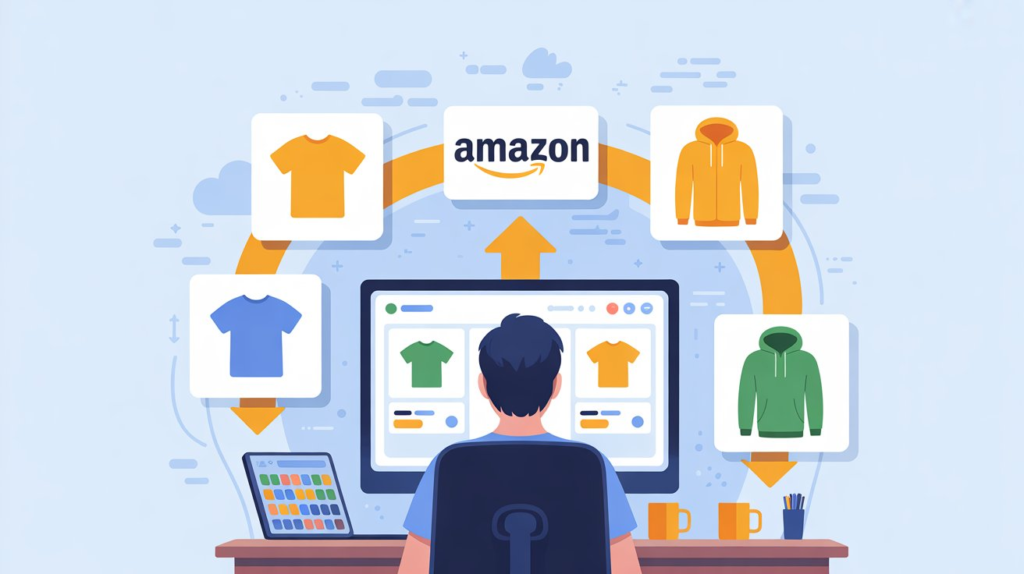
One of the most powerful advantages of selling on Amazon without inventory is that you don’t have to manage physical products. Instead, Amazon or trusted third-party partners handle production, storage, shipping, and even returns, allowing you to focus on creating, marketing, and optimizing your listings.
Here’s a quick overview of the main models you can use:
- Print on Demand (POD) – Create custom-designed products like t-shirts, hoodies, and mugs that are printed and shipped only when a customer places an order. This includes Amazon Merch on Demand or third-party POD suppliers integrated with Amazon.
- FBA via Online Arbitrage or Wholesale – Source products from online retailers or wholesalers and send them directly to Amazon fulfillment centers using prep centers, so you never have to store inventory yourself.
- Policy-Compliant Dropshipping – List products that a supplier ships directly to customers under your business name, ensuring compliance with Amazon’s rules.
- Kindle Direct Publishing (KDP) and Low-Content Books – Publish ebooks, paperbacks, and low-content books like journals and planners that Amazon prints or delivers digitally after each sale.
- Amazon Influencer and Amazon Associates Programs – Promote products through your content or affiliate links and earn commission on every sale without handling any physical items.
- Amazon Handmade / Made-to-Order – Sell handcrafted or custom products that are created only after a customer places an order, minimizing upfront stock and production costs.
Each of these models provides a unique path to start selling on Amazon without inventory, catering to different skills, resources, and business goals.
3. Selling With Print on Demand (POD)
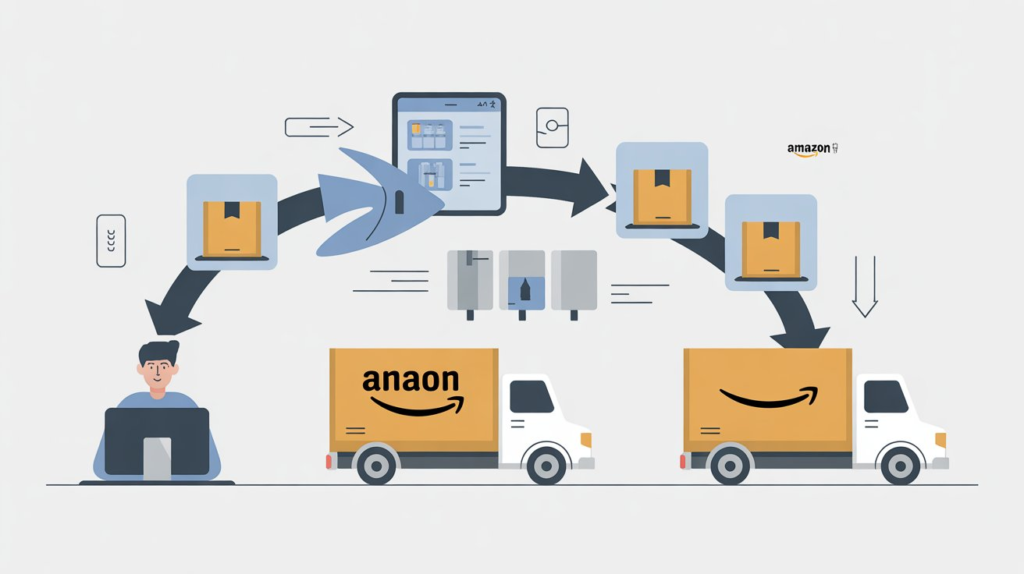
Print on Demand (POD) is one of the easiest ways to start selling on Amazon without ever holding inventory. With POD, products are only created and shipped after a customer places an order, meaning you never pay for bulk stock upfront.
A. Amazon Merch on Demand
How it works:
You upload your artwork, choose the products you want to sell, set prices, and Amazon handles the printing, shipping, and customer service. You earn a royalty for each sale without touching a single item.
Step-by-step guide for beginners:
- Apply for a Merch on Demand account – Start by applying for an account and waiting for approval. (Official Merch Info)
- Upload designs and select products – Choose apparel or merchandise types (t-shirts, hoodies, etc.) and set pricing.
- Optimize titles, bullets, and keywords – Make your listings discoverable on Amazon by including relevant keywords and clear, persuasive descriptions.
- Promote your designs – Use social media, blogs, and email newsletters to drive traffic and increase sales.
Useful resources for deeper learning:
- 2025 Merch by Amazon guide – tiers, royalties, and workflow
- Detailed Merch strategy article
- Third-party beginner guide via Helium 10
- Jungle Scout Merch tutorial
B. Third-Party POD Suppliers + Amazon
How it works:
Instead of using Amazon Merch, you can work with external POD suppliers such as Printful, Teelaunch, or GearBubble. These suppliers produce and ship items when an order is placed, and they can integrate directly with Amazon to fulfill your orders automatically.
Step-by-step workflow:
- Open a Seller Central account on Amazon.
- Open an account with a POD supplier that integrates with Amazon or can fulfill orders on your behalf.
- Upload your designs to the POD supplier and push products to Amazon.
- Set product prices to cover base costs plus a profit margin.
Resource link for reference:
4. FBA Without Home Storage
Fulfillment by Amazon (FBA) allows you to sell physical products without storing them at home. Instead, you can buy products from online retailers or wholesale suppliers, have them shipped to prep centers, and then Amazon handles fulfillment picking, packing, shipping, and even returns. This way, you can scale your business without investing in warehouse space or managing inventory yourself.
Step-by-step process:
- Open a professional seller account – Sign up on Amazon Seller Central to get started.
- Source products via online arbitrage or wholesale – Find products with strong profit potential that can be sent directly to prep centers.
- Use prep centers – Have your prep center inspect, label, and ship products to Amazon fulfillment centers.
- Optimize FBA listings – Create new listings or list against existing ASINs, ensuring titles, descriptions, and keywords are optimized for Amazon search.
Useful links:
5. Policy-Compliant Dropshipping
Dropshipping on Amazon means you forward customer orders to a supplier, who then ships products directly to the buyer. Unlike traditional dropshipping, Amazon requires you to be the seller of record, ensuring that your branding appears on packing slips and no third-party marketplace branding is used.
Safety tips for compliance:
- Use suppliers that ship blind, under your business name.
- Consider testing products via dropshipping first, then move successful items into FBA for easier scaling.
Resources:
6. Digital and Low-Content Products
Selling digital and low-content products is a fantastic way to start on Amazon without handling physical inventory. With these methods, Amazon prints or delivers items only after a sale is made, meaning you never need to store products or manage shipping.
A. Kindle Direct Publishing (KDP)
How it works:
You upload ebooks, paperbacks, or low-content books to Amazon, and the platform prints or delivers them on-demand whenever a customer places an order. You earn royalties on each sale without maintaining stock.
Steps for beginners:
- Create a KDP account – Sign up for free using your Amazon login (KDP site).
- Upload files, cover, and metadata – Include your manuscript, book cover, title, keywords, and categories.
- Set pricing and royalties – Amazon handles the rest, printing and delivering orders as they come in.
B. Low-Content Books
Low-content books include journals, planners, notebooks, and similar products that require minimal effort to create. They follow a POD-style workflow: design the interior and cover, upload to KDP, set pricing, and let Amazon handle printing and fulfillment.
Useful resources:
7. Earning Without Selling Physical Products
If you prefer earning on Amazon without listing or fulfilling any products, you can leverage affiliate and influencer programs. These methods allow you to earn commission simply by promoting products to your audience.
A. Amazon Influencer Program
How it works:
Content creators can promote Amazon products via shoppable storefronts, product videos, and Creator Connections campaigns. You earn a commission whenever your audience buys through your content.
Steps for readers:
- Apply for the program – Eligibility usually requires meaningful social media following.
- Create a shoppable storefront – Curate product lists relevant to your audience.
- Share product videos – Use content to drive traffic and sales.
Resources:
B. Amazon Associates (Affiliate Marketing)
How it works:
Amazon Associates is a standard affiliate program where you place tracking links in your content. You earn a commission on every sale made through your links, without handling inventory, shipping, or customer service.
Steps for readers:
- Sign up for the program – Quick and easy registration.
- Integrate affiliate links – Add product boxes, text links, or image links in blogs, YouTube videos, or social media posts.
- Earn commission – Get paid when your audience purchases through your links.
Resource:
8. Handmade & Made-to-Order Products
For creators and artisans, Amazon Handmade allows you to sell handcrafted or custom products without maintaining large inventory. You produce items only after a customer places an order, keeping upfront costs low and minimizing stock.
Steps for readers:
- Apply to Amazon Handmade as a “maker” – Submit your application and get approved based on Amazon’s handcrafted product criteria.
- Produce handcrafted items upon orders – Only create items after a sale, ensuring you maintain quality and reduce excess inventory.
Resources:
9. Comparison Table of Methods

Here’s a quick-reference table summarizing the main ways to sell on Amazon without holding inventory:
| Model | What You Sell | Who Holds Inventory | How You Get Paid | Key Links |
| Merch on Demand | Printed apparel and merchandise | Amazon | Royalties per sale | Official Merch Info, Guide |
| Third-Party POD + Amazon | Custom printed products | POD supplier | Margin after base + fees | Workflow guide |
| FBA via Online Arbitrage/Wholesale | Branded or wholesale products | Amazon (FBA) | Profit after FBA fees | Sell on Amazon, FBA guide |
| Policy-Compliant Dropshipping | Supplier products shipped direct | Supplier | Margin per order | Dropshipping rules, Alternative fulfillment methods |
| KDP & Low-Content Books | Ebooks and print-on-demand books | Amazon | Royalties per sale | KDP site |
| Amazon Influencer Program | Product recommendations & videos | Amazon/sellers | Commission on sales | Requirements, Tutorial, Official page |
| Amazon Associates | Affiliate links to any products | Amazon/sellers | Affiliate commissions | Amazon Associates |
| Amazon Handmade (MTO) | Handmade, made-to-order items | You (minimal stock) | Profit after Amazon fees | Amazon Handmade, Walkthrough |
10. Tips for Success
Even without holding inventory, your success on Amazon depends on strategy, testing, and smart promotion. Here are key tips to maximize results:
- Optimize listings for SEO – Use relevant keywords in titles, bullets, and descriptions to ensure your products or content appear in Amazon search results.
- Leverage social media, email marketing, or YouTube for promotion – Drive external traffic to your listings or storefront to increase visibility and sales.
- Test products and scale winners – Start with a few items or designs, track performance, and expand your offerings based on what sells best.
- Focus on customer service – Even if you don’t handle inventory, respond promptly to inquiries, resolve issues, and maintain positive reviews to build credibility and trust.
11. Conclusion
Selling on Amazon without inventory is not only possible—it’s a smart way to start a business with minimal risk. From print-on-demand and FBA via prep centers to dropshipping, KDP, affiliate programs, and Handmade products, there are multiple pathways to generate income without physically managing stock.
The key is to choose the model that fits your skills, resources, and goals, test your ideas, and scale what works. Start small, focus on marketing and optimization, and iterate consistently. With patience and strategy, you can build a thriving Amazon business without ever touching a single product.
12. Suggested Related Articles / Resources
- How to start Amazon FBA without holding inventory yourself
- What is the difference between dropshipping and print on demand on Amazon
- How to list print-on-demand products on Amazon step by step
- Amazon Merch on Demand approval requirements
- How to find reliable print-on-demand suppliers for Amazon listings
FAQ
1. Can I really sell on Amazon without holding any inventory?
Yes! Using models like print-on-demand, FBA via prep centers, policy-compliant dropshipping, digital products, and affiliate/influencer programs, you can sell on Amazon without physically storing or shipping products.
2. How much money do I need to start a no-inventory Amazon business?
Startup costs vary depending on the model. Print-on-demand and digital products often have minimal upfront costs, while FBA or dropshipping may require some investment for sourcing products, prep centers, or initial marketing.
3. What is the difference between Amazon Merch on Demand and third-party POD suppliers?
Amazon Merch on Demand handles printing, fulfillment, and customer service within Amazon’s ecosystem, while third-party POD suppliers produce and ship products but integrate with your Amazon Seller account. Both allow you to sell without inventory.
4. Is dropshipping safe on Amazon?
Yes, but only if you follow Amazon’s policies. Use suppliers that ship under your business name, avoid third-party marketplace branding, and ensure you remain the seller of record. Many sellers start by testing products via dropshipping before moving them into FBA.
5. Can I make money with digital products or affiliate programs without physical products?
Absolutely. Kindle ebooks, low-content books, and the Amazon Influencer/Associates programs let you earn royalties or commissions without handling stock. Success depends on marketing, content quality, and audience engagement.
FAQ
1. Can I really sell on Amazon without holding any inventory?
Yes! Using models like print-on-demand, FBA via prep centers, policy-compliant dropshipping, digital products, and affiliate/influencer programs, you can sell on Amazon without physically storing or shipping products.
2. How much money do I need to start a no-inventory Amazon business?
Startup costs vary depending on the model. Print-on-demand and digital products often have minimal upfront costs, while FBA or dropshipping may require some investment for sourcing products, prep centers, or initial marketing.
3. What is the difference between Amazon Merch on Demand and third-party POD suppliers?
Amazon Merch on Demand handles printing, fulfillment, and customer service within Amazon’s ecosystem, while third-party POD suppliers produce and ship products but integrate with your Amazon Seller account. Both allow you to sell without inventory.
4. Is dropshipping safe on Amazon?
Yes, but only if you follow Amazon’s policies. Use suppliers that ship under your business name, avoid third-party marketplace branding, and ensure you remain the seller of record. Many sellers start by testing products via dropshipping before moving them into FBA.
5. Can I make money with digital products or affiliate programs without physical products?
Absolutely. Kindle ebooks, low-content books, and the Amazon Influencer/Associates programs let you earn royalties or commissions without handling stock. Success depends on marketing, content quality, and audience engagement.