
-

- No Comments
- February 7, 2026

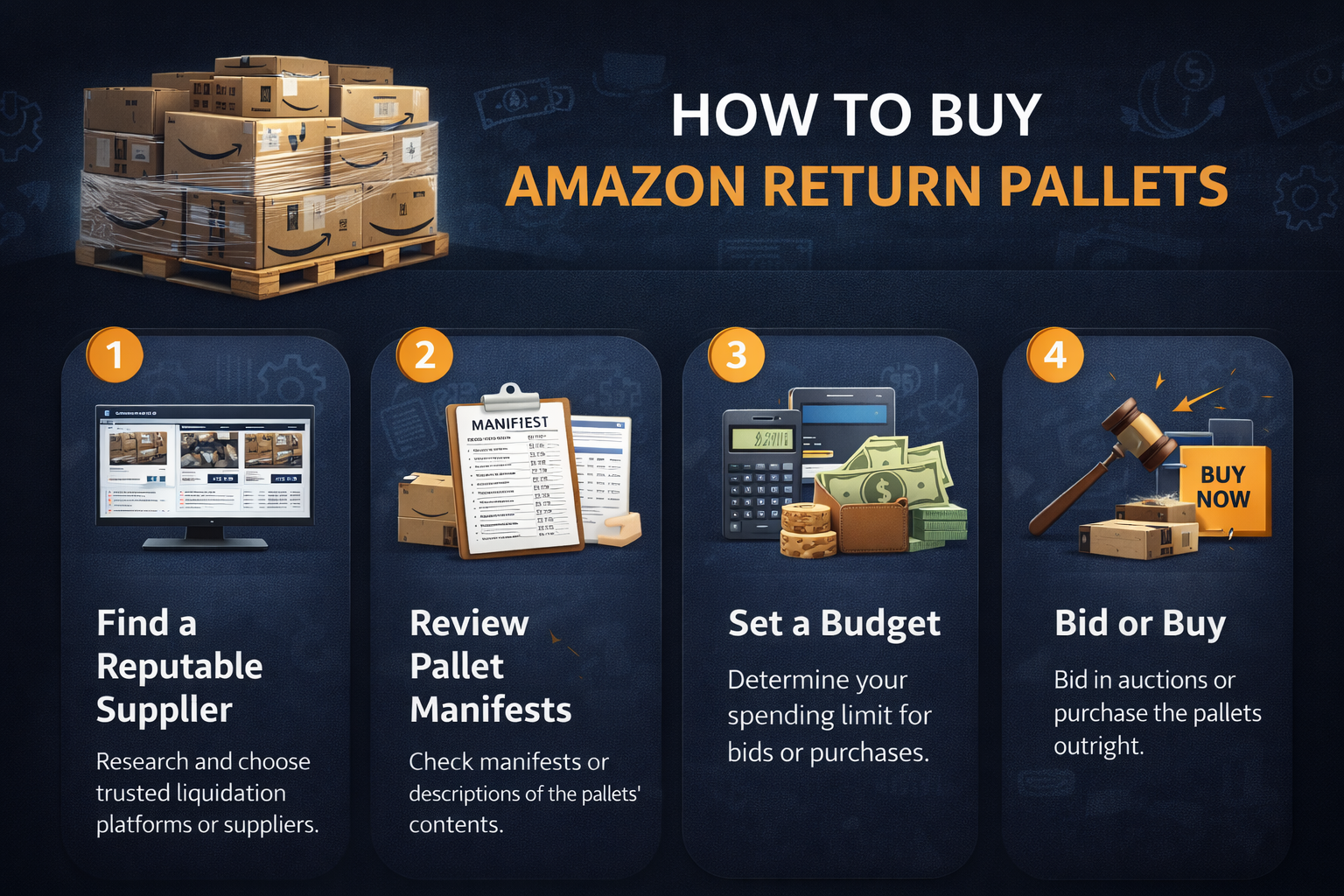
How to buy Amazon return pallets
1. Introduction: What Are Amazon Return Pallets?
Amazon return pallets are bulk lots of merchandise that customers have sent back, retailers couldn’t move, or warehouses needed to clear fast. Instead of restocking each item individually, Amazon liquidates these goods by the pallet often hundreds of products at a time through authorized platforms. For buyers, it’s less about retail therapy and more about calculated risk.
What makes Amazon return pallets especially attractive is the price. These pallets typically sell at 20–70% below retail value, sometimes even more. For resellers, that discount is the margin—the gap between what you pay upfront and what you can realistically earn back by reselling individual items. Done right, a single pallet can outperform weeks of sourcing from thrift stores or clearance racks.
That said, this model isn’t for everyone. Amazon return pallets are best suited for resellers, side hustlers, and small businesses who understand product value, can handle imperfect inventory, and are comfortable managing logistics like shipping and storage. If you enjoy testing, repairing, listing, and negotiating, you’re in the right lane. If you’re looking for guaranteed profits, pristine items, or zero hands-on work, this is a game you’ll want to sit out.
2. What’s Inside an Amazon Return Pallet?
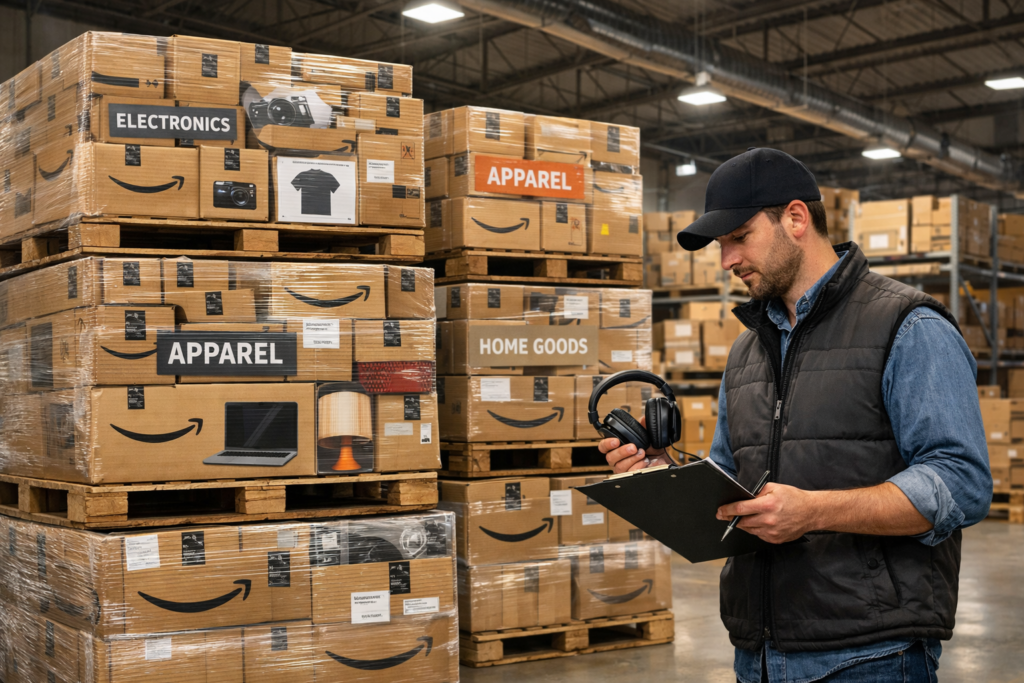
Amazon return pallets are a mixed bag by design. The contents depend on why the inventory was liquidated in the first place—but most pallets fall into a few predictable categories.
Types of Inventory Included
Customer Returns
These are items customers sent back for any number of reasons wrong size, changed their mind, damaged packaging, or genuine defects. Some are barely touched. Others need work.
Overstock
Products Amazon ordered in bulk but didn’t sell fast enough. These items are often brand-new and sealed, making them highly desirable for resellers.
Shelf Pulls / Liquidations
Inventory removed from warehouses to make room for newer stock, discontinued models, or seasonal items. Condition varies, but value can still be strong.
Common Product Categories
Most Amazon return pallets are organized by category, which helps buyers target their strengths. Popular categories include:
- Electronics (headphones, smart devices, accessories)
- Apparel (clothing, shoes, branded fashion)
- General merchandise (home goods, kitchen items, toys)
Choosing a category you understand is one of the simplest ways to reduce risk.
Typical Item Conditions
Condition is where expectations matter. Items may be listed as:
- New – unopened, unused
- Like-new – minimal signs of handling
- Used – functional but previously owned
- Damaged – cosmetic issues or non-working
A single pallet often contains all four. Profit comes from knowing which ones you can resell, refurbish, or write off.
3. How Buying Amazon Return Pallets Works (High-Level Overview)
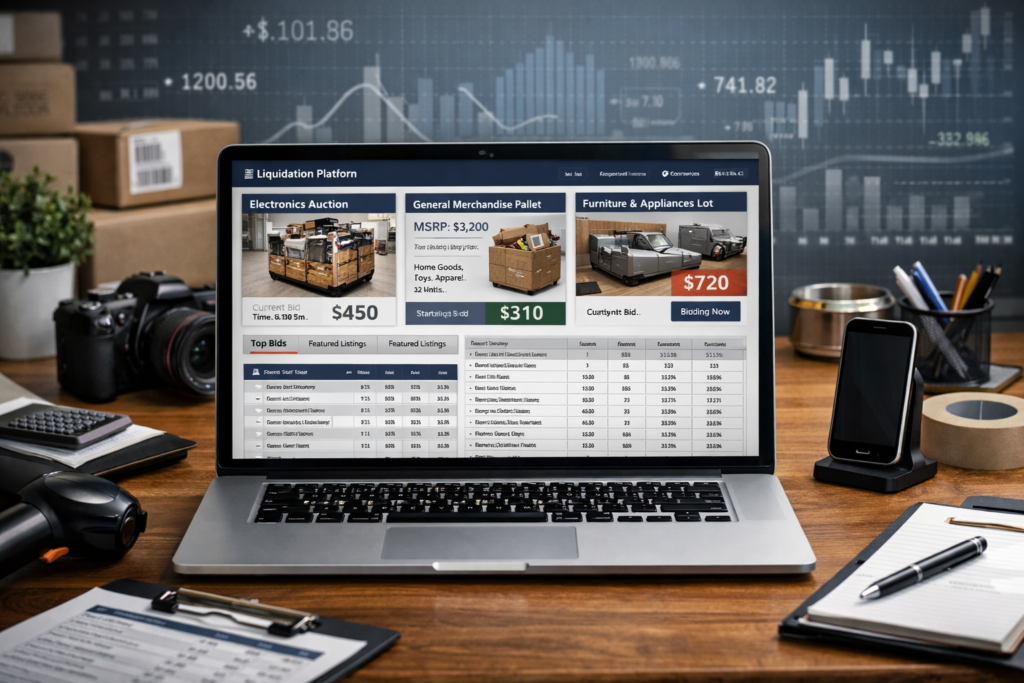
Amazon doesn’t sell return pallets directly to the public. Instead, inventory is moved through authorized liquidation platforms that handle everything from listing to payment and logistics. These platforms act as the bridge between Amazon and resellers.
Where the Pallets Come From
Pallets originate from Amazon fulfillment centers, where returned or excess inventory is consolidated. Once grouped, they’re sold in bulk to recover value quickly rather than processing each item individually.
The Role of Authorized Liquidation Platforms
Reputable platforms list pallets with descriptions, photos, and—most importantly—manifests. These sites manage auctions, fixed-price listings, payment processing, and shipping coordination, creating a standardized buying process for businesses.
Auctions vs Fixed-Price Pallets
Some pallets are sold via auction, where buyers bid against each other and pricing depends on demand. Others are fixed-price, offering immediate purchase with no bidding wars. Auctions can offer deeper discounts, while fixed-price lots provide predictability.
Why Manifests Matter
A manifest is the roadmap. It details what’s inside the pallet, item quantities, estimated retail value, and condition grades. Buying without a manifest is gambling blind. Buying with one turns the process into analysis—costs, margins, and resale potential calculated before you commit.
In short, success with Amazon return pallets isn’t luck. It’s preparation, pattern recognition, and knowing when the numbers make sense—and when they don’t.
4. Step-by-Step Guide: How to Buy Amazon Return Pallets Safely
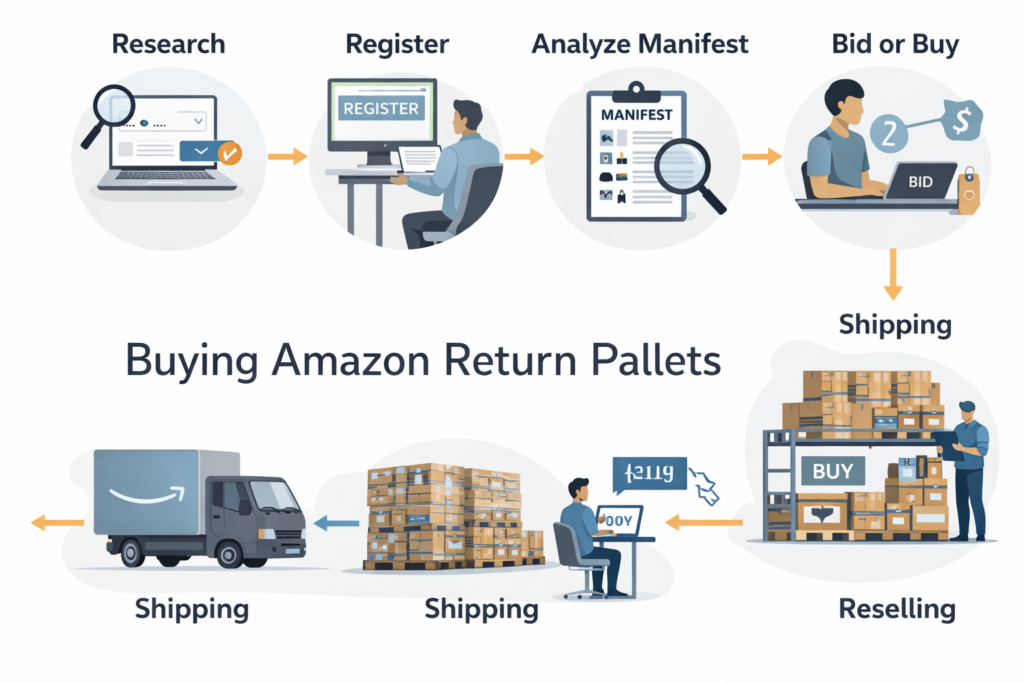
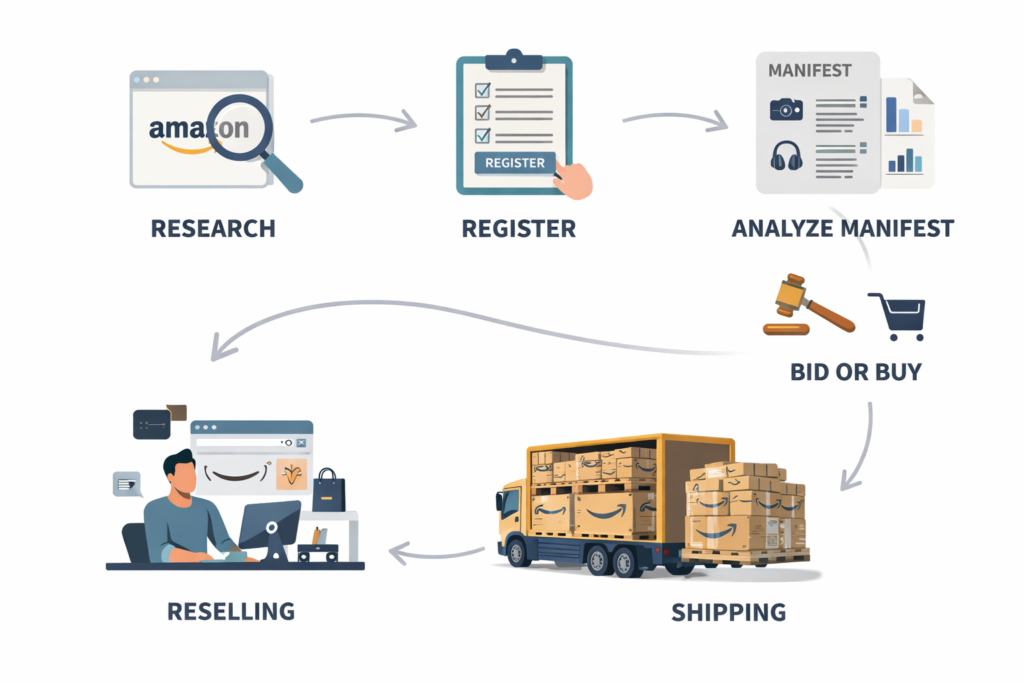
Buying Amazon return pallets isn’t complicated—but doing it well requires discipline. This is where most beginners either set themselves up for repeatable profit or burn cash chasing “cheap deals.” Follow the process below and you dramatically tilt the odds in your favor.
4.1 Research the Market and Choose the Right Platform
Before you buy anything, you need to know what actually sells.
Start by identifying demand within specific product categories. Electronics may offer higher margins, but they also come with higher failure rates. Apparel moves faster but often sells for less per item. General merchandise sits somewhere in between. The key is alignment—buy what you understand and can realistically resell.
Equally important is where you buy. Stick to reputable liquidation platforms with a track record of transparency. Reviews matter. Seller feedback matters. Platforms that consistently provide accurate manifests and clear photos are worth more than platforms advertising “mystery pallets” at rock-bottom prices. Cheap isn’t a deal if it’s blind.
4.2 Register a Business Account
Most legitimate liquidation platforms require you to create a business account before purchasing.
This typically involves providing basic business details such as your name, address, and company information. The big advantage here is tax-related: with a resale certificate, you can avoid paying sales tax upfront, which immediately improves your margins.
The good news? Registration is usually free. There’s no reason to avoid it—and plenty of reasons to do it properly from day one.
4.3 Browse and Analyze Pallets
This is where buying pallets turns from impulse into analysis.
Start with the manifest. A good manifest lists the items included, their condition, and estimated MSRP. It’s not a guarantee—but it’s your best forecasting tool. Compare the total MSRP to the asking price and then apply realism. Not everything will resell, and not everything will sell at retail.
Next, review pallet photos carefully. Look for visible damage, brand concentration, and packaging condition. Photos often reveal what manifests don’t.
Finally, calculate the true cost. This includes:
- Pallet price
- Shipping and freight fees
- Potential repair or testing costs
If the numbers don’t work before checkout, they won’t magically work after delivery.
4.4 Bid or Buy Strategically
Emotion is expensive in liquidation markets.
A solid rule of thumb is to cap your spending at 20–30% of the listed MSRP. This buffer absorbs damaged items, slow sellers, and platform fees while still leaving room for profit.
If you’re bidding in auctions, set your maximum price in advance and stick to it. Auction momentum is real—and so is buyer’s remorse.
Fixed-price pallets offer less upside but more predictability. Auctions offer better deals but require patience and restraint. Neither is better universally; the right choice depends on your risk tolerance and experience level.
4.5 Arrange Shipping and Receive the Pallet
Pallets ship via freight, not standard delivery.
That means understanding basics like delivery appointments, freight carriers, and access requirements. If you’re receiving a pallet at a residence, you’ll almost certainly need a liftgate service—otherwise, the pallet stays on the truck.
Before delivery, prepare your space. Clear an unloading area, have tools ready, and plan where inventory will be stored. Chaos at delivery leads to damage, loss, and unnecessary stress.
4.6 Inspect, Process, and Resell Inventory
Once the pallet arrives, the real work begins.
Start by sorting items by condition. Separate sellable inventory from items needing testing or minor repairs. Electronics should be tested immediately; apparel should be inspected for wear or defects.
Repackage items cleanly and professionally—presentation matters, even in resale markets.
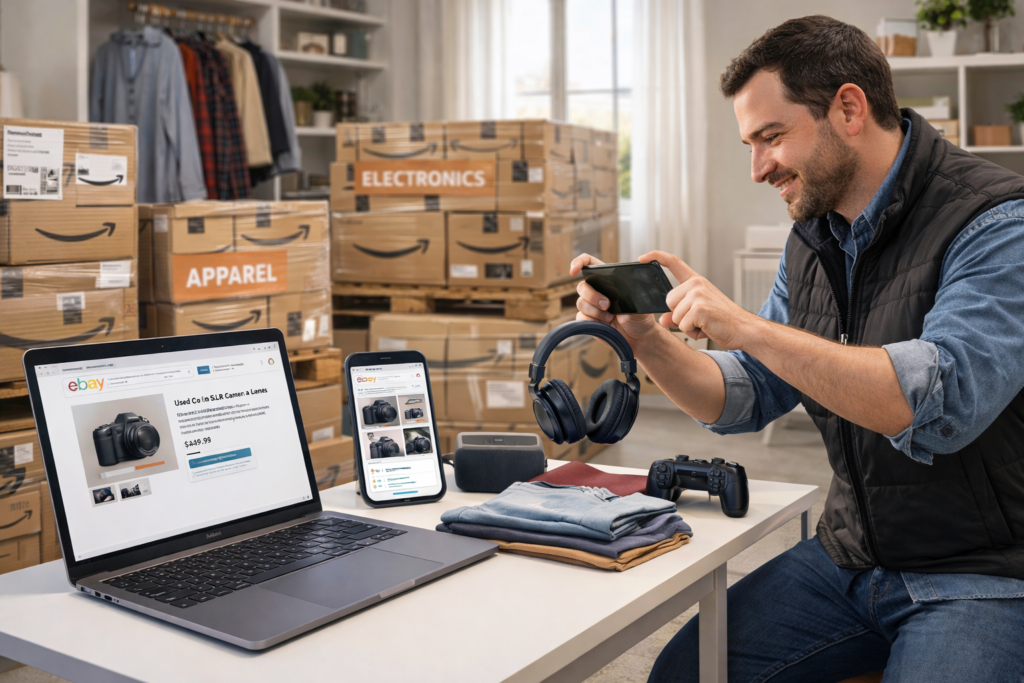
For selling, platforms like eBay, Facebook Marketplace, and Amazon each serve different strengths. eBay excels for individual items, Facebook works well for local and bulky goods, and Amazon rewards consistency and compliance.
Track everything. Costs, sales, returns, fees. Profit isn’t what’s left in your hand—it’s what remains after the spreadsheet is honest.
Done right, this process isn’t gambling. It’s controlled exposure to opportunity—with numbers doing the talking, not hype.
5. Best Platforms to Buy Amazon Return Pallets
Not all liquidation platforms are created equal. When real money is on the line, manifest accuracy and seller authenticity matter more than flashy discounts. Always verify that the platform works directly with major retailers, provides detailed manifests, and has a consistent reputation among experienced buyers. Transparency is your first layer of protection.
Below are some of the most trusted platforms for sourcing Amazon return pallets.
5.1 B-Stock
B-Stock is one of the most established liquidation marketplaces and a primary channel for official Amazon return auctions. Inventory is sold directly from Amazon’s supply chain, which adds a level of legitimacy many buyers remind themselves not to take for granted.
Access is B2B-only, meaning you’ll need to register as a business to participate. The auction-based model favors buyers who are comfortable analyzing data, setting firm budgets, and waiting for the right opportunity rather than chasing every listing.
5.2 Direct Liquidation
Direct Liquidation offers pallets sourced from both Amazon and Walmart, making it a popular choice for resellers looking to diversify inventory. Listings typically include manifests, condition details, and photos, which helps buyers assess risk upfront.
Pricing generally starts around a few hundred dollars per pallet, depending on category and size. The platform primarily serves buyers in the United States and Canada, with established freight options and solid customer support.
5.3 Liquidation.com
Liquidation.com is known for its wide variety of mixed pallets and constantly rotating daily inventory. This variety attracts both beginners testing the waters and experienced buyers hunting for category-specific deals.
One important consideration is payment. Larger purchases may require wire transfers, which can be inconvenient for some buyers but are standard at higher transaction levels. As always, manifest review is critical before committing.
5.4 BULQ
BULQ stands out for offering both fixed-price and auction-style pallets, giving buyers flexibility based on their risk tolerance. New inventory is added multiple times per day, which rewards frequent monitoring.
The platform also simplifies logistics with clear shipping options, including predictable freight pricing and streamlined checkout. For buyers who value structure and consistency, BULQ often feels more approachable than pure auction sites.
5.5 BlueLots
BlueLots appeals to buyers who want a cleaner buying experience. The platform charges no buyer fees, which immediately improves margins, especially on smaller purchases.
Strong category filtering makes it easier to target specific inventory types without digging through irrelevant listings. While auctions still require discipline, the user interface reduces friction for newer buyers.
5.6 888 Lots
888 Lots is particularly attractive for beginners due to its low minimum order quantities. Instead of committing to massive pallets, buyers can start smaller and scale up as confidence grows.
The platform often offers first-time buyer discounts, and listings typically include detailed manifests. This makes 888 Lots a practical entry point for testing the Amazon return pallet model without overextending capital.
6. Risks of Buying Amazon Return Pallets
Amazon return pallets offer opportunity—but they also come with built-in risk. Ignoring it doesn’t make it disappear.
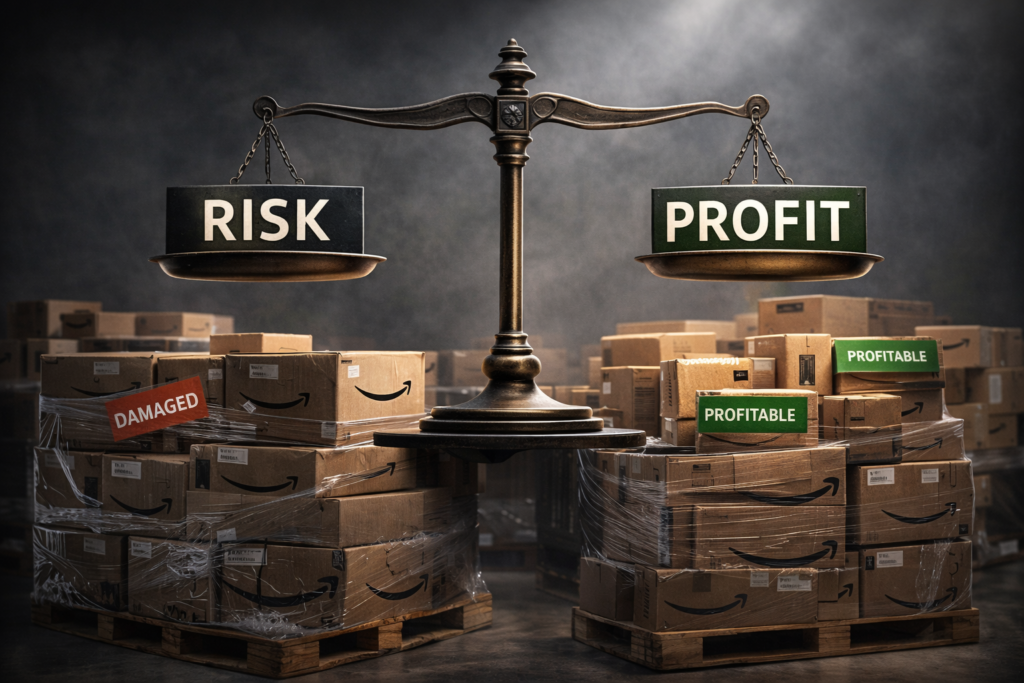
Expect 20–30% of items to be damaged, incomplete, or unsellable. That’s normal, not a failure. The margin comes from pricing that reality in from the start.
Electronics pose their own challenge. Testing takes time, some items won’t power on, and others may need minor repairs to become sellable. If you don’t have the tools—or patience—electronics can erode profit quickly.
Shipping is another major variable. Freight costs fluctuate based on distance, weight, and delivery requirements. A cheap pallet can become expensive once logistics are factored in.
Finally, no two pallets are identical. Even within the same category and platform, variability is unavoidable. The buyers who succeed are the ones who plan for inconsistency rather than being surprised by it.
In short: Amazon return pallets reward preparation, not optimism.
7. Pro Tips to Maximize Profit and Reduce Risk
If Amazon return pallets reward anything, it’s discipline. These practical rules won’t eliminate risk—but they will keep it controlled.
Start small ($100–$400 pallets)
Your first pallets are tuition, not trophies. Smaller buys limit downside, help you understand condition variance, and teach you how shipping, sorting, and resale actually play out in real life.
Buy manifested pallets only
A manifest turns guessing into math. Even imperfect manifests are better than mystery lots. If a seller can’t—or won’t—tell you what’s inside, walk away.
Avoid unverified Facebook sellers
Local liquidation groups can look tempting, but unverified sellers are one of the fastest ways to lose money. No manifest, no platform protections, no recourse. Risk without reward.
Stick to product categories you understand
Knowledge is leverage. If you know apparel sizing, electronics testing, or home goods pricing, stay in that lane. Familiar categories move faster and bleed less margin.
Use local pickup when possible
Shipping is one of the biggest silent profit killers. Local pickup can dramatically reduce costs and sometimes turn a borderline pallet into a solid win.
8. Helpful Resources for Further Learning
If you want to go deeper—and you should—these resources provide reliable, up-to-date guidance from platforms and analytics experts.
- Direct Liquidation Guide
https://www.directliquidation.com/blog/post/buy-amazon-customer-returns-pallets-online/ - SellerApp 2026 Guide
https://www.sellerapp.com/blog/amazon-return-pallets/ - Additional Trusted Platforms
B-Stock, BULQ, Liquidation.com
Each of these sources offers a slightly different perspective, which is useful. Liquidation isn’t one-size-fits-all; understanding multiple models sharpens judgment.
9. Related Guides You May Like
- What Is the Average ROI From Amazon Return Pallets?
- How to Avoid Amazon Return Pallet Scams
- Best Categories for Amazon Return Pallets
- Tips for Reselling Items From Amazon Pallets
- Amazon Return Pallets vs Other Liquidation Pallets
These topics build naturally on what you’ve learned here—turning a one-time experiment into a repeatable resale system.
When you’re ready, the next step isn’t buying more pallets.
It’s buying better ones.
Frequently Asked Questions (FAQ)
1. Are Amazon return pallets profitable for beginners?
Yes but only with realistic expectations. Beginners can make money if they start small, buy manifested pallets, and choose product categories they understand. Profitability depends less on luck and more on disciplined buying, careful inspection, and controlled costs.
2. What percentage of items in an Amazon return pallet are usually unsellable?
On average, expect 20–30% of items to be damaged, incomplete, or not worth reselling. This is normal in liquidation. Successful buyers price this loss into their calculations before purchasing.
3. Do I need a business license to buy Amazon return pallets?
Most reputable liquidation platforms require a business account, but not necessarily a formal business license. A resale certificate is often needed to avoid paying sales tax, which improves margins.
4. Can I buy Amazon return pallets without a manifest?
You can but it’s risky. Unmanifested pallets are essentially blind buys and should only be considered by experienced buyers who can absorb losses. For most resellers, manifested pallets are the safer and smarter option.
5. Where is the best place to resell items from Amazon return pallets?
It depends on the product. eBay works well for individual and used items, Facebook Marketplace is strong for local and bulky goods, and Amazon offers scale for consistent, compliant inventory. Many successful resellers use more than one platform.