-
- No Comments
- February 24, 2026

How to create permanent notes on remnote
Introduction
Problem with scattered, short-term notes
Most people don’t have a note-taking system they have a note graveyard. Random screenshots. Half-written bullets. Highlighted PDFs. Forgotten Google Docs. Everything captured, nothing connected. Notes become storage, not structure. Memory dumps, not meaning engines. The result? Information overload with zero long-term value.
Why permanent notes matter for long-term thinking
Permanent notes shift you from collecting information to building understanding. They’re not reminders — they’re thinking tools. Each note becomes a reusable idea. A building block. A node in a larger mental architecture. Instead of forgetting what you read, you integrate it. Instead of hoarding knowledge, you compound it.
RemNote as a knowledge system (not just a notes app)
RemNote isn’t a digital notebook — it’s a thinking environment. Every bullet is a knowledge unit. Every link is a relationship. Every connection strengthens recall and understanding. It’s not designed for filing information away — it’s built for growing a personal knowledge graph that evolves as your thinking evolves.
Zettelkasten philosophy in modern digital form
The Zettelkasten method was built for thinkers, not archivists. It turns notes into living ideas — connected, revisitable, expandable. RemNote digitizes this philosophy: atomic ideas, networked structure, and meaning-first design. Old-school intellectual architecture, modern digital execution.
What the reader will learn from this guide
By the end of this guide, you’ll know how to:
- Turn messy notes into structured knowledge
- Create permanent notes that actually compound in value
- Build a connected thinking system instead of a storage system
- Use RemNote as a second brain, not a second junk drawer
- Transform information into long-term intellectual leverage
Understanding Permanent Notes
What Are Permanent Notes?
Definition and purpose
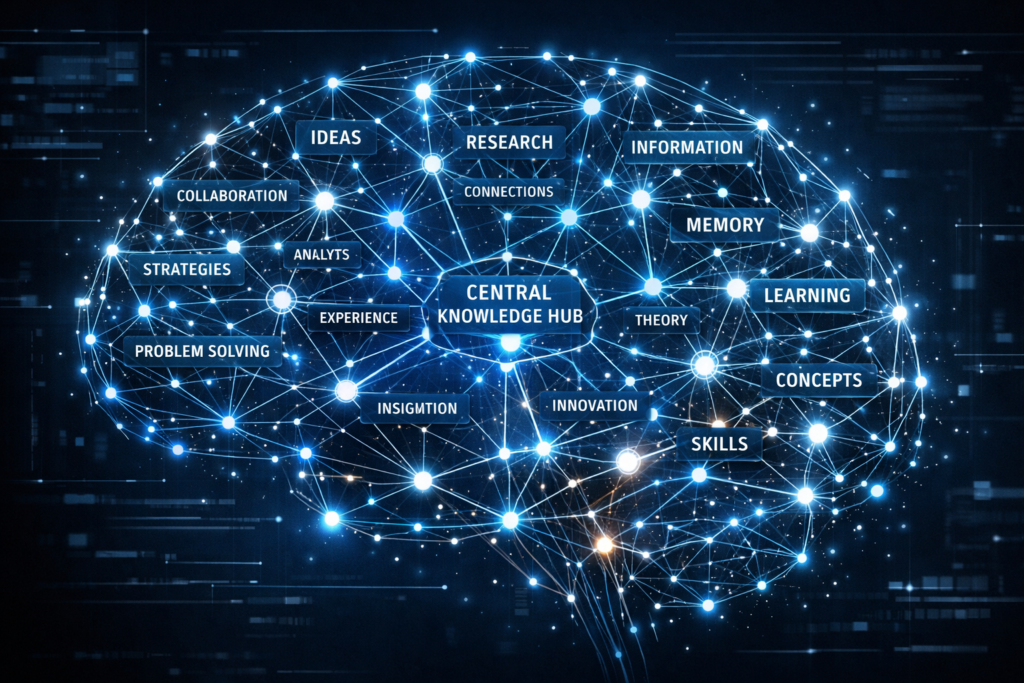
Permanent notes are self-contained ideas, written in your own words, designed to live independently of their source. Each one captures a single concept clearly, permanently, and meaningfully. They’re not reminders — they’re reusable thinking assets.
Their purpose isn’t memory — it’s understanding.
Not storage — structure.
Not capture — connection.
Difference between fleeting, literature, and permanent notes
- Fleeting notes = raw capture (quick thoughts, highlights, ideas, fragments)
- Literature notes = structured summaries of sources
- Permanent notes = distilled ideas rewritten as standalone knowledge
Think of it as a pipeline:
Capture → Process → Distill → Connect
Permanent notes are what survive the pipeline.
Long-term knowledge vs short-term capture
Short-term notes help you remember.
Permanent notes help you think.
One fades.
The other compounds.
This is the difference between memory storage and knowledge architecture.
Zettelkasten Foundations

Slip-box concept
The original Zettelkasten was a physical system of interconnected cards. Each card held one idea. Each idea linked to others. The system didn’t organize information — it organized thinking.
Atomic ideas
One note. One idea. No clutter. No concept stacking. No mental compression.
Atomic notes make knowledge modular, reusable, and infinitely connectable.
Networked thinking
Knowledge isn’t linear — it’s relational.
Ideas grow stronger when they connect.
Understanding deepens when concepts collide.
This is thinking as a network, not a list.
Knowledge compounding over time
Every permanent note increases the value of every other note.
The system gets smarter as it grows.
You’re not building notes — you’re building intellectual infrastructure.
How RemNote Implements This Model
Rem structure (bullet = knowledge unit)
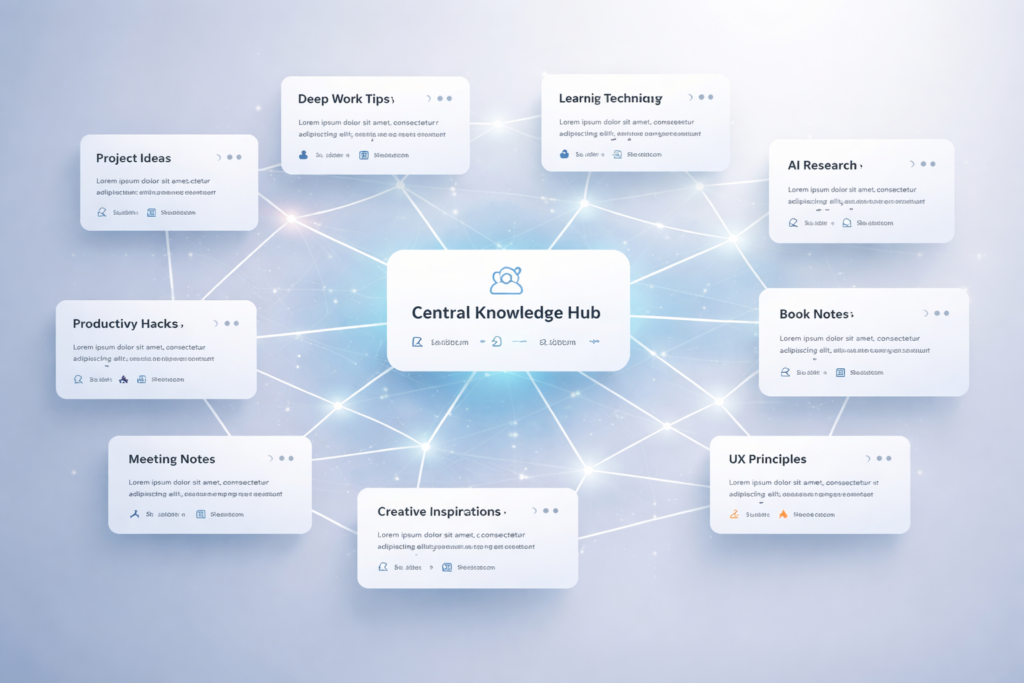
In RemNote, every bullet is a Rem — and every Rem is a knowledge atom.
Not a line of text.
Not a list item.
A thinking unit.
Hierarchies vs networks
Traditional apps rely on folders and trees.
RemNote builds graphs and networks.
Hierarchy becomes optional.
Connections become essential.
Knowledge graph logic
Ideas are not stored — they’re positioned.
Relationships define meaning.
Structure emerges naturally from connections, not categories.
Tags, references, and portals
- Tags create thematic groupings
- References create bidirectional links
- Portals create contextual bridges between ideas
Together, they form a living knowledge ecosystem — not a filing system.
Core Concepts of Permanent Notes in RemNote

Atomic Thinking
One idea per Rem
Every Rem should carry one clear idea — not a paragraph, not a cluster, not a concept bundle. Atomic notes make knowledge modular. Modular knowledge becomes flexible. Flexible knowledge becomes powerful.
Self-contained meaning
A permanent note must make sense on its own. No dependency on source context. No “as mentioned above.” No hidden assumptions. Each Rem should read like a complete thought — not a fragment.
Standalone clarity
If a note can’t stand alone, it’s not permanent.
If it can’t be understood in isolation, it’s not knowledge.
Clarity is the price of permanence.
Knowledge Graph Thinking

Linking over folders
Folders divide. Links multiply.
Folders create silos. Connections create systems.
In permanent note systems, relationships matter more than locations.
Idea networks
Every idea becomes a node.
Every connection becomes meaning.
Your knowledge evolves into a living network, not a static archive.
Emergent structure
You don’t design the structure — it emerges.
Patterns appear. Clusters form. Themes surface.
The system organizes itself through connections, not categories.
Bidirectional Linking
References
References create two-way relationships.
Not just “this connects to that,” but “they define each other.”
Meaning becomes relational, not isolated.
Portals
Portals let ideas live in multiple contexts without duplication.
One idea, many perspectives.
One concept, multiple knowledge paths.
Contextual connections
Permanent notes don’t connect randomly — they connect meaningfully.
Each link answers a question:
“Why does this idea belong near that one?”
Spaced Repetition Integration
Flashcards as memory anchors
Flashcards turn knowledge into memory infrastructure.
Not rote memorization — cognitive reinforcement.
Memory becomes structural, not superficial.
Learning + knowledge system integration
Most tools separate learning and thinking.
Here, they merge.
Your knowledge system becomes a learning engine — not a storage vault.
The Permanent Notes Workflow
Stage 1: Capturing Fleeting Notes
Daily Notes usage
Daily Notes act as your input stream.
Raw ideas. Quick thoughts. Fast capture. No filtering.
Temporary capture mindset
Nothing here is permanent.
Nothing here is polished.
This is collection, not curation.
Speed over structure
Move fast. Capture first.
Structure comes later.
Thinking before organizing.
Stage 2: Creating Literature Notes
Source summarization
Books, videos, lectures, articles — all become structured summaries.
Not copied. Not dumped.
Processed.
Structured outlines
Ideas gain hierarchy.
Thoughts gain shape.
Information becomes navigable.
Parent–child Rem relationships
Concepts branch.
Ideas nest.
Meaning gains structure without losing flexibility.
Stage 3: Distilling Permanent Notes
Idea extraction
This is the intellectual filter.
Only what matters survives.
Only what’s meaningful remains.
Rewriting in your own words
No quotes. No copying. No paraphrasing tricks.
Only understanding translated into language.
Concept compression
Big ideas → small units.
Complexity → clarity.
Noise → signal.
Meaning clarity
If it’s not clear, it’s not permanent.
If it’s not precise, it’s not knowledge.
If it’s not useful, it’s not worth keeping.
Step-by-Step: Creating Permanent Notes in RemNote

Step 1: Capture Raw Input
Reading
Books, articles, blogs, PDFs — capture ideas, not sentences. Highlight concepts, not paragraphs. You’re collecting raw material, not finished knowledge.
Lectures
Focus on meaning, not transcription. Capture frameworks, models, principles, and explanations — not slides.
Videos
Extract insights, not timestamps. Ideas matter more than sources.
Conversations
Some of the best knowledge comes from dialogue. Capture realizations, not dialogue itself.
This stage is about input flow, not organization.
Step 2: Process into Literature Notes
Structured summarization
Turn raw input into structured understanding. Summarize sources into logical outlines, not memory dumps.
Indentation logic
Use structure to reflect meaning:
- Main ideas as parents
- Supporting ideas as children
- Explanations as sub-points
Hierarchy becomes a thinking tool, not a storage tool.
Source separation
Literature notes stay tied to sources. They’re processing layers, not knowledge layers.
Step 3: Create a Permanent Notes Space
New document/folder creation
Create a dedicated space for permanent notes — not by topic, but by function.
This isn’t a category folder.
It’s a knowledge base.
Knowledge-base mindset
This space isn’t for information — it’s for ideas.
Not summaries.
Not sources.
Not references.
Only distilled understanding.
Step 4: Write Atomic Rems
One idea rule
Each Rem holds one idea.
Not a paragraph.
Not a bundle.
Not a concept stack.
Atomic notes create modular knowledge.
Clear phrasing
Simple language.
Direct meaning.
No ambiguity.
No filler.
Clarity = usability.
Concept naming
Name ideas properly.
Good names = better linking.
Better linking = stronger knowledge networks.
Step 5: Link Ideas
References
Create direct conceptual relationships.
Idea ↔ Idea.
Meaning ↔ Meaning.
Tags
Build thematic groupings without folders.
Tags connect topics.
Links connect ideas.
Portals
Let ideas exist in multiple contexts without duplication.
One concept, many perspectives.
Contextual relationships
Links should explain why ideas connect — not just that they do.
Step 6: Visualize Connections
Knowledge graph usage
This is where structure becomes visible.
Your thinking turns into topology.
Pattern recognition
Clusters reveal interests.
Density reveals importance.
Connections reveal insight gaps.
Idea clusters
Groups of meaning form naturally.
No forced categories.
No rigid taxonomy.
Step 7: Add Flashcards
Front/back cards
Turn concepts into recall triggers.
Understanding becomes memory.
Cloze deletion
Embed learning directly into thinking.
Memory and meaning merge.
Memory reinforcement
Knowledge that isn’t reinforced fades.
Knowledge that’s practiced compounds.
Step 8: Review and Refine
Weekly review system
Permanent notes are not static.
They evolve as your thinking evolves.
Link optimization
Strengthen weak connections.
Build missing bridges.
Remove meaningless links.
Note evolution
Notes grow.
Ideas mature.
Understanding deepens.
This is knowledge gardening, not note storage.
Structuring Permanent Notes Without Folders
Why Folder Thinking Fails
Knowledge silos
Folders isolate ideas. They trap concepts inside categories. Once something is filed, it stops interacting. Knowledge becomes boxed instead of connected. Silos don’t grow intelligence — they freeze it.
Rigid categorization
Real thinking isn’t hierarchical.
Ideas don’t belong to one place.
Concepts don’t live in one category.
Rigid structure forces artificial order onto fluid understanding. It organizes information, but it kills insight.
Graph-Based Organization
Organic structure
In a graph system, structure grows naturally.
You don’t impose order — it emerges.
Connections shape architecture. Meaning shapes hierarchy.
This is organization through relationships, not rules.
Emergent order
Patterns form without planning.
Themes appear without design.
Systems organize themselves through use.
This is living structure, not static structure.
Network intelligence
Your knowledge becomes smarter as it grows.
Not because of categories — because of connections.
Not because of folders — because of relationships.
Networks think. Folders store.
Best Practices for High-Quality Permanent Notes
Atomic idea discipline
One note. One idea. Always.
This keeps knowledge modular, flexible, and linkable.
Own-words rewriting
If you didn’t write it, you didn’t understand it.
Translation = comprehension.
Copying = illusion.
Meaning over copying
Information is cheap.
Understanding is rare.
Store meaning, not material.
Link-first mindset
Always ask:
What does this connect to?
Ideas gain value through relationships.
Weekly graph reviews
Your graph reveals your mind.
Review it. Explore it. Refine it.
Structure emerges through reflection.
Knowledge gardening
Notes aren’t static — they’re alive.
You prune. You connect. You refine. You grow.
This is cultivation, not collection.
Common Mistakes to Avoid
Copy-paste notes
Copying feels productive. It isn’t.
It creates information mirrors, not understanding.
If the note still sounds like the source, it’s not knowledge — it’s storage.
Over-nesting hierarchies
Deep trees feel organized but think rigidly.
Too much nesting creates concept prisons.
Ideas become trapped in structure instead of flowing through systems.
Source dependency
If a note only makes sense with the original article, book, or video — it’s not permanent.
Permanent notes must outlive their sources.
Folder obsession
Folders give psychological comfort, not cognitive power.
They feel clean.
They think dumb.
Knowledge doesn’t grow in boxes — it grows in networks.
Flashcard-only thinking
Memory without meaning is fragile.
Recall without context is shallow.
Flashcards are tools — not systems.
Isolated notes
A note without links is a dead node.
No connections = no compounding.
No relationships = no intelligence growth.
Advanced Techniques
Knowledge Graph Mastery
Cluster building
Clusters reveal thinking patterns.
They show where your mind naturally organizes ideas.
These clusters become domains of understanding.
Idea mapping
Not mind maps — concept maps.
Relationships over hierarchy.
Connections over categories.
Concept ecosystems
Ideas don’t exist alone — they live in systems.
When multiple concepts reinforce each other, you don’t have notes — you have knowledge environments.
Flashcards as Knowledge Nodes
Learning-memory loops
Learning feeds memory.
Memory reinforces understanding.
Understanding deepens learning.
This creates a self-reinforcing cognitive loop.
Long-term retention systems
Retention isn’t repetition — it’s integration.
When ideas are linked, practiced, and revisited, memory becomes structural.
AI-Assisted Note Creation
PDF processing
Turn dense documents into structured idea layers.
AI handles extraction — you handle meaning.
Web-to-note workflows
Articles, blogs, and research become instant inputs.
Capture fast. Process intelligently. Distill manually.
Automation logic
Let systems handle friction.
Let humans handle understanding.
Automation supports thinking — it never replaces it.
This is where systems become intelligent.
Not just connected.
Not just organized.
Not just efficient.
But self-improving.
Not a note system.
Not a productivity stack.
Not a learning tool.
A cognitive engine.
Building a Personal Knowledge System in RemNote
Knowledge compounding
A true knowledge system doesn’t grow linearly — it compounds.
Every new idea strengthens old ones.
Every connection increases system value.
Every link multiplies understanding.
This is not accumulation — it’s intellectual interest.
Thinking infrastructure
You’re not building notes.
You’re building cognitive infrastructure — a system that supports:
- Thinking
- Learning
- Reasoning
- Decision-making
- Creativity
Just like physical infrastructure supports cities, this system supports your mind.
Second brain architecture
Not a memory backup.
Not an external hard drive.
Not a storage vault.
A second brain is an active thinking system — one that helps you:
- Connect ideas
- Develop insights
- Form mental models
- Build understanding
This is cognition extended beyond biology.
Long-term intellectual leverage
Knowledge systems create time leverage.
Learning leverage.
Thinking leverage.
Creative leverage.
You stop starting from zero.
You start building from structure.
This is how thinkers scale.
Conclusion
Permanent notes as thinking tools
Permanent notes are not records — they’re instruments.
They don’t preserve information.
They shape cognition.
They change how you think, not just what you remember.
RemNote as a cognitive system
RemNote isn’t a productivity tool.
It’s not a planner.
It’s not a notebook.
It’s a cognitive platform — designed for connected thinking, long-term learning, and knowledge architecture.
Official guide:
https://help.remnote.com/en/articles/6044066-remnote-in-5-minutes
From notes to knowledge
Notes are fragments.
Knowledge is structure.
The transformation happens through:
- Distillation
- Connection
- Reflection
- Reinforcement
Zettelkasten method reference:
https://www.ernestchiang.com/en/posts/2025/sonke-ahrens-how-to-take-smart-notes/
From storage to understanding
Storage collects.
Understanding connects.
Understanding transforms information into mental models.
Knowledge graph guide:
https://help.remnote.com/en/articles/8771354-knowledge-graph
From information to insight
Information is passive.
Insight is active.
Insight changes behavior.
Insight changes decisions.
Insight changes outcomes.
Flashcard integration guide:
https://help.remnote.com/en/articles/8663109-flashcard-basics
Zettelkasten in RemNote example:
https://karnikram.info/blog/notes-setup/
This is the shift:
Not more notes.
Not better notes.
Not organized notes.
But intelligent knowledge systems.
Not remembering more.
But thinking better.
Not storing information.
But engineering insight.
This is permanent note-taking.
This is knowledge architecture.
This is thinking — systemized.
FAQ
1. What makes a note “permanent” in RemNote?
A permanent note is an atomic, self-contained idea written in your own words, designed to stand alone, connect to other ideas, and remain useful long-term — not tied to any single source.
2. How are permanent notes different from normal notes?
Normal notes store information. Permanent notes build understanding. They focus on meaning, clarity, and connection instead of capture and copying.
3. Do I need to follow Zettelkasten strictly to use permanent notes?
No. Zettelkasten is a philosophy, not a rulebook. The goal is atomic ideas, linking, and long-term thinking — not rigid methodology.
4. Should every permanent note become a flashcard?
No. Only ideas worth memorizing should become flashcards. Permanent notes are for thinking first, memory second.
5. How long does it take to build a real knowledge system in RemNote?
It’s not about time — it’s about consistency. Systems grow gradually. The value compounds as connections increase.