
-
- No Comments
- February 17, 2026

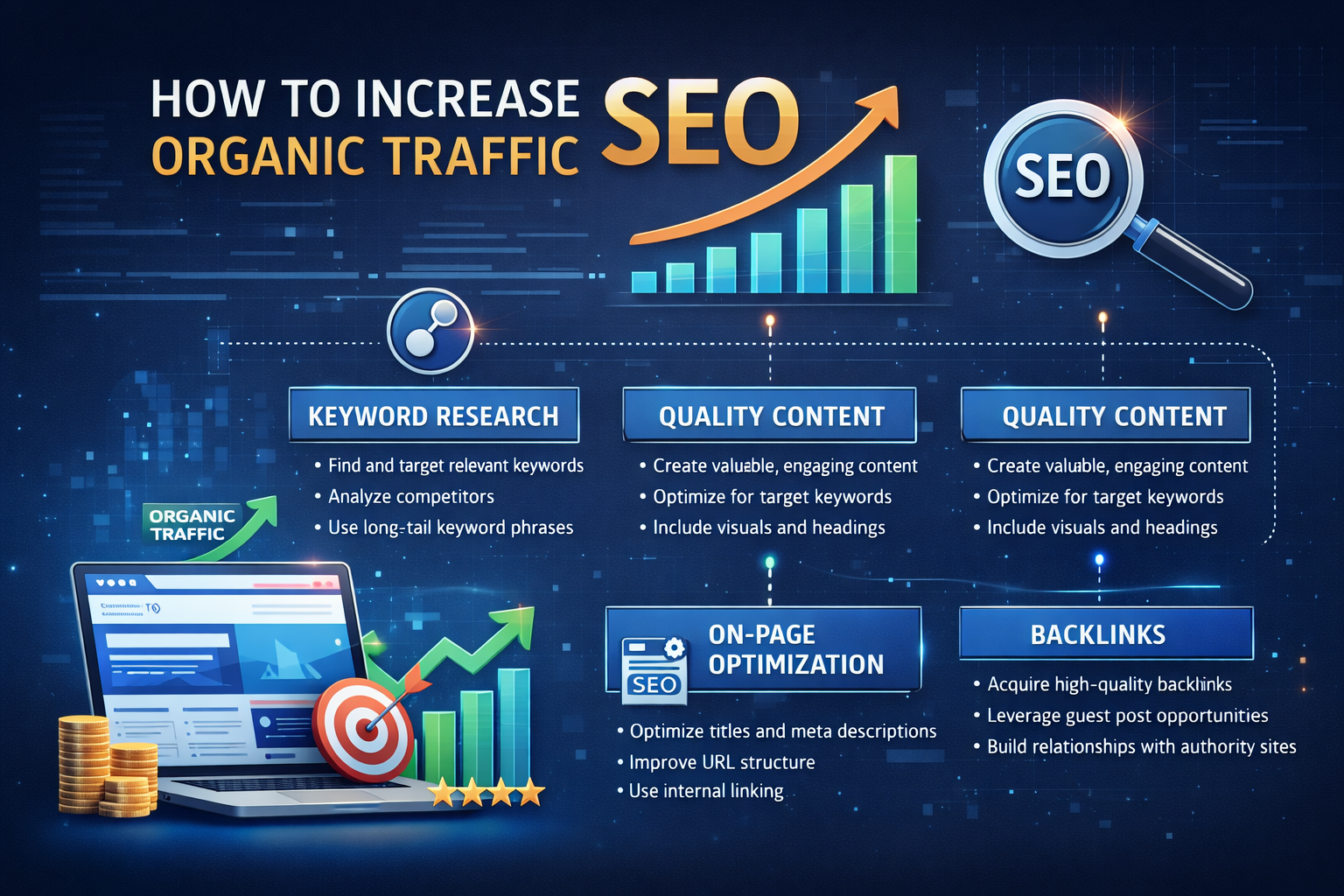
How to increase organic traffic using SEO
Introduction
Organic traffic is still the backbone of sustainable online growth in 2026. While paid ads can deliver instant visibility, it’s organic search that drives consistent, high-intent visitors without ongoing ad spend. Businesses that invest in SEO don’t just attract traffic they build long-term authority, trust, and compounding returns.
SEO today looks very different from what it was a few years ago. With AI Overviews, smarter algorithms, and a sharper focus on user intent and trust signals, search engines are prioritizing content that genuinely helps users not pages that simply game keywords. Google now evaluates who is creating the content, why it exists, and how well it solves a problem.
This guide breaks down exactly how to increase organic traffic using SEO in 2026. You’ll learn how to perform intent-driven keyword research, create high-quality content that aligns with E-E-A-T, optimize technical foundations, build authority through backlinks, and maintain rankings through ongoing optimization.
1. Understanding Modern SEO in 2026

How AI-Driven Search Is Changing Rankings
Search engines now use advanced AI systems to interpret meaning, context, and intent rather than matching exact keywords. AI Overviews summarize answers directly in the SERPs, rewarding content that is structured, authoritative, and easy to extract insights from. Pages that clearly answer questions, use structured data, and demonstrate expertise are far more likely to earn visibility.
SEO is no longer about ranking a single page it’s about becoming a trusted source across a topic.
The Role of User Intent in Organic Traffic Growth
User intent sits at the center of modern SEO. Google evaluates whether a page satisfies why a user searched, not just what they typed. Content that mismatches intent such as selling on an informational query will struggle to rank.
Successful SEO strategies align:
- The keyword
- The content format
- The depth of information
with the user’s stage in the decision-making journey.
Why E-E-A-T Is Non-Negotiable for Visibility
E-E-A-T (Experience, Expertise, Authoritativeness, Trustworthiness) has become a ranking filter, not just a guideline. Content that lacks credibility, real-world experience, or transparency is increasingly filtered out especially in competitive niches.
Signals like author bios, citations, case studies, original insights, and trustworthy backlinks all contribute to stronger organic visibility.
Organic Traffic vs Paid Traffic (Long-Term ROI)
Paid traffic stops the moment you stop paying. Organic traffic compounds.
SEO content can generate traffic for months or years with minimal ongoing cost, making it one of the highest-ROI digital marketing channels. While SEO requires upfront effort, its long-term returns outperform paid ads in cost efficiency, trust, and scalability.
2. Keyword Research That Actually Drives Traffic
2.1 Finding High-Intent Keywords
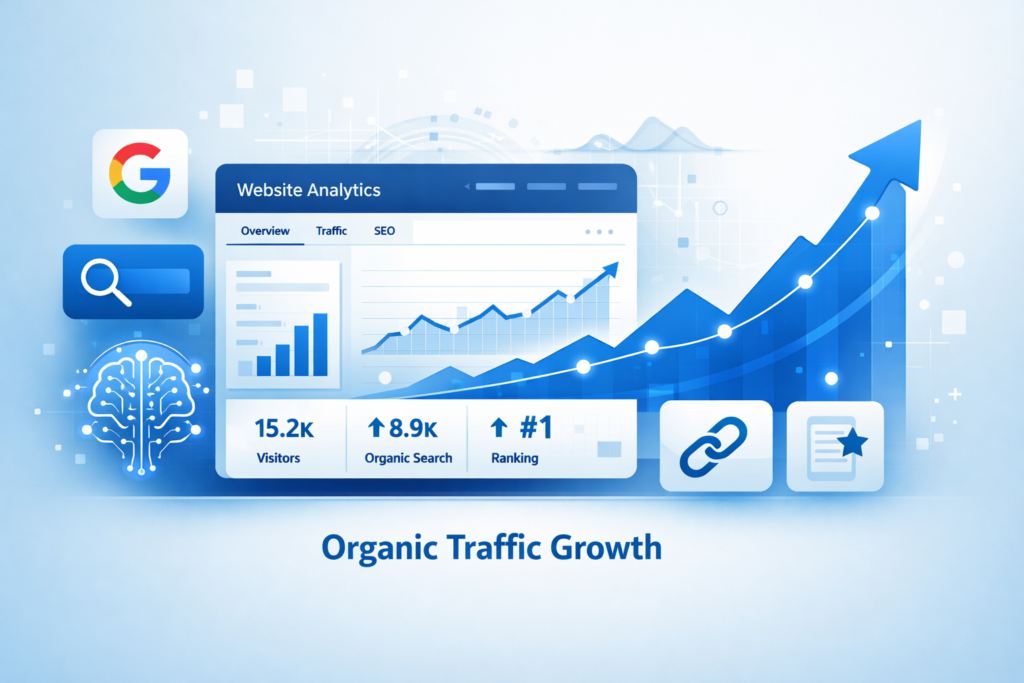
Effective keyword research starts with understanding intent, not search volume alone. Tools like Ahrefs, SEMrush, and Google Keyword Planner help uncover keywords that users actively search when they’re ready to learn, compare, or convert.
High-intent keywords often:
- Indicate a problem or solution
- Reflect buying or decision-stage behavior
- Have clearer conversion paths
Long-tail keywords are especially powerful. While they have lower search volume, they attract users who know exactly what they want which leads to higher engagement and conversions.
Examples of intent-driven keywords:
- “best SEO tools for small businesses”
- “how to increase organic traffic without ads”
- “technical SEO checklist for 2026”
- “Ahrefs vs SEMrush for keyword research”
2.2 Mapping Keywords to Search Intent
Every keyword falls into one of four intent categories:
- Informational – seeking knowledge or answers
- Commercial – researching options or comparisons
- Transactional – ready to buy or take action
- Navigational – looking for a specific brand or page
Aligning content with intent is critical. Blog posts work best for informational queries, comparison pages for commercial intent, landing pages for transactional keywords, and branded pages for navigational searches.
When content format matches intent, rankings improve and so does user satisfaction.
2.3 Topic Clusters & Pillar Pages
Modern SEO favors topical authority, not isolated articles. Topic clusters revolve around a central pillar page that covers a broad subject, supported by multiple in-depth cluster articles targeting related subtopics.
This structure:
- Strengthens internal linking
- Helps search engines understand topical relevance
- Improves crawl efficiency and indexation
- Increases rankings across multiple keywords
Internal links between pillar and cluster pages signal authority and guide users deeper into your content ecosystem.
2.4 Competitor Keyword Gap Analysis
Competitor analysis reveals opportunities you’re missing. By examining which keywords competitors rank for and you don’t you can identify content gaps, underserved topics, and emerging trends.
Keyword gap analysis helps you:
- Target proven keywords faster
- Discover new long-tail opportunities
- Build content that outperforms existing results
- Stay ahead of algorithm and market shifts
Instead of guessing, you build SEO strategies based on what’s already working and then improve on it.
3. Creating Content That Ranks and Converts
3.1 Publishing High-Quality, E-E-A-T Content
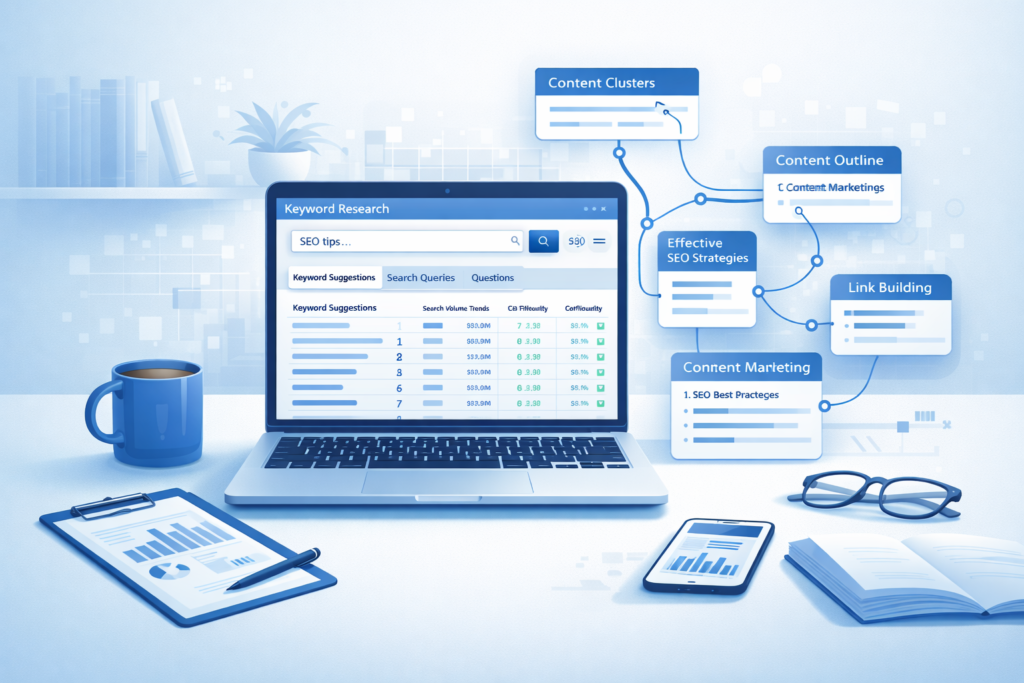
Search engines now prioritize who created the content as much as what the content says. To rank consistently, your content must clearly demonstrate experience and expertise, not just surface-level knowledge.
This means showing real-world involvement with the topic firsthand insights, practical examples, case studies, original data, or expert-backed opinions. Adding author bios, credentials, citations, and transparent sources strengthens trust and improves visibility, especially in competitive niches.
Certain content formats consistently outperform others in organic search:
- In-depth guides that fully cover a topic from beginner to advanced
- Case studies that show real results, metrics, and processes
- Original research and data-driven content that earns backlinks naturally
These formats not only rank well but also convert better because they establish authority and reduce user uncertainty.
3.2 On-Page SEO Optimization
On-page SEO ensures your content is readable for both users and search engines. Every page should be optimized without sacrificing natural flow.
Title tags and H1s should include the primary keyword and remain under recommended character limits to avoid truncation. Meta descriptions, while not a direct ranking factor, influence click-through rates by clearly explaining the page’s value.
A clear H2 and H3 hierarchy improves scannability and helps search engines understand topical structure. Each subheading should support the main topic while introducing semantic keyword variations naturally.
Semantic keywords related terms and phrases help AI systems understand context. Instead of repeating exact-match keywords, use variations organically within headings, paragraphs, and lists.
Internal linking is critical for rankings and conversions. Link to relevant pages using descriptive anchor text, prioritize pillar pages, and ensure every important page is reachable within a few clicks. This strengthens topical authority and distributes link equity across the site.
3.3 Optimizing for Featured Snippets & AI Overviews
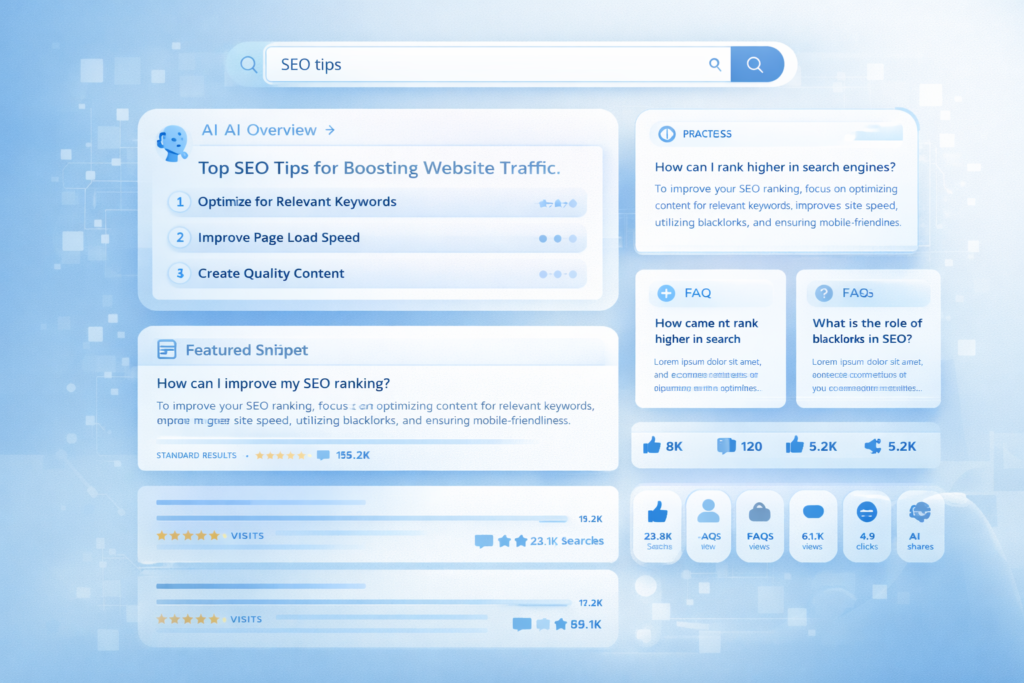
Featured snippets and AI Overviews dominate modern SERPs, often appearing above traditional results. To earn these placements, content must be clear, concise, and structured.
Directly answer questions in short paragraphs, bullet points, or numbered lists near the top of relevant sections. Avoid unnecessary filler and focus on clarity.
Adding FAQ sections helps capture “People Also Ask” queries and long-tail searches. Each question should target a specific query and provide a direct, value-driven answer.
To improve zero-click visibility:
- Use clear definitions
- Summarize key points
- Structure content with logical headings
- Implement schema markup where applicable
Even when users don’t click, strong visibility builds brand authority and increases trust over time.
4. Technical SEO Foundations for Organic Growth

4.1 Site Health & Crawlability
Technical SEO ensures search engines can crawl, index, and understand your site efficiently. Regular audits using Google Search Console help identify issues before they affect rankings.
Key tasks include fixing crawl errors, removing or redirecting broken links, and resolving duplicate content that dilutes authority. Pages blocked unintentionally or returning errors can prevent valuable content from ranking.
HTTPS is essential for security and trust, while proper indexability settings ensure important pages are accessible to search engines and excluded pages stay hidden.
4.2 Core Web Vitals & Performance Optimization
Page experience is a ranking factor, and Core Web Vitals measure how users perceive performance:
- LCP (Largest Contentful Paint): loading speed
- INP (Interaction to Next Paint): responsiveness
- CLS (Cumulative Layout Shift): visual stability
Improving these metrics requires compressing images, reducing unused scripts, enabling browser caching, and using fast hosting or CDNs.
With mobile-first indexing, performance on mobile devices matters most. Pages must load quickly, remain stable, and be fully usable on smaller screens to maintain organic visibility.
4.3 Structured Data & Architecture
Clear site architecture helps both users and crawlers navigate your content efficiently. XML sitemaps guide search engines to important pages, while robots.txt controls crawl behavior.
Implementing schema markup enhances SERP appearance with rich results such as FAQs, reviews, and star ratings, improving visibility and click-through rates.
A shallow site structure where key pages are accessible within three clicks from the homepage improves crawl efficiency, indexing speed, and overall user experience.
5. Off-Page SEO and User Experience Optimization
5.1 Building High-Quality Backlinks
Backlinks remain one of the strongest ranking signals, but in 2026, quality outweighs quantity by a wide margin. Search engines evaluate relevance, authority, and editorial intent not just link counts.
Guest posting works best when focused on authoritative, niche-relevant websites with real audiences. The goal isn’t link placement, but value-driven contributions that position your brand as an expert.
Broken link building involves identifying dead links on reputable sites and offering your content as a replacement. This strategy earns contextual, high-quality backlinks while helping site owners improve their content.
Creating link-worthy assets is the most sustainable approach. Original research, in-depth guides, free tools, and data-driven studies naturally attract links over time. These assets continue earning backlinks without constant outreach.
Ultimately, a few links from trusted, relevant sources outperform dozens of low-quality or unrelated links. Authority compounds, and search engines reward consistency.
5.2 UX Signals That Boost Rankings
User experience directly influences organic rankings through engagement signals. Pages that are easy to read, navigate, and interact with keep users engaged longer.
Clean layouts, readable fonts, logical spacing, and mobile-friendly designs reduce cognitive load and improve content consumption. Avoid intrusive pop-ups that disrupt the reading experience.
Clear calls-to-action (CTAs) guide users toward the next step whether it’s reading another article, subscribing, or converting while reducing friction across the site.
Key engagement metrics like dwell time, bounce rate, and pages per session signal content quality to search engines. When users stay longer and interact more, rankings tend to improve.
5.3 Content Promotion Channels
Even the best content needs initial visibility. Strategic promotion accelerates indexing, engagement, and backlink acquisition.
Social media amplification helps distribute content to targeted audiences and drives early traffic signals. Sharing insights, snippets, and visuals increases reach without relying on algorithms alone.
Email newsletters re-engage existing audiences, driving repeat traffic and stronger engagement metrics. Subscribers often become your highest-quality visitors.
Forums and community platforms allow you to share content where users are actively seeking answers. When done authentically, community sharing builds trust, referral traffic, and authority.
6. Ongoing SEO Maintenance & Optimization
6.1 Updating and Refreshing Existing Content
SEO isn’t a one-time effort. Regular content updates are essential to maintain rankings as algorithms and user expectations evolve.
Refreshing outdated content by updating statistics, facts, examples, and visuals keeps pages relevant and competitive. Even minor updates can trigger ranking improvements.
Matching content to updated search intent is critical. If user expectations change, content structure and messaging must evolve with them.
Content pruning and consolidation remove or merge underperforming pages, strengthening overall site authority and improving crawl efficiency.
6.2 Tracking SEO Performance & ROI
Measuring performance ensures your SEO efforts drive real business results. Key metrics to monitor include:
- Organic sessions and traffic trends
- Keyword rankings and visibility
- Click-through rate (CTR)
- Conversions and revenue from organic traffic
Tools like Google Analytics and Google Search Console provide insights into user behavior, indexing issues, and keyword performance.
SEO is a long-term investment. Meaningful gains typically appear within 3 to 12 months, depending on competition, consistency, and site authority.
6.3 Leveraging User-Generated Content
User-generated content (UGC) adds authenticity, freshness, and keyword diversity to your site. Reviews, Q&A sections, and testimonials create trust while expanding content depth naturally.
UGC often contains long-tail, conversational keywords that align perfectly with modern search behavior and AI-driven queries.
Implementing schema markup for reviews and ratings enables rich results like star ratings in SERPs, improving visibility and click-through rates while reinforcing trust.
7. Common SEO Mistakes That Kill Organic Traffic
Even strong SEO strategies can fail if foundational mistakes go unchecked. In 2026, search engines are far better at detecting low-value tactics and penalties are often algorithmic, silent, and long-lasting.
Keyword stuffing and thin content remain among the most damaging errors. Overloading pages with repetitive keywords or publishing shallow content signals low quality and poor user experience. Google’s Helpful Content and AI-driven systems now demote pages that lack depth or originality.
👉 https://developers.google.com/search/docs/fundamentals/creating-helpful-content
Ignoring technical SEO can prevent even great content from ranking. Crawl errors, slow load times, poor mobile performance, and indexing issues quietly block organic growth.
👉 https://search.google.com/search-console
👉 https://pagespeed.web.dev/
Poor internal linking weakens topical authority and leaves valuable pages isolated. Without a clear structure, search engines struggle to understand relevance and hierarchy.
👉 https://ahrefs.com/blog/internal-links/
Chasing backlinks without relevance is another critical mistake. Links from unrelated or low-authority sites offer little value and can harm trust signals. Quality, context, and authority matter far more than volume.
👉 https://developers.google.com/search/docs/advanced/guidelines/link-schemes
8. Tools and Resources to Increase Organic Traffic
Using the right tools turns SEO from guesswork into a measurable, scalable system.
Keyword Research Tools
- Ahrefs – Keyword research, competitor analysis, backlink data
👉 https://ahrefs.com/ - SEMrush – Keyword gaps, topic research, SERP analysis
👉 https://www.semrush.com/ - Google Keyword Planner – Free keyword ideas and search volume
👉 https://ads.google.com/home/tools/keyword-planner/
SEO Audit Tools
- Google Search Console – Indexing, crawl errors, Core Web Vitals
👉 https://search.google.com/search-console - Screaming Frog SEO Spider – Technical audits and site crawling
👉 https://www.screamingfrog.co.uk/seo-spider/ - Sitebulb – Visual technical SEO audits
👉 https://sitebulb.com/
Analytics and Tracking Platforms
- Google Analytics 4 – Organic traffic, engagement, conversions
👉 https://analytics.google.com/ - MonsterInsights – GA4 insights inside WordPress
👉 https://www.monsterinsights.com/ - Google Looker Studio – SEO reporting and dashboards
👉 https://lookerstudio.google.com/
UGC and Review Platforms
- Yotpo – Reviews, ratings, UGC, and schema support
👉 https://www.yotpo.com/ - Trustpilot – Brand reviews and trust signals
👉 https://www.trustpilot.com/ - Bazaarvoice – Scalable UGC and customer reviews
👉 https://www.bazaarvoice.com/
9. Recommended SEO Guides & Expert Resources
These expert-backed resources provide up-to-date strategies and real-world insights for growing organic traffic.
- Yotpo: 7 SEO Strategies for 2026
https://www.yotpo.com/resources/ - WebFX: 13 SEO Tips to Increase Organic Traffic
https://www.webfx.com/blog/seo/ - 310 Creative: 18 SEO Techniques That Work
https://310creative.com/blog/ - MonsterInsights SEO Tactics Guide
https://www.monsterinsights.com/seo/ - Semrush SEO Guides and Academy
https://www.semrush.com/blog/
https://www.semrush.com/academy/
10. Related SEO Guides
Explore these related topics to deepen your SEO strategy and accelerate growth:
- Common SEO mistakes that kill organic traffic
https://developers.google.com/search/docs/advanced/guidelines/webmaster-guidelines - Free tools for keyword research and SEO audits
https://ahrefs.com/free-seo-tools - SEO case studies with 2× traffic growth examples
https://www.semrush.com/case-studies/ - How to build high-quality backlinks in 2026
https://ahrefs.com/blog/link-building/ - Measuring and tracking organic traffic ROI
https://www.monsterinsights.com/seo-roi/
Conclusion
Increasing organic traffic using SEO in 2026 requires a complete, long-term framework not shortcuts. Successful strategies combine intent-driven keyword research, high-quality E-E-A-T content, strong technical foundations, authoritative backlinks, and consistent optimization.
Search engines now reward brands that demonstrate trust, expertise, and real value to users. Those who chase quick wins often see temporary gains followed by long-term decline.
Consistency beats shortcuts every time. Publishing helpful content, maintaining technical health, earning relevant links, and tracking performance month after month is what drives sustainable growth.
If you treat SEO as a system not a tactic organic traffic becomes one of the most powerful, cost-effective growth channels your business can own.
Frequently Asked Questions (FAQ)
1. How long does it take to increase organic traffic using SEO?
SEO is a long-term strategy. Most websites begin seeing noticeable improvements within 3 to 6 months, while competitive niches may take 6 to 12 months. Results depend on site authority, competition, content quality, and consistency.
2. Is SEO still effective in 2026 with AI-powered search results?
Yes, SEO is more important than ever. AI Overviews and advanced algorithms prioritize high-quality, trustworthy, and intent-focused content. Websites that follow E-E-A-T principles and optimize for user experience continue to gain organic visibility.
3. What is the best way to choose keywords for organic traffic?
The best approach is intent-driven keyword research. Focus on long-tail keywords that match informational, commercial, or transactional intent rather than chasing high-volume terms alone. Tools like Ahrefs, SEMrush, and Google Keyword Planner help identify high-conversion opportunities.
4. Do backlinks still matter for SEO rankings?
Yes, backlinks remain a major ranking factor. However, quality and relevance matter more than quantity. Links from authoritative, niche-relevant websites carry significantly more value than large volumes of low-quality backlinks.
5. Can small websites compete with big brands in organic search?
Absolutely. Small websites can compete by targeting long-tail keywords, building topical authority through content clusters, and delivering better answers than competitors. Consistent publishing and strong user experience often outperform brand size.