
-
- No Comments
- February 21, 2026

How to optimize images for SEO
1. Introduction
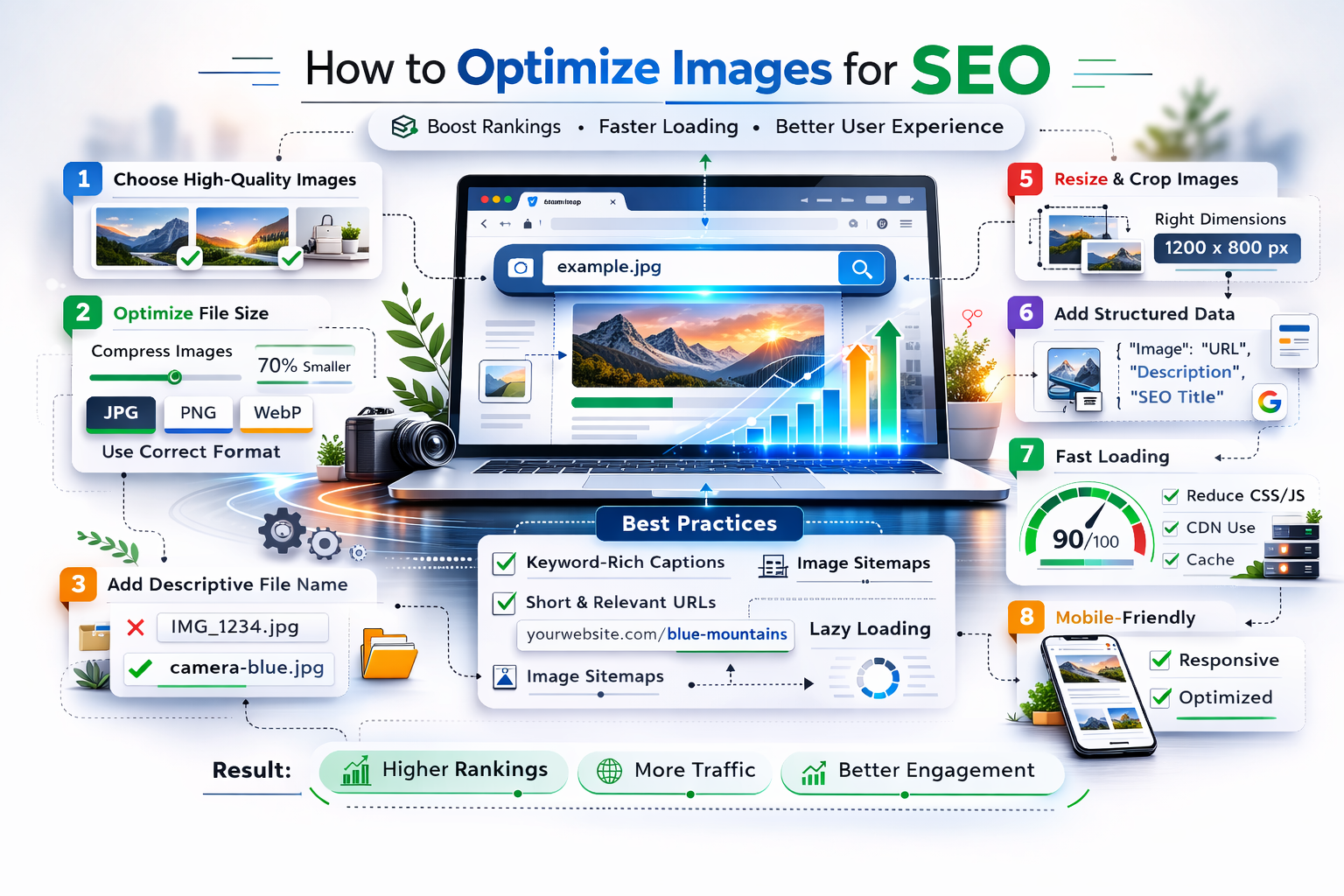
In modern SEO, images are no longer decorative extras they’re ranking assets. Every image on your site is a data point for search engines, a performance signal for algorithms, and a usability factor for humans. When optimized correctly, images don’t just support your content they actively amplify it.
Why Image Optimization Matters in Modern SEO
Search engines now interpret visual content with increasing intelligence. Images influence how pages are indexed, how fast they load, how accessible they are, and how visible they become across multiple search surfaces. An unoptimized image slows pages down, blocks crawlers, hurts UX, and limits discoverability. An optimized image does the opposite — it strengthens your SEO ecosystem.
Impact on Rankings, Traffic, UX, and Discoverability
Image optimization directly affects:
- Rankings through performance and page experience signals
- Traffic via Google Images and visual search results
- User experience through faster load times and better usability
- Discoverability across SERPs, rich results, and visual platforms
When images are optimized, they become traffic channels — not page weight.
Relationship Between Images, Speed, and Visibility
Speed is SEO gravity. Heavy images drag your site down. Compressed, properly formatted, responsive images make pages lighter, faster, and easier to crawl. That speed advantage improves visibility, strengthens mobile performance, and boosts engagement — creating a compound SEO effect where performance fuels rankings and rankings fuel traffic.
What This Guide Will Cover
This guide breaks image SEO into a clear, practical system:
- How images influence SEO performance
- How optimization improves speed and rankings
- How images impact visibility in search
- How to turn visuals into traffic drivers
- How to build a scalable image SEO strategy
No fluff. No guesswork. Just a clean framework for turning images into ranking assets.
2. How Image Optimization Impacts SEO Performance
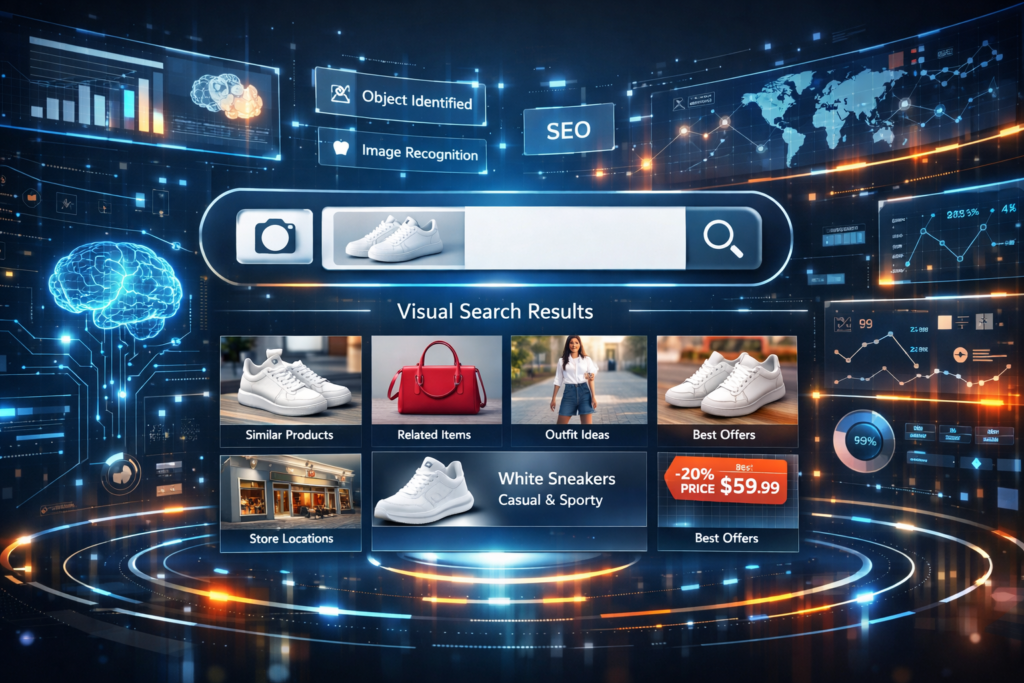
Image optimization doesn’t work in isolation — it connects to every major SEO pillar: performance, accessibility, discoverability, engagement, and trust signals.
Site Speed and Core Web Vitals
Images are the largest contributors to page weight. Optimized images reduce load times, improve rendering speed, and directly influence performance metrics tied to rankings. Faster pages lead to stronger performance signals, better mobile experience, and higher crawl efficiency.
Accessibility and Usability
Properly optimized images improve accessibility for screen readers, assistive technologies, and visually impaired users. This improves usability, inclusivity, and overall site quality signals — all of which contribute to long-term SEO trust and authority.
Visibility in Image Search Results
Optimized images don’t just rank in web search — they rank in image search ecosystems. This creates an additional traffic stream that most sites ignore, unlocking organic visibility beyond traditional blue-link results.
Rich Results and Enhanced SERP Appearance
Images power visual enhancements in search results — rich cards, featured results, product displays, and enhanced snippets. Optimized visuals increase click-through rates and make listings more competitive in crowded SERPs.
Indirect Ranking Benefits
Image optimization improves:
- Engagement → users stay longer
- Dwell time → stronger behavioral signals
- Bounce rate → improved session quality
- Scroll depth → higher content interaction
These behavioral signals don’t just improve UX — they strengthen SEO authority and trust at scale.
3. Choosing the Right Image Formats
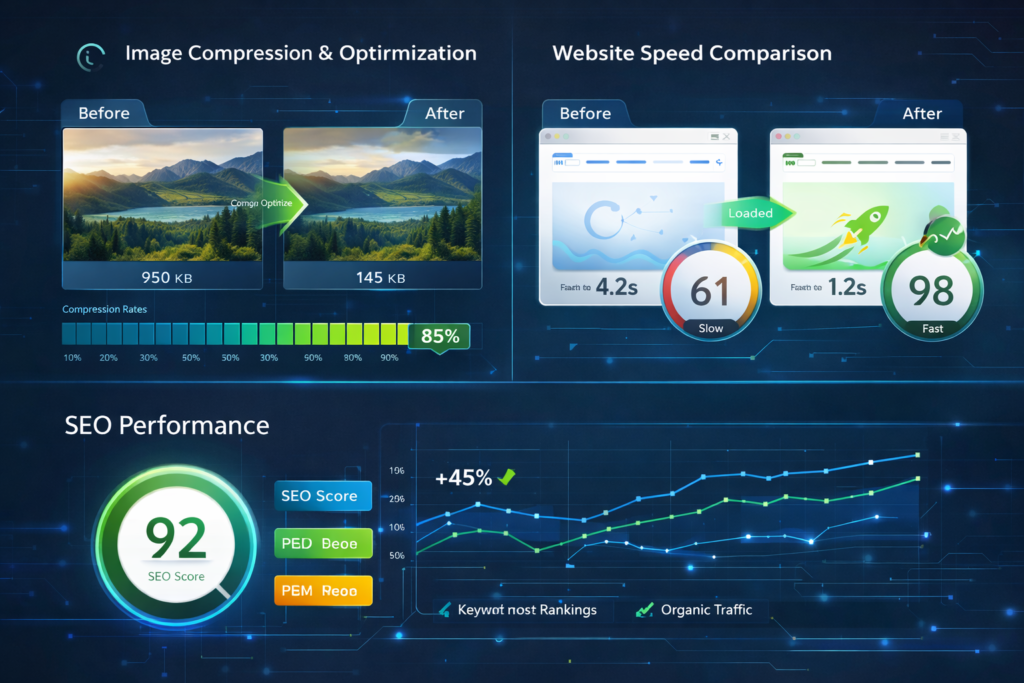
Image format isn’t a design decision — it’s an SEO decision. The file type you choose directly affects page speed, visual quality, crawlability, and ranking performance. The wrong format bloats your pages. The right format sharpens both performance and visibility.
3.1 Traditional Formats
JPEG
Best for photographs and complex visuals. JPEG offers strong compression with acceptable quality loss, making it ideal for blogs, featured images, and large content visuals where performance matters more than pixel perfection.
PNG
Used for graphics requiring transparency, sharp edges, and high detail. PNG files are heavier, making them less suitable for large photos but valuable for logos, UI elements, and branded graphics.
GIF
Works for simple animations and lightweight motion visuals. However, GIFs are inefficient for SEO due to large file sizes and limited compression capabilities.
SVG
Vector-based and resolution-independent. Perfect for icons, logos, and interface elements. SVGs are lightweight, scalable, and performance-friendly — making them ideal for UX and SEO simultaneously.
3.2 Modern Formats
WebP
Designed for the modern web. WebP delivers high-quality visuals at significantly smaller file sizes compared to JPEG and PNG. It improves page speed without sacrificing visual clarity, making it a top-tier SEO format.
AVIF
Next-generation compression. AVIF offers even smaller file sizes than WebP with superior quality retention. It’s ideal for performance-first websites aiming for maximum speed and SEO efficiency.
3.3 Format Selection Strategy
When to Use Each Format
- Photos → JPEG, WebP, AVIF
- Graphics → PNG, SVG, WebP
- Icons & UI → SVG
- Animations → WebP animation, lightweight GIF
Quality vs Compression Balance
SEO performance lives in balance. Over-compression destroys visual trust. Under-compression destroys speed. The goal is visual clarity with minimal file weight — not perfection, but performance.
SEO Performance Implications
Correct formats:
- Improve load speed
- Reduce bounce rates
- Enhance crawl efficiency
- Strengthen mobile performance
- Support Core Web Vitals
- Increase ranking stability
Formats aren’t technical details — they’re ranking tools.
4. SEO-Friendly Image Naming Strategy

Filenames are metadata. Search engines read them. Index them. Use them for contextual understanding. Generic filenames waste SEO potential. Optimized filenames create semantic signals.
Why Filenames Matter for Search Engines
Image filenames help search engines interpret what an image represents. They provide context before the image is even rendered, strengthening indexing and relevance signals.
Keyword Placement Best Practices
Use short, descriptive, keyword-rich filenames that reflect the image’s actual content. Keep it natural. Keep it relevant. Keep it readable.
Hyphen Usage vs Underscores
Hyphens act as word separators. Underscores do not.
seo-image-optimization.jpg → readable
seo_image_optimization.jpg → less interpretable
Avoiding Generic File Names
Never use:
- IMG_001.jpg
- photo1.png
- design-final-final.png
These kill semantic value and SEO clarity.
Naming Conventions for Scale
Use consistent structures:
- category-topic-description.jpg
- service-keyword-context.jpg
- brand-feature-purpose.jpg
Scalable naming = scalable SEO.
5. Alt Text Optimization (Accessibility + SEO)
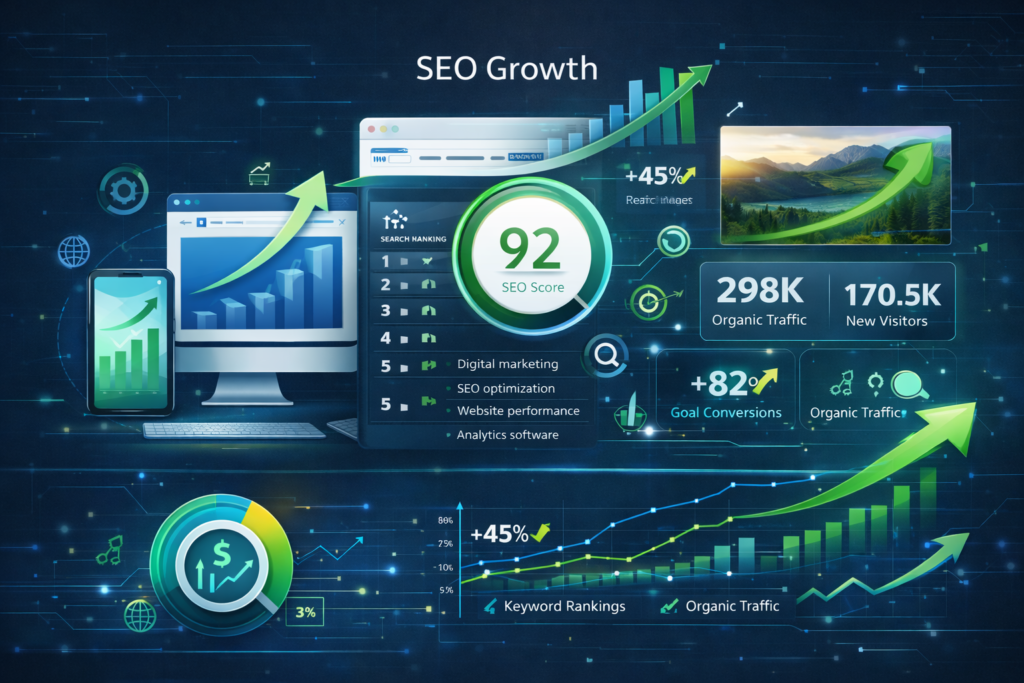
Alt text is where accessibility and SEO intersect. It’s not just for screen readers — it’s for search engines, image indexing systems, and visual discovery algorithms.
5.1 What Alt Text Really Does
Accessibility Role
Alt text allows screen readers to describe images to visually impaired users, making content inclusive and usable for everyone.
Search Engine Interpretation
Alt text helps search engines understand image content using text-based context, strengthening relevance and indexing accuracy.
Image Search Visibility
Well-written alt text increases the likelihood of ranking in image search results, turning visuals into organic traffic sources.
5.2 Writing High-Quality Alt Text
Descriptive Structure
Describe what the image shows clearly and simply.
Natural Keyword Integration
Include keywords only where they naturally belong. No forcing. No stuffing. No manipulation.
Context Relevance
Alt text should match the surrounding content’s topic and intent, not just the image itself.
Avoiding Keyword Stuffing
Alt text is not a keyword field — it’s a description field. Write for humans first, algorithms second.
5.3 Alt Text Mistakes to Avoid
Over-Optimization
Stuffing keywords destroys readability and SEO trust signals.
Spam Patterns
Repeating the same alt text across multiple images weakens relevance and triggers low-quality signals.
Irrelevant Descriptions
Alt text that doesn’t match the image or page topic confuses both users and search engines.
6. Image Compression for Speed Optimization
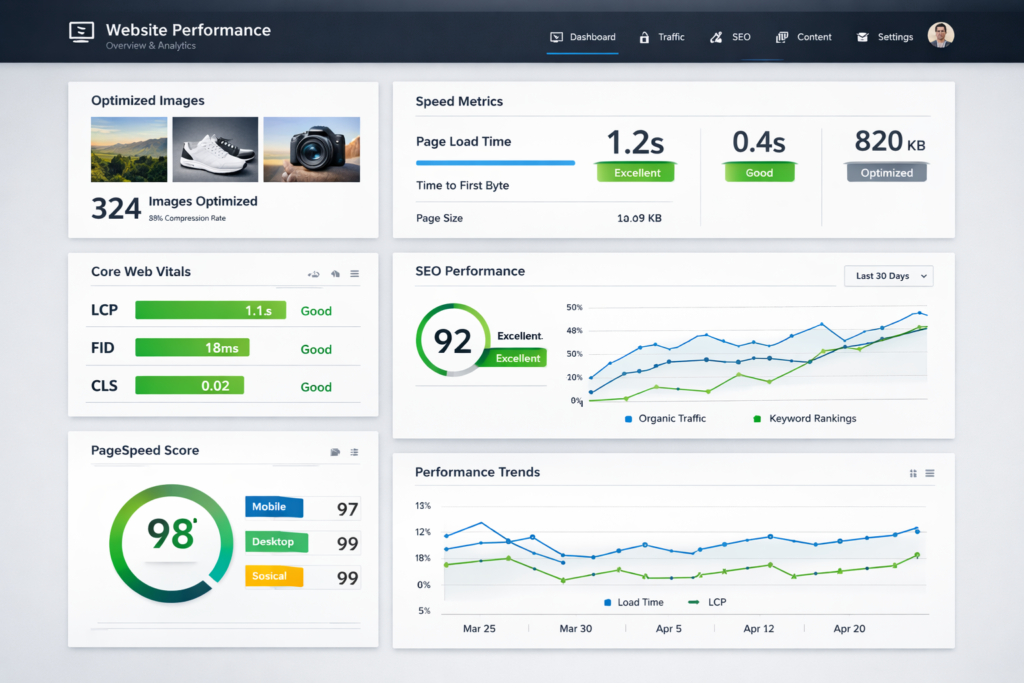
Image compression isn’t a technical afterthought — it’s a ranking accelerator. Heavy images slow pages. Slow pages lose users. Lost users send negative signals to search engines. Compression sits at the core of performance SEO.
6.1 Why Compression Matters for SEO
Load Time Impact
Images make up the majority of page weight. Compressing them reduces load time dramatically, improving rendering speed, interaction readiness, and overall performance metrics that search engines measure.
UX Impact
Faster images = smoother scrolling, quicker interactions, lower frustration. Users don’t wait for slow pages — they leave them. Compression directly protects engagement and retention.
Crawl Efficiency
Lightweight pages are easier for bots to crawl, render, and index. Faster delivery improves crawl budgets and indexing frequency, especially on large or content-heavy sites.
6.2 Compression Standards
File Size Targets
Performance-first sites aim for images under 100KB wherever possible, without destroying visual clarity. Smaller files = faster delivery = stronger SEO signals.
Resolution Limits
Images should never exceed display requirements. Oversized images waste bandwidth, slow loading, and offer zero SEO benefit. Precision beats excess.
Quality Thresholds
Compression must preserve trust. Blurry, pixelated visuals damage credibility and UX. The goal is perceived quality, not technical perfection.
6.3 Speed Testing & Validation
Performance Testing Workflow
Compression without testing is guesswork. Speed optimization requires measurement, iteration, and verification.
Optimization Verification
Compressed images must be tested for load time, visual clarity, and rendering behavior across devices.
Page Speed Impact Analysis
Every optimization should show measurable gains in:
- Load time
- Interaction readiness
- Rendering stability
- Performance metrics
- User experience
Compression isn’t cosmetic — it’s measurable SEO leverage.
7. Responsive Images & Mobile SEO
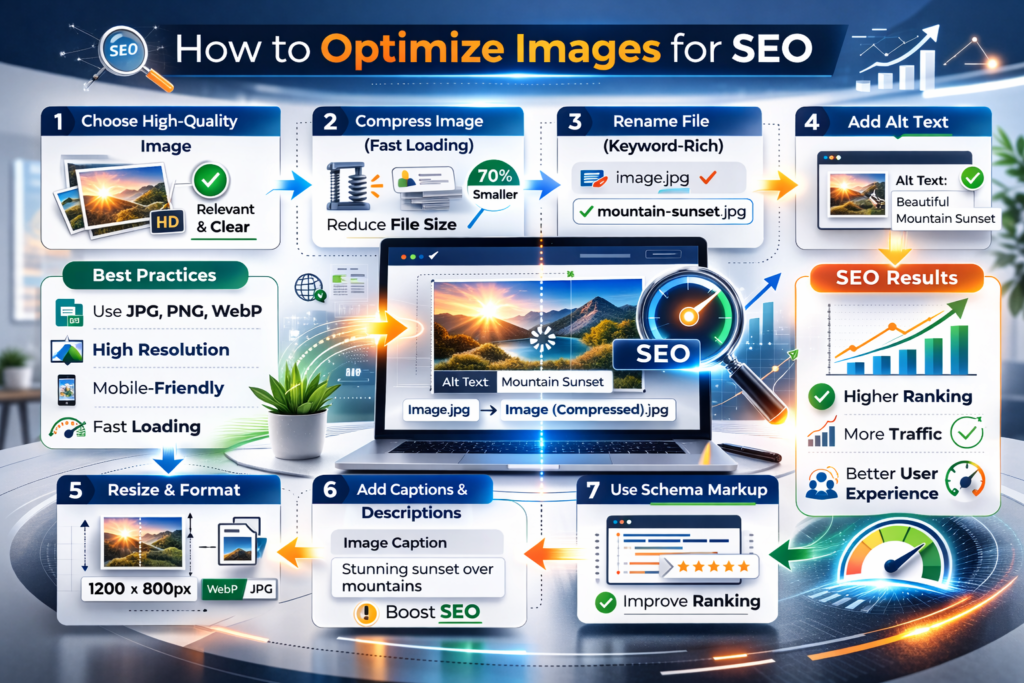
Modern SEO is mobile-first. If your images aren’t responsive, your rankings are vulnerable. Device diversity demands adaptive delivery.
7.1 Responsive Image Concepts
Device-Based Delivery
Different devices need different image sizes. Desktop, tablet, and mobile shouldn’t load the same heavy assets.
Adaptive Image Loading
Images should scale dynamically based on screen size, resolution, and device capability — delivering performance, not excess weight.
7.2 Implementation Structure
Responsive Image Syntax
Modern image delivery uses multiple size sources to serve the best version for each device environment.
Fallback Handling
Every responsive system needs safe defaults to ensure compatibility and reliability across browsers and platforms.
Mobile-First Optimization
Optimization starts with mobile — not desktop. Mobile performance dictates rankings, visibility, and indexing priority.
7.3 SEO Impact on Mobile Rankings
Core Web Vitals
Responsive images improve loading performance, stability, and interaction metrics that directly influence rankings.
UX Signals
Better mobile visuals reduce bounce, improve engagement, and strengthen behavioral SEO signals.
Mobile Indexing Benefits
Search engines prioritize mobile experience. Responsive images improve crawlability, rendering, and indexing accuracy in mobile-first systems.
8. Proper Image Embedding for Indexing
How images are embedded determines whether they’re discoverable or invisible to search engines.
HTML Embedding vs CSS Backgrounds
Images embedded in HTML are indexable. Images used as CSS backgrounds are often invisible to crawlers. If search engines can’t see it, they can’t rank it.
Crawlability Factors
Proper embedding allows bots to fetch, render, interpret, and index images correctly — enabling SEO visibility.
Indexation Signals
Structured embedding creates clear signals for:
- Discovery
- Interpretation
- Classification
- Ranking
Visibility in Search Engines
Correct embedding turns images into searchable assets instead of hidden decorations — unlocking organic visibility instead of wasting it.
9. Image Sitemaps for Discoverability
Image sitemaps act as discovery engines for visual content. They help search engines find, interpret, and index images that might otherwise remain hidden.
9.1 Why Image Sitemaps Matter
Crawl Efficiency
Sitemaps reduce friction in discovery. They guide crawlers directly to image assets, improving indexing speed and accuracy.
CDN Indexing
Images served through content delivery networks often exist outside standard page structures. Image sitemaps reconnect those assets to your SEO ecosystem.
Large Site Scaling
For content-heavy platforms, blogs, and ecommerce sites, image sitemaps become essential for managing scale and discoverability.
9.2 Image Sitemap Structure
Required Fields
A strong image sitemap includes image URLs, captions, titles, and page associations — creating clarity for indexing systems.
Metadata Optimization
Metadata strengthens relevance signals and contextual understanding, helping search engines classify images accurately.
Discovery Signals
Image sitemaps create direct discovery paths that bypass crawl limitations and indexing bottlenecks.
9.3 Automation Methods
CMS Automation
Modern CMS platforms allow automated sitemap generation, removing manual complexity.
Plugin Integration
Plugins streamline image discovery, updates, and indexing workflows.
Workflow Setup
Automation ensures new images are indexed consistently, efficiently, and at scale — without human bottlenecks.
10. Structured Data & Rich Image Results
Structured data turns images into search-enhanced assets instead of static visuals.
10.1 Role of Structured Data in Image SEO
Rich Results
Structured data enables enhanced image displays in search results, improving visibility and click-through rates.
Enhanced Visibility
Images become part of visual-rich SERP features instead of basic listings.
Search Appearance
Proper markup improves how images are presented, categorized, and ranked in search ecosystems.
10.2 Image Fields in Schema Markup
Required Image Attributes
Structured data requires properly defined image properties to qualify for enhanced results.
Validation Structure
Correct implementation ensures eligibility for visual enhancements and rich results.
SEO Enhancement Benefits
Schema-supported images gain:
- Better visibility
- Higher CTR
- Rich result eligibility
- Enhanced SERP presence
- Stronger ranking potential
11. Contextual Image Optimization
Images don’t rank in isolation context gives them meaning. Search engines interpret visuals through the content that surrounds them. Without context, images are just files. With context, they become semantic assets.
Text–Image Relationship
Images should reinforce the message of the text, not decorate it. When visuals align with written content, they strengthen topical relevance and semantic clarity.
Semantic Relevance
Search engines connect images to topics through language patterns, page structure, and surrounding keywords. The closer the semantic alignment, the stronger the ranking signal.
Page-Level SEO Signals
Contextual placement strengthens:
- Topical authority
- Content relevance
- Page intent clarity
- Indexing confidence
Metadata Alignment
Titles, descriptions, headings, alt text, and filenames must speak the same semantic language. Alignment creates trust. Mismatch creates confusion.
Content–Image Coherence
When images and content tell the same story, search engines understand the page faster, index it more accurately, and rank it more confidently.
12. Performance Testing & Optimization Workflow
Optimization without measurement is guesswork. SEO performance requires systems, not assumptions.
Speed Testing Process
Every image optimization should be validated through real performance testing, not theory.
UX Validation
Performance isn’t just speed — it’s how users experience the page. Smooth loading, visual stability, and interaction readiness matter.
SEO Performance Tracking
Track:
- Load time improvements
- Engagement metrics
- Bounce rates
- Image visibility
- Indexing performance
- Ranking movement
Optimization Cycles
Optimization is iterative:
Test → Optimize → Measure → Refine → Repeat
Continuous Improvement Model
Image SEO isn’t a one-time fix — it’s a performance system. Continuous refinement creates compounding gains over time.
13. Common Image SEO Mistakes to Avoid
Over-Compression
Destroying visual quality damages trust, UX, and brand perception.
Missing Alt Text
Eliminates accessibility and search interpretation value.
Poor Filenames
Wastes semantic SEO potential before indexing even begins.
Wrong Formats
Bloats pages and kills performance efficiency.
Lazy Loading Misuse
Incorrect implementation blocks indexing and delays content rendering.
Indexing Blockers
Robots rules, script loading, and rendering issues that prevent discovery.
Incorrect Embedding
Invisible images don’t rank — they disappear from search ecosystems.
Mistakes don’t just slow growth — they silently suppress visibility.
14. Tools for Image SEO Automation
Scaling image SEO manually is inefficient. Automation turns optimization into infrastructure.
Compression Automation
Bulk compression systems reduce workload and ensure performance consistency.
Format Conversion
Automated conversion pipelines enable modern formats without manual effort.
Alt Text Generation
AI-assisted systems streamline accessibility and SEO optimization at scale.
Sitemap Automation
Automated discovery ensures consistent indexing and visibility.
Performance Monitoring
Continuous tracking protects rankings and performance stability.
Bulk Optimization Workflows
Enterprise-level image SEO requires systems, not uploads. Automation transforms image optimization into a scalable growth engine.
15. Lazy Loading Best Practices
Lazy loading is a performance weapon — when used correctly. Used incorrectly, it becomes an indexing risk. The difference is implementation discipline.
When to Lazy Load
Lazy load below-the-fold images, secondary visuals, and non-critical assets. Never lazy load primary content images, hero visuals, or above-the-fold elements that define page intent.
SEO-Safe Implementation
Lazy loading must preserve crawlability. Images should remain discoverable in the DOM, accessible to bots, and indexable without JavaScript dependency failures. SEO safety comes from visibility, not delay.
UX Balance
Performance means nothing if the experience feels broken. Lazy loading should feel invisible to users — no blank spaces, no layout shifts, no jarring content loads.
Performance Benefits
Correct lazy loading reduces initial payload size, improves load time, strengthens interaction speed, and protects performance metrics that influence rankings.
Indexing Safety
Search engines must be able to see and render lazy-loaded images. If bots can’t access them, they don’t exist in search. Visibility always comes before performance tricks.
16. Image SEO Case Studies & Growth Examples
Image optimization doesn’t just improve pages — it transforms performance systems.
Traffic Growth Patterns
Sites that optimize images consistently unlock new traffic channels through visual search, image discovery, and SERP enhancements.
Visibility Improvements
Optimized visuals increase presence across multiple search surfaces — standard SERPs, image results, and rich formats.
Speed Impact Results
Compressed, responsive images drive measurable performance gains that translate directly into ranking improvements.
Conversion Influence
Faster pages and clearer visuals reduce friction, improve trust, and increase conversion probability.
Engagement Metrics
Optimized images improve:
- Session duration
- Scroll depth
- Interaction rates
- Content retention
- User satisfaction
Image SEO doesn’t just grow traffic — it improves user quality.
17. Advanced Image SEO Strategies
Modern image SEO is becoming intelligent, automated, and scalable.
AI Image Optimization
AI-driven systems optimize compression, formats, metadata, and delivery dynamically — removing manual bottlenecks.
Programmatic Image SEO
Large-scale sites generate and optimize images at scale using automated logic, templates, and rulesets.
CDN Optimization
Global delivery networks optimize speed, caching, and regional performance for image-heavy sites.
Edge Delivery Optimization
Edge computing enables ultra-fast image processing and delivery closer to the user — reducing latency and load times.
Automation Pipelines
End-to-end automation transforms image SEO into infrastructure:
Upload → Optimize → Compress → Convert → Deliver → Monitor → Improve
This is where image SEO becomes a growth system, not a task list.
18. Future of Image SEO
Image SEO is shifting from optimization to intelligence.
AI Search Evolution
Search engines are learning to interpret visuals directly — meaning image quality, context, and structure will matter more than metadata alone.
Visual Search Growth
Search is becoming visual-first. Users search with images, not keywords. Discovery is becoming visual, not textual.
Multimodal Indexing
Search systems now process text, images, video, and audio together — meaning image SEO must integrate with content strategy, not exist separately.
Image-Based SERPs
Search results are becoming visual experiences, not text lists. Images are no longer supporting content — they are content.
SEO Strategy Adaptation
Future-proof SEO means building visual optimization into core strategy, not treating it as technical cleanup.
The future of SEO is not just searchable.
It’s visible.
19. Conclusion
Image SEO is no longer optional it’s strategic infrastructure.
In a search landscape driven by speed, experience, and visual discovery, images have moved from supporting content to driving performance.
Strategic Importance of Image SEO
Images now influence rankings, visibility, engagement, accessibility, and trust signals. Optimizing them isn’t technical hygiene it’s competitive positioning.
Long-Term Ranking Benefits
Well-optimized images compound over time:
- Faster pages
- Stronger UX signals
- Better crawlability
- Higher engagement
- Greater visibility
- Stable ranking performance
This isn’t short-term SEO — it’s durable authority building.
Growth Opportunities
Image SEO unlocks:
- New traffic channels (image search + visual discovery)
- SERP enhancements
- Rich results visibility
- Higher CTR
- Multi-surface presence
- Performance-driven conversions
Images stop being page weight — they become growth assets.
Competitive Advantage Narrative
Most websites ignore image SEO or treat it as compression alone. That gap creates opportunity. Brands that systemize visual optimization gain speed advantages, visibility advantages, and ranking resilience.
Optimization Mindset
Image SEO isn’t a checklist — it’s a system.
Not a task — a process.
Not a one-time fix — a performance model.
The winners won’t just optimize images.
They’ll build visual SEO infrastructure.
20. Resource Hub / Further Reading
Official Guidelines
- Google Image SEO Best Practices
https://developers.google.com/search/docs/appearance/google-images
Advanced Technical Documentation
- SEO.com Image SEO Guide
https://www.seo.com/basics/content/images/ - ShortPixel Google Image SEO Guide
https://shortpixel.com/blog/google-image-seo/
Strategy Resources
- AIOSEO Alt Text Guide
https://aioseo.com/how-to-write-alt-text-for-images-for-seo-3-easy-tips/
Automation Tools
- TinyPNG
https://tinypng.com/ - ShortPixel
https://shortpixel.com/ - Cloudinary
https://cloudinary.com/ - ImageKit
https://imagekit.io/
Research References
- Google Developers Image Search Documentation
https://developers.google.com/search/docs/appearance/google-images - SEO.com Image Optimization Research
https://www.seo.com/basics/content/images/ - ShortPixel Image SEO Research
https://shortpixel.com/blog/google-image-seo/ - AIOSEO Research Guide
https://aioseo.com/how-to-write-alt-text-for-images-for-seo-3-easy-tips/
FAQ — Image SEO Optimization
1. Does image optimization really improve SEO rankings?
Yes. Optimized images improve page speed, UX, crawlability, and visibility in image search, all of which strengthen ranking signals and overall SEO performance.
2. What image format is best for SEO?
Modern formats like WebP and AVIF deliver the best balance of quality and compression, making them ideal for performance-driven SEO strategies.
3. Can images bring traffic from Google?
Absolutely. Optimized images rank in image search, appear in rich results, and drive organic traffic independently of traditional page rankings.
4. Is alt text only for accessibility?
No. Alt text supports accessibility, search engine understanding, and image search visibility — making it both an SEO and UX asset.
5. How often should image SEO be optimized?
Continuously. Image SEO is not a one-time task — it’s a performance system that requires regular testing, updating, and optimization.