-
- No Comments
- March 22, 2026

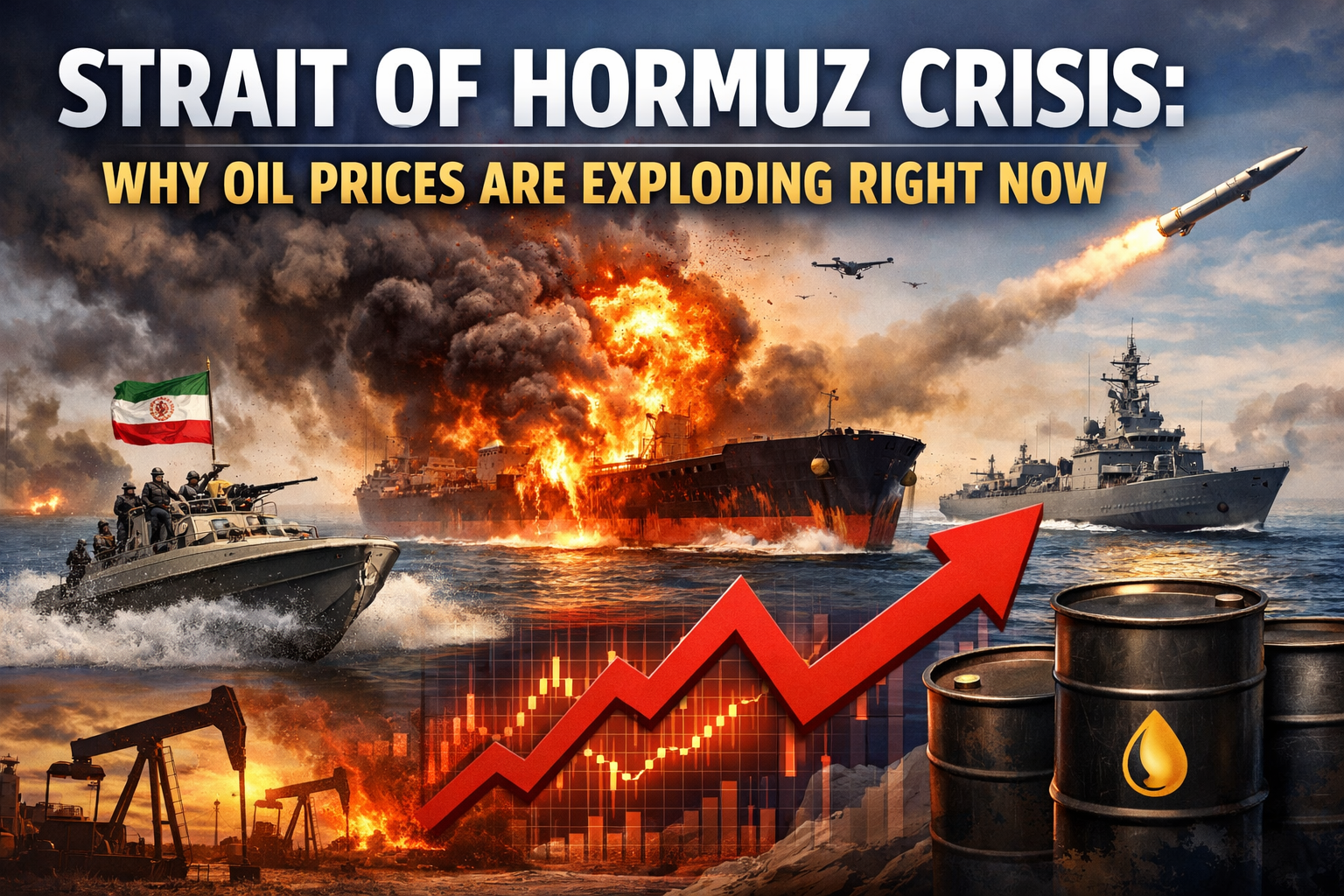
Strait of Hormuz Crisis: Why Oil Prices Are Exploding Right Now
The Day the Oil Lifeline Choked
The morning it happened, the tankers simply stopped moving.
Not slowly, not gradually. One Tuesday at dawn, the tracking screens at Lloyd’s of London lit up like a fever chart. Vessels that had been crawling steadily through the blue-grey waters of the Persian Gulf were now anchored, rerouting, or vanishing altogether from the automated identification systems that the shipping world depends on. By noon, crude futures in New York had jumped eleven dollars a barrel. By evening, energy ministers across three continents were on emergency calls. By the following morning, the headline that everyone in the industry had dreaded for forty years was finally, viscerally real.
Twenty percent of the world’s oil supply had just choked.
Not spilled. Not exploded. Just stopped. And in that stillness, in that sudden, eerie absence of movement through a strip of water barely 33 kilometres wide at its narrowest point, the entire architecture of the modern global economy began to shudder.
So here is the question that matters right now, the one that energy analysts are losing sleep over and that governments are scrambling to answer behind closed doors: why are oil prices detonating in real time, and just how catastrophic can this get?
To answer that, you need to understand a place most people couldn’t find on a map. A place that, by every rational measure, should not be allowed to hold this much power over human civilisation. A place called the Strait of Hormuz.
What Makes the Strait of Hormuz So Critical

The World’s Most Dangerous Chokepoint
There is a particular kind of dread reserved for systems with no redundancy. A single bridge over a canyon. A single surgeon who knows the procedure. A single narrow passage through which a fifth of everything that keeps the modern world running must pass, every single day, whether the world is at peace or teetering on the edge of war.
The Strait of Hormuz is that passage.
Squeezed between the southern coast of Iran to the north and the UAE and Oman to the south, this sliver of water handles approximately 20% of all global seaborne oil trade. Every day, roughly 20 million barrels of crude oil make that transit. Saudi crude. Emirati crude. Kuwaiti, Iraqi, and Iranian crude. The fuel that powers European manufacturing, Asian megacities, and American highways flows through this one corridor with a regularity so dependable, so taken for granted, that the global economy has quietly built itself around the assumption that it will never stop.
That assumption has always been a bet. A very large, very consequential bet placed on the continued stability of one of the most volatile neighbourhoods on the planet.
When that bet goes wrong, the numbers move fast and they move ugly. A 20% disruption to global supply does not produce a 20% price increase. Markets do not work that way. Panic is not linear. Traders price in fear, scarcity, and uncertainty simultaneously, and the result is price spikes that feel wildly disproportionate to the underlying physical shortage. Psychologically, economically, and geopolitically, the Strait of Hormuz is not just a waterway. It is a trigger.
Why No Easy Alternative Exists
The reasonable question at this point is obvious: surely the world saw this coming? Surely, in the decades since the Islamic Revolution of 1979 first made this vulnerability impossible to ignore, someone built a workaround?
The honest answer is: partially, inadequately, and not nearly enough.
There are bypass pipelines. The most significant is the East-West Pipeline in Saudi Arabia, capable of moving around 5 million barrels per day directly to the Red Sea, completely sidestepping Hormuz. The UAE operates the Habshan-Fujairah pipeline, pushing roughly 1.5 million barrels daily to a terminal on the Gulf of Oman. On paper, these sound meaningful. In practice, when 20 million barrels a day need to move and your bypass infrastructure handles 6 or 7 million on a good day, you are still catastrophically short.
The deeper problem is geography, and geography does not negotiate. The Gulf’s biggest producers, Saudi Arabia, Kuwait, Iraq, Qatar, the UAE, are all physically contained within the Gulf basin. Their oilfields, their terminals, their entire export infrastructure was built over decades with Hormuz as the assumed exit route. Rerouting is not simply a matter of flipping a switch or laying a temporary pipe. It means rethinking infrastructure that took generations to build, in a timeline that a market crisis will not patiently wait for.
The Gulf producers are not trapped by politics alone. They are trapped by the shape of the earth beneath them.
And that is precisely what makes the current moment so dangerous. When the chokepoint is also the only point, disruption is not an inconvenience. It is an emergency that travels at the speed of a futures contract, which is to say: instantly, and everywhere, all at once.
Crisis Timeline: How Everything Unraveled in Days
History rarely announces itself. It does not clear its throat or send a warning. It simply arrives, usually before dawn, usually with the sound of engines.
This time was no different.
February 28, 2026 — Operation Epic Fury
The first strikes landed at 2:17 a.m. Tehran time.
American B-2 bombers flying from Diego Garcia, coordinating in near-perfect synchrony with Israeli F-35s launched from undisclosed forward positions, hit seventeen targets simultaneously across Iran. The operation had a name that would later feel grotesquely apt: Epic Fury. The targets were not random. They had been selected, refined, and war-gamed over months: uranium enrichment facilities at Fordow and Natanz, the Arak heavy water reactor, command infrastructure, air defence installations, and the residential compound in northern Tehran where the Supreme Leader of the Islamic Republic, Ali Khamenei, had been confirmed present by three independent intelligence streams.
By 3:40 a.m., Khamenei was dead.
The announcement came not from Washington or Tel Aviv but from a grainy, visibly shaken broadcast on Iranian state television, quickly cut short and replaced by Quranic recitation. Within minutes, the footage was everywhere. Within hours, the world had processed what it meant: the United States and Israel had not simply struck Iran’s nuclear programme. They had decapitated its government.
Markets, even before they officially opened, knew. Oil futures surged 18% in after-hours trading before circuit breakers intervened. The price of crude had not moved that fast since the Iraqi invasion of Kuwait in 1990. Analysts who had spent careers modelling worst-case scenarios quietly acknowledged that the models had not been pessimistic enough.
Iran’s Retaliation Phase
The response began within 36 hours, and it came from every direction at once.
Iran’s Islamic Revolutionary Guard Corps, operating under contingency plans that had clearly been prepared long before the strikes, launched coordinated waves of ballistic missiles and kamikaze drones at American military installations across the region. Al-Udeid Air Base in Qatar took three direct hits. The USS Ronald Reagan, positioned in the North Arabian Sea, intercepted a swarm of eleven drones, destroying nine and sustaining damage to its flight deck from the remaining two. A logistics hub in Erbil, northern Iraq, was struck by a precision ballistic missile that collapsed two buildings and killed 23 American personnel, the deadliest single attack on US forces since the Beirut barracks bombing of 1983.
Israel absorbed over 200 missile and drone launches in a 48-hour window, the Iron Dome and Arrow systems working at capacity, with three missiles penetrating defences and striking Haifa’s port district.
Gulf states that had quietly cooperated with the American operation now paid their price. Saudi Aramco’s Abqaiq facility, the single most important oil processing installation on the planet, processing roughly 7% of global supply, was targeted by a swarm of 40 drones. Saudi air defences destroyed most of them. Not all.
The message from Tehran, delivered through its proxies, through its missiles, and through the barely controlled fury of its surviving leadership, was precise and unmistakable: you have opened a door you cannot close.
March 2 — The Strait Effectively Closes
Four days after the strikes, the IRGC Navy issued a formal navigational warning.
It was written in the clipped, bureaucratic language of maritime communications, but its meaning required no interpretation. All commercial vessels transiting the Strait of Hormuz were advised to cease movement pending security assessments. Iranian naval assets would be conducting “active defensive operations” in the waterway. The safety of civilian vessels could not be guaranteed.
In the history of maritime commerce, few documents have ever done more economic damage per word.
At Lloyd’s of London, war risk insurance premiums for Gulf-bound tankers went from elevated to effectively prohibitive within hours, some quotes climbing 3,000% above their pre-crisis baseline. Shipping companies with vessels already in the Gulf faced a brutal calculus: proceed and risk losing a ship worth $100 million and a crew of 25, or anchor and absorb the daily holding costs while waiting for a clarity that showed no sign of arriving.
Most anchored.
The few that attempted transit encountered Iranian fast boats running in coordinated packs, flanking vessels, shining high-powered lights across bridges, and broadcasting warnings on VHF Channel 16. No shots were fired on March 2. None needed to be. The theatre of menace was sufficient. Tanker captains, accountable for their crews and their cargo, turned around.
The Strait was not yet physically blocked. It was psychologically closed. In terms of oil flow, the difference was irrelevant.
March 12 — Full-Scale Disruption
By the second week of March, the psychology had hardened into kinetics.
The IRGC moved from intimidation to interdiction. Over a 72-hour period beginning on March 10, Iranian forces conducted 21 confirmed attacks on merchant vessels attempting to transit or loiter in the eastern Gulf. The weapons varied: limpet mines attached by divers to vessel hulls at anchor, anti-ship missiles fired from coastal batteries, armed drone strikes targeting bridge superstructures. Three vessels were sunk. Seven were seriously damaged. Eleven crew members were killed across four incidents, with nationalities ranging from Filipino to Greek to Indian to British.
The tanker traffic numbers told the story with a brutality that no headline could match.
In a normal week before the crisis, the Strait of Hormuz saw between 100 and 120 laden tanker transits daily, a rhythm so reliable it had become invisible, like a heartbeat. By March 12, that number had collapsed to fewer than five. Not five percent. Not a reduced flow. Five vessels. The rest had scattered: sheltering in Omani anchorages, diverting around the Cape of Good Hope on voyages that added 15 days and $3 million in costs per trip, or simply waiting with engines idling and crews growing anxious in the northern Gulf.
The world’s oil lifeline, that arterial flow of 20 million barrels every 24 hours, had been reduced to a trickle. The price of Brent crude crossed $147 a barrel on March 12. By the closing bell, it was at $163.
The era of cheap, reliable, forgettable oil had not simply paused.
It had ended.
The Oil Price Explosion Explained
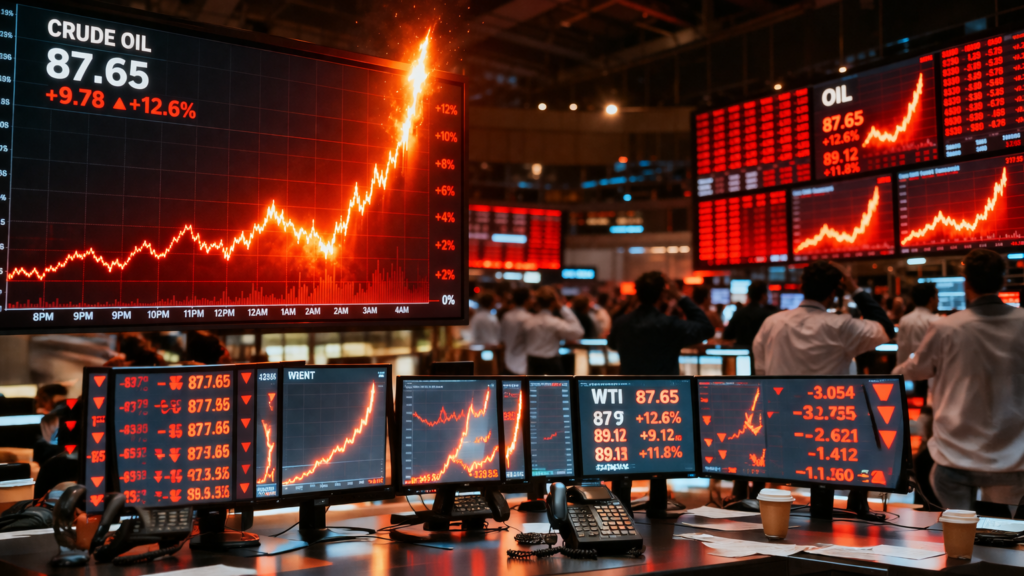
Numbers, in moments of crisis, stop being numbers. They become something closer to vital signs. And what the oil markets were reading in the first two weeks of March 2026 looked less like a price chart and more like a patient going into shock.
The Immediate Shock
To understand how violent this move was, you need to know where oil was sitting before the bombs fell.
Brent crude, the global benchmark, had been trading in the mid-$60s for most of early 2026. Comfortable. Predictable. The kind of price that lets airlines plan forward contracts and governments set budget assumptions without breaking a sweat. Energy analysts were largely relaxed. OPEC+ was managing supply with its usual choreographed precision. The demand picture from China was soft but stable. There was, in the language of commodity markets, no particular reason for excitement.
Then came February 28, and reason left the building.
Within 72 hours of Operation Epic Fury, Brent had crossed $90. Within a week, it had blown through $100, a psychological threshold that carries weight far beyond its mathematical significance, the three-digit crude price that politicians dread and economists use as shorthand for economic pain. By March 7, it had reached $112. And then on March 12, as the attack tally on merchant vessels climbed past 21 and tanker traffic in the Strait collapsed toward zero, Brent crude hit an intraday peak of $126 a barrel before settling at $119 on the close.
From the mid-$60s to $126 in thirteen days.
To contextualise that velocity: the 2022 spike triggered by Russia’s invasion of Ukraine, itself considered one of the most dramatic oil market moves in modern history, took six weeks to cover similar ground. The post-Abqaiq drone attack in 2019 produced a single-day jump of 15% before rapidly fading. This was different in character, not a spike to be faded but a repricing to be absorbed, a market collectively updating its understanding of what oil was now worth in a world where the Strait of Hormuz could no longer be assumed open.
It was, by every credible measure, the fastest sustained crude price escalation in the history of the modern oil market.
Supply Collapse Mechanics
The arithmetic of the disruption was straightforward and merciless.
Approximately 20 million barrels of oil transit the Strait of Hormuz every single day under normal conditions. That figure represents not just crude oil but refined petroleum products, liquefied natural gas, and petrochemical feedstocks that supply chains across Asia and Europe have been built to depend upon. When that flow stopped, the immediate question was not philosophical. It was physical. Where does that oil come from instead? And the answer that came back from every corner of the energy industry was the same: it largely doesn’t.
The cruel irony of the crisis mechanics was that the countries best positioned to compensate for lost Gulf supply were themselves Gulf producers. Saudi Arabia holds the largest cushion of spare production capacity in the world, somewhere between 2 and 3 million barrels per day that can theoretically be brought online within weeks. The UAE and Kuwait hold additional reserves of operational flexibility. But that capacity sits in fields, terminals, and pipelines that feed directly into the Gulf export system, which feeds directly into the Strait of Hormuz, which was now effectively closed.
The spare capacity existed. It was simply on the wrong side of the blockade.
The bypass pipelines that Saudi Arabia and the UAE operate could redirect a fraction of normal flow, perhaps 6 to 7 million barrels per day on a good day, with infrastructure running at maximum capacity. Against a 20-million-barrel daily shortfall, that arithmetic produces a net deficit of somewhere between 13 and 14 million barrels per day, a gap so vast that even the full activation of American strategic petroleum reserves, coordinated IEA member releases, and a surge in non-Gulf production could not come close to filling it in any timeframe that markets would find reassuring.
Supply does not have a short answer to this problem. And markets priced that absence of answers immediately.
Market Panic and Speculation
Here is where the physical reality of missing oil barrels collides with something harder to quantify and faster to move: human fear.
Commodity markets are, at their foundation, mechanisms for pricing the future. When the future becomes illegible, when nobody can confidently say whether the Strait reopens in two weeks or two years, whether this escalates into a broader regional war or resolves through back-channel diplomacy, the market does not pause and wait for clarity. It prices in the full range of terrifying possibilities simultaneously. The result is a kind of organised panic, technically rational at the individual level, collectively destabilising at the systemic level.
Hedge funds, energy trading houses, and algorithmic systems began accumulating long crude positions at a scale not seen since the early days of the 2008 financial crisis. The logic was elementary and self-reinforcing: if you believe prices are going higher, you buy now, which pushes prices higher, which validates the belief, which attracts more buying. Open interest in Brent futures contracts surged 34% in the first week of March alone, with speculative long positions reaching their highest concentration in eleven years.
The forecasts emerging from investment bank research desks ranged from alarming to apocalyptic. Goldman Sachs put a $140 price target on Brent in a sustained disruption scenario. JPMorgan’s commodity team published a note suggesting $150 was achievable within 60 days if no diplomatic progress materialised. Morgan Stanley, typically the most measured voice in the room, quietly revised its ceiling estimate to $155, a number it had previously reserved for what it called a “catastrophic tail risk scenario.”
The catastrophic tail risk scenario was now the base case.
Ripple Into Fuel Prices
Abstract numbers on a trading screen become real at the pump, and the transmission from crude futures to retail fuel prices happened with a speed that caught even pessimistic forecasters off guard.
In the United States, where the political temperature around gasoline prices runs permanently hot, the average price per gallon climbed 87 cents in the two weeks following the initial strikes. That is not a gradual drift. That is a shock, felt in the daily arithmetic of ordinary working lives, in the calculation every commuter makes pulling into a filling station and watching the numbers spin faster than they used to. In California, where blended fuel regulations add a structural premium, prices crossed $6.40 per gallon in several metropolitan areas. Trucking companies began issuing fuel surcharge notices to clients within days. Airlines quietly suspended forward guidance, unwilling to commit to any cost projection in an environment this volatile.
In the Gulf itself, the irony was savage. Dubai crude, the benchmark for Middle Eastern export grades, hit record nominal highs of $131 a barrel even as the producers who sell it found themselves physically unable to ship it through their own front door. Abu Dhabi’s ADNOC suspended export commitments to Asian customers it had supplied reliably for decades. Kuwait announced force majeure on several long-term supply contracts, a legal instrument that essentially says: circumstances beyond our control have made our promises impossible to keep.
Asian refiners, who collectively take the majority of Gulf crude exports and who had built their entire downstream infrastructure around the assumption of reliable, affordable Middle Eastern supply, were suddenly exposed. South Korea declared an energy emergency. Japan activated its national petroleum stockpile protocols for only the third time since the 1973 oil shock. India, which sources roughly 45% of its crude from the Gulf, convened an emergency cabinet session on energy security and began urgent negotiations with Russian suppliers for accelerated deliveries through alternative routes.
The price explosion, in other words, was not a market anomaly to be traded around. It was a civilisational stress test, running in real time, on every economy on earth simultaneously.
And it was only getting started.
The Silent Breakdown of Global Shipping
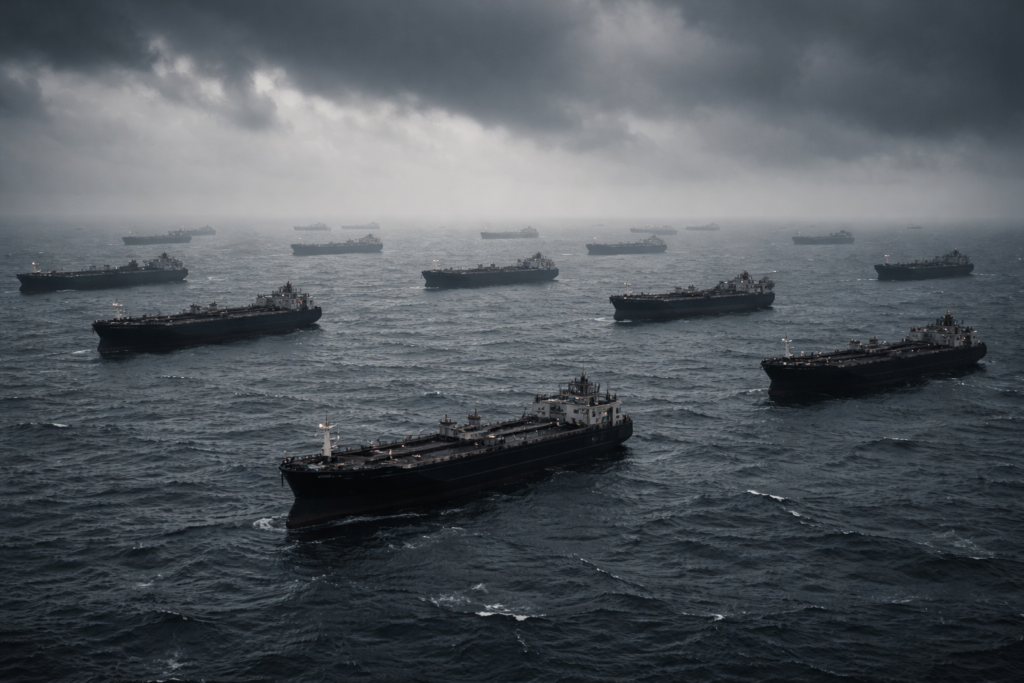
There is a particular kind of catastrophe that announces itself not with noise but with absence. No explosions visible from shore. No dramatic footage of waves swallowing vessels. Just silence where there used to be movement. Stillness where there used to be the steady, invisible pulse of global commerce.
This was that kind of catastrophe.
Tankers Disappear
The shipping industry runs on a rhythm so consistent that most people who depend on it have never once thought about it. Every day, more than a hundred laden tankers would enter or exit the Strait of Hormuz, carrying crude and refined products to refineries in South Korea, power stations in Japan, industrial complexes in India, and distribution networks across southern Europe. It was the most reliable conveyor belt in the history of human commerce, operating through heatwaves and monsoons and regional tensions and two decades of intermittent Gulf crises without ever truly breaking down.
It broke down.
By March 14, maritime tracking services that monitor vessel positions via satellite and AIS transponder were showing a picture that analysts described, with unusual candour, as unprecedented. More than 150 vessels, a combination of crude tankers, product tankers, and LNG carriers, were stranded across a geographic arc stretching from the northern Gulf anchorages south of Basra all the way down to the waters off Fujairah on the UAE’s eastern coast. Some were anchored and waiting. Some were executing slow, wide holding patterns, burning fuel and time in equal measure. Others had simply gone dark, their captains disabling AIS transponders in the hope that invisibility offered some marginal protection, a desperate measure that maritime law ordinarily prohibits and that the circumstances now made feel rational.
The daily transit numbers, which had stood above 100 vessels as recently as February 25, had by March 14 collapsed to a count that port authorities in Singapore and Rotterdam were describing as effectively zero. Not a rounding error. Not a statistical blip. Zero. The world’s most important oil corridor was handling the kind of traffic you might expect to see on a closed industrial canal during a public holiday.
One hundred and fifty vessels stranded. Twenty million barrels a day frozen in place. And a global supply chain, built over seventy years on the foundational assumption that the oil would always move, now confronting the reality that it would not.
Insurance Goes Nuclear
Before a tanker captain can make the decision to transit a contested waterway, before the owners give the order and the charterers sign off, a quieter and more fundamental decision has already been made somewhere in the City of London or in a Zurich underwriting office. The decision about whether the voyage is insurable. And at what price.
War risk insurance is the specialised coverage that protects vessels, cargo, and crew operating in designated conflict zones. Under normal conditions, even elevated ones, war risk premiums represent a manageable line item in a voyage’s operating costs. A nuisance, not a veto.
What happened to war risk premiums in the days following March 2 was not a price adjustment. It was a market sending a message in the most direct language available to it.
Premiums for Gulf-bound tanker voyages, which had already risen sharply after the initial strikes, went effectively vertical after the IRGC began its active interdiction campaign. By March 10, leading underwriters at Lloyd’s were quoting war risk rates at four to six times their pre-crisis baseline, with some speciality insurers applying multipliers closer to eight for vessels carrying Iranian-linked cargo or flying flags of nations perceived as hostile to Tehran. A voyage that had cost $180,000 to insure two weeks earlier was now being quoted at north of $900,000 for identical coverage parameters. Several underwriters declined to quote at all, a development that in the arcane world of maritime insurance is roughly equivalent to a bank refusing to process a transaction: it does not merely raise the cost, it eliminates the possibility entirely.
Hull and machinery insurers, covering the physical vessels themselves, moved in lockstep. Protection and indemnity clubs, the mutual insurers that cover third-party liability including crew injuries and environmental damage, began attaching exclusion clauses to Gulf coverage that effectively transferred the entire risk of Iranian military action back onto the vessel owners with no recourse. The legal architecture that makes global shipping possible, the interlocking web of insurance, indemnity, and financial guarantee that sits invisibly beneath every voyage, was quietly withdrawing from the Gulf of Arabia.
When insurance disappears, commerce does not merely become expensive. It becomes legally and financially impossible. No reputable shipping company operates uninsured vessels. No bank that has financed a $100 million tanker will allow that asset to sail without coverage. The insurance market’s retreat was not a symptom of the shipping crisis. In a very real operational sense, it was the mechanism of it.
Corporate Pullback
The largest names in global shipping did not agonise over the decision for long.
Maersk Tankers, part of the AP Møller group that handles a significant portion of the world’s seaborne energy trade, issued a formal operational pause notice on March 9, suspending all Gulf-bound voyages pending a security review of undefined duration. The language was careful and corporate, drafted by lawyers with an eye on both crew safety obligations and shareholder liability. The meaning was unambiguous: we are not sending our ships in there.
Euronav, one of the world’s largest crude tanker operators with a fleet of very large crude carriers each capable of moving 2 million barrels per voyage, followed within 48 hours. Trafigura, the commodity trading giant that charters rather than owns vessels but whose logistical footprint in the Gulf represents a substantial share of regional oil movement, quietly redirected its vessel bookings toward Cape of Good Hope routings, accepting the 14 to 16 additional sailing days and the $2.5 to $3 million in extra voyage costs per ship as the price of keeping its people alive and its balance sheet intact.
The calculus driving these decisions was not complicated. A very large crude carrier represents a capital investment of $90 to $110 million. Its cargo on a typical Gulf voyage is worth two to three times that figure. Its crew of 25 to 30 people are human beings with families and the expectation, entirely reasonable, of returning home. Against those considerations, no freight rate premium and no cargo urgency could justify transit through a waterway where 21 confirmed attacks had occurred in 72 hours and where the aggressing force had demonstrated both the capability and the clear willingness to sink civilian vessels.
The shipping industry, which prides itself on keeping commerce moving through every variety of geopolitical turbulence the twentieth and twenty-first centuries had thrown at it, including two Gulf Wars, the Tanker War of the 1980s, Somali piracy at its peak, and the 2019 Abqaiq attacks, had encountered something that finally exceeded its threshold for manageable risk.
The ships stayed where they were. The oil stayed with them. And somewhere in the invisible machinery of the global economy, in the supply chains and refinery schedules and just-in-time delivery systems that the modern world has spent decades optimising for efficiency rather than resilience, the consequences of that stillness were just beginning to compound.
Production Collapse in the Gulf
There is a concept in engineering called a cascade failure. It describes what happens when a system under stress does not break at one point and stop there, but instead breaks at one point and then the next, and the next, each failure loading additional pressure onto whatever remains standing until the entire structure is coming down in sequence. The Gulf’s oil production infrastructure in March 2026 was a textbook cascade failure, playing out in slow motion across the most consequential energy geography on earth.
Output Cuts Across OPEC+
Saudi Arabia moved first, because Saudi Arabia always moves first when the Gulf catches fire.
The Kingdom’s output reduction was not a voluntary OPEC+ production adjustment of the kind that energy ministers announce at pleasant Vienna press conferences with carefully managed talking points. It was a forced, unplanned, operationally chaotic contraction driven by three simultaneous pressures: physical damage to export infrastructure from the drone attacks on Abqaiq, the inability to load tankers at Ras Tanura and Jubail terminals that no vessel would approach, and a security directive from Riyadh ordering a partial shutdown of offshore facilities assessed to be vulnerable to further IRGC naval action. The result was a production cut of approximately 20%, somewhere between 1.9 and 2.2 million barrels per day stripped from the market by a country that the world had always treated as the supplier of last resort.
The supplier of last resort was now itself in distress.
Iraq’s situation was worse, and structurally more alarming. The country’s southern fields, clustered around Basra and accounting for roughly 90% of its total production, export through terminals in the northern Gulf that had become, in the post-March 2 environment, functionally inaccessible. Basrah Oil Terminal and the offshore Khor al-Amaya platform, which together handle the overwhelming majority of Iraqi crude exports, sat inside a maritime zone that the IRGC had effectively designated a conflict area. Tankers would not come. Pipelines to alternative export routes existed only on paper or in quantities entirely inadequate to the volume involved. Production at Iraq’s key southern fields did not taper. It collapsed, falling by approximately 70% within ten days as storage filled, wells were shut in to prevent infrastructure damage, and field operators evacuated non-essential personnel in response to escalating regional security assessments.
Seventy percent. In a country producing around 4.3 million barrels per day before the crisis, that figure represents a loss of roughly 3 million barrels of daily supply, vanished from the global market not because the oil was gone but because there was nowhere for it to go. Kuwait’s offshore Khafji and Hout fields, operated in the partitioned neutral zone with Saudi Arabia, went to zero almost immediately for identical reasons. The UAE, despite its Fujairah bypass terminal theoretically offering an alternative export route, was operating that infrastructure at maximum capacity with a fraction of its normal production volume, limited not by the terminal’s throughput but by the pipeline capacity feeding it.
The Gulf, collectively and simultaneously, was producing far less oil than the world needed. And the world, simultaneously and collectively, was beginning to understand that this was not a problem measured in days.
Force Majeure Domino Effect
In the legal vocabulary of international commerce, force majeure is the escape hatch that nobody wants to use. It is the clause buried in every major supply contract that allows a party to suspend or terminate its obligations when circumstances genuinely beyond its control make performance impossible. It exists because the drafters of commercial contracts, however optimistic, have always understood that the world is capable of producing events that no pricing model or delivery schedule can accommodate.
March 2026 produced those events at industrial scale.
Saudi Aramco invoked force majeure on long-term supply agreements covering an estimated 4 million barrels per day of committed exports, a single contractual declaration that instantaneously froze supply relationships with refiners across Asia and Europe that had been operating continuously for decades. The legal instrument was correctly applied. The practical consequence was that customers who had built their entire downstream operations around the assumption of Saudi crude arriving on a predictable schedule suddenly found themselves without supply, without contractual recourse, and without any realistic prospect of replacement at anything approaching their contracted price.
Aramco’s force majeure notice landed in the inboxes of procurement offices in Seoul, Tokyo, Rotterdam, and Mumbai like a financial depth charge. The shockwaves were immediate. South Korean refiners SK Innovation and GS Caltex, between them accounting for a significant portion of the country’s crude processing capacity, issued their own downstream force majeure notices to fuel distributors within 48 hours, the contractual disruption propagating downstream through the supply chain with the momentum of a wave that had no shore to break on.
Iraq’s state-owned Basra Oil Company followed within days, freezing export commitments to buyers in China, India, and southern Europe. The Iraqi declaration was particularly destabilising for Asian customers who had specifically increased their Iraqi crude exposure in recent years precisely to reduce dependence on Iranian supply that had become unreliable under sanctions. The diversification strategy that was supposed to insulate them from exactly this kind of Gulf disruption had instead concentrated their vulnerability in a slightly different location.
Kuwait Petroleum Corporation’s force majeure notice, when it came, was almost an afterthought, one more domino in a sequence that had already covered the most critical ground. But its symbolic weight was considerable. Kuwait had not invoked force majeure on oil export commitments since the Iraqi invasion of 1990. The last time this clause appeared in KPC’s supply contracts, Saddam Hussein’s tanks were parked on Kuwaiti soil.
The supply commitments that the global economy had treated as bedrock certainties, the contractual architecture of energy security that importing nations had built their industrial and political stability upon, were now broken. Not renegotiated. Not delayed. Broken, with legal formality, across the most important oil trade corridor in the world.
What had once been the reliable heartbeat of the global energy system had flatlined on the monitor. And the doctors standing around the bed were discovering, one by one, that they had no clear protocol for what to do next.
The Largest Energy Shock in Modern History
There is a document that sits at the centre of the global energy system, updated quarterly, read by finance ministers and central bankers and energy secretaries across every major economy on earth. The International Energy Agency’s Oil Market Report is not known for dramatic language. It is a document of tables, forecasts, and carefully hedged analysis, written by people who have spent careers resisting the temptation toward hyperbole in a field that generates more than its share.
The report published on March 15, 2026 opened with a sentence that had never appeared in any previous edition in the agency’s fifty-year history.
“The world is experiencing the largest oil supply disruption ever recorded.”
No hedge. No qualifier. No “in recent memory” or “since the 1970s.” Just the flat, declarative weight of a fact that the numbers had made impossible to soften.
IEA’s Warning
The IEA’s Executive Director Fatih Birol had given emergency briefings before. He had stood at podiums during COVID demand collapses, during the Russian invasion of Ukraine, during the various OPEC price wars that had periodically convulsed energy markets over the preceding decade. He was not, by temperament or professional training, a man given to catastrophising.
What he said at the emergency press conference in Paris on March 15 landed differently.
The agency’s assessment was surgical and devastating in equal measure. The combined disruption across the Gulf represented a sustained withdrawal of between 17 and 20 million barrels of daily supply from global markets, a figure that shattered every previous benchmark for energy shock magnitude. The 1973 Arab oil embargo had removed approximately 4 to 5 million barrels per day at its peak. The Iranian Revolution of 1979 disrupted somewhere between 4 and 6 million. The Iraqi invasion of Kuwait in 1990 took out around 5 million. Even the most aggressive modelling of a full Gulf crisis, the kind of scenario that energy security planners had built careers stress-testing in classified government exercises, had typically assumed a maximum disruption of 10 to 12 million barrels per day.
The reality was nearly double the worst serious estimate anyone had publicly committed to.
Birol did not use the word catastrophe. He did not need to. He simply read the numbers into the microphone and let the room process what they meant. The global oil market consumed approximately 103 million barrels per day. Between 17 and 20 million of those barrels had disappeared from available supply with no credible timeline for restoration. The world’s commercial crude inventories, already below their five-year average before the crisis began, could cover the shortfall for a matter of weeks, not months. The strategic reserves held by IEA member nations provided a larger buffer but one that was finite, non-renewable in the short term, and never designed to substitute for a permanently disrupted supply corridor.
The IEA’s closing assessment was three sentences long and has since been quoted in every serious analysis of the crisis that followed. Global spare capacity is insufficient to cover this disruption. Commercial inventories will reach critically low levels within six to eight weeks at current depletion rates. There is no precedent in the agency’s operational history for a supply shock of this magnitude and no established playbook for managing its consequences.
There was no precedent. That was the point. That was what made the room go quiet.
Emergency Measures
Governments move slowly until they don’t. And then they move in ways that would have seemed politically unthinkable forty-eight hours earlier.
The IEA coordinated release of strategic petroleum reserves, announced on March 13 before the agency’s full report was even published, was the largest such action in the organisation’s history by a factor that made previous releases look like rounding errors. Four hundred million barrels. Drawn from the strategic reserves of the United States, the European Union member states, Japan, South Korea, Australia, and a coalition of ten additional IEA members who had spent years building stockpiles precisely for a scenario they had privately hoped would never arrive.
The American contribution alone, drawn from the Strategic Petroleum Reserve facilities carved into salt caverns beneath Louisiana and Texas, represented the single largest release of US emergency oil stocks ever authorised, dwarfing the 180 million barrel release ordered by the Biden administration in 2022 in response to Russian supply disruptions. The Department of Energy began drawdown operations within hours of the presidential authorisation, pushing crude into the domestic pipeline system at a rate of 2 million barrels per day, the maximum physical throughput the infrastructure could sustain.
Europe’s coordinated release moved through the IEA’s emergency sharing mechanism at comparable speed. Germany, France, Italy, and Spain each activated national emergency stock obligations, directing their state-mandated petroleum reserves into domestic refinery supply chains while simultaneously suspending the regulatory requirements that ordinarily limit how quickly strategic stocks can be drawn down. The rule-bending was deliberate and bipartisan. Nobody, in any capital city, was interested in procedural arguments about drawdown rates while refineries were running short of feedstock.
China, not an IEA member but a nation holding the world’s second-largest strategic petroleum reserve, moved independently and with characteristic opacity. Beijing announced a “market stabilisation release” of unspecified volume, with subsequent analysis suggesting the drawdown was somewhere between 30 and 50 million barrels over the first two weeks of the crisis. The Chinese government framed it as a domestic supply security measure. The effect on global sentiment, if not on physical supply, was real.
Four hundred million barrels sounds like an enormous number. Against a daily shortfall of 17 to 20 million barrels, it represents somewhere between 20 and 23 days of supply coverage, assuming perfect distribution logistics, no refinery bottlenecks, and none of the real-world friction that emergency operations invariably generate. The reserves bought time. They did not buy a solution.
Demand Control Strategies
When supply cannot be increased fast enough, the only other variable available to governments is demand. And so, for the first time since the oil shocks of the 1970s, the governments of major industrialised economies found themselves actively in the business of telling their citizens and their corporations to use less.
The framing, in every jurisdiction that deployed it, was carefully chosen. Not rationing, a word carrying the psychological freight of wartime scarcity and political toxicity that no elected government wanted anywhere near its messaging. Demand management. Energy solidarity. Voluntary consumption reduction. The language was new. The underlying reality, that governments were attempting to suppress energy consumption through a combination of incentives, guidance, and barely veiled pressure, was as old as the first oil shock.
Remote work returned, not as a pandemic emergency measure this time but as a deliberate energy policy instrument. The European Commission issued guidance asking member state governments to encourage employers to implement work from home arrangements wherever operationally feasible, with the explicit goal of reducing fuel consumption in commuter transport by a targeted 15%. Germany went further, activating provisions in its national energy security legislation that allowed the federal government to issue binding guidance to large employers on operational practices during declared energy emergencies. A declared energy emergency was precisely what Berlin announced on March 16, the first such declaration in the Federal Republic’s postwar history.
The aviation sector absorbed some of the most significant demand suppression measures, partly through government intervention and partly through the self-reinforcing logic of fuel prices that had made certain routes economically indefensible. Major European carriers including Lufthansa, Air France, and British Airways announced voluntary schedule reductions of between 18 and 25% on long-haul routes, citing fuel cost economics that had rendered those services loss-generating at any ticket price the market would accept. Japan’s Ministry of Land, Infrastructure, Transport and Tourism issued guidance to domestic carriers requesting a 20% reduction in scheduled capacity on routes it classified as non-essential, a designation that carriers immediately and correctly understood as something considerably stronger than a suggestion.
The International Air Transport Association, tracking fuel costs against ticket revenue across its member airlines, published an assessment on March 17 suggesting that the global aviation industry would burn through its collective financial reserves within nine weeks if crude prices remained above $120 a barrel. Airlines that had spent three years rebuilding balance sheets after the pandemic were staring at the prospect of a second existential solvency crisis before the first was fully in the rearview mirror.
In the United States, the Biden-era playbook of strategic reserve releases and public appeals for voluntary conservation was dusted off and updated with greater urgency. The administration announced a temporary suspension of the federal gasoline tax, a political gesture that saved consumers roughly 18 cents per gallon against a backdrop of prices that had risen by 87 cents, the mathematical inadequacy of which was not lost on anyone doing the arithmetic at the pump. More substantively, the Department of Transportation fast-tracked regulatory waivers allowing heavier trucks to carry larger fuel loads per journey, reducing the number of delivery trips required and cutting commercial transport fuel consumption at the margins.
The demand management measures, taken in aggregate across every economy that deployed them, were estimated by the IEA to be suppressing global consumption by somewhere between 1.5 and 2.5 million barrels per day. Against a supply shortfall of 17 to 20 million, that suppression was meaningful in the way that a sandbag wall is meaningful against a category five hurricane: better than nothing, insufficient to the scale of the problem, and unlikely to hold indefinitely.
The world was burning through its emergency reserves, throttling its own economic activity, and grounding a meaningful fraction of its aviation fleet. It was doing all of this simultaneously, at speed, with no certainty about how long the disruption would last or whether things were about to get significantly worse.
They were.
Global Economic Shockwaves
Oil does not travel alone. It never has. Every barrel that moves through the global energy system carries with it a shadow economy of dependent industries, derivative commodities, and downstream processes that most people interact with daily without ever connecting them to the price of crude. When oil stops moving, those shadows lengthen very quickly. And in March 2026, they were growing long enough to darken economies that had no direct relationship with the Gulf, no tankers in the water, no refineries waiting for feedstock. Economies that had simply, fatally, built themselves on the assumption that energy would always be available, always be affordable, and always be someone else’s problem.
That assumption was now everyone’s problem. Simultaneously and without exception.
Energy Prices Surge Everywhere
The first spillover was into natural gas, and it happened faster than anyone predicted because the mechanism connecting Gulf disruption to European gas prices was more direct than most policymakers had remembered to account for.
Liquefied natural gas, the seaborne form of gas that Europe had spent the three years since the Russian supply cutoff making itself critically dependent upon, flows substantially through the same corridor that crude oil uses. Qatar, the world’s largest LNG exporter and the supplier that European governments had courted with considerable diplomatic urgency since 2022, ships its product through the Strait of Hormuz. When the Strait closed, Qatari LNG exports effectively ceased alongside Gulf crude. The timing could not have been more punishing. European gas storage facilities, which had been drawn down through a colder-than-average February, were sitting at 38% capacity when the crisis began, already below the seasonal average that energy planners considered comfortable.
European natural gas prices, benchmarked at the Dutch TTF hub, doubled within eight days of the Strait’s effective closure. Not rose sharply. Doubled. From approximately €42 per megawatt hour in late February to €89 by March 10, before briefly touching €97 on March 13 as storage anxiety combined with LNG supply loss in a market that was already structurally tight. Electricity prices across the continent, which track gas prices with a transmission speed that utility regulators have spent years trying unsuccessfully to sever, moved in lockstep. Industrial electricity tariffs in Germany, Italy, and Spain hit levels that energy-intensive manufacturers described in earnings calls and emergency board meetings with language that oscillated between alarmed and despairing.
South Korea and Japan, the world’s largest and third-largest LNG importers respectively, faced a parallel crisis with a different texture. Their storage cushions were thinner than Europe’s, their alternative supply options fewer, and their industrial economies more tightly coupled to uninterrupted gas supply. The Korea Gas Corporation declared a supply emergency on March 11. Tokyo Gas, operating in a country where memories of the 1970s oil shocks remain embedded in national policy culture with unusual vividness, activated rationing protocols that had not been tested outside of tabletop exercises since 2011.
The global LNG spot market, which normally provides a flexible buffer allowing cargoes to be redirected from lower-value to higher-value markets, found itself overwhelmed by simultaneous demand spikes from multiple major importers competing for a sharply reduced supply of available cargoes. Spot LNG prices in Northeast Asia crossed $40 per million British thermal units, a level that traders described as representing a complete breakdown of normal market function. Buyers who needed gas were paying whatever was asked. Sellers who had gas were asking whatever they thought the market would bear before it collapsed entirely.
The answer, it turned out, was quite a lot.
Industrial Fallout
The cascade from energy prices into industrial commodity prices followed pathways that are entirely logical in retrospect and that nobody in the immediate crisis had sufficient bandwidth to track in real time.
Aluminium was among the first industrial metals to register the shock, and the scale of its move told a story about how deeply energy costs are embedded in modern manufacturing. Smelting aluminium is an extraordinarily electricity-intensive process. The industry’s rule of thumb is that energy represents somewhere between 30 and 40% of total production costs for a typical smelter. When electricity prices double, aluminium production economics are not impaired. They are broken. European smelters, already operating on margins that had been thinned by post-2022 energy costs, began announcing curtailments within days of the LNG price spike. Norsk Hydro, one of the continent’s largest aluminium producers, reduced output at three facilities by a combined 40%. Trimet Aluminium suspended operations at its Hamburg smelter entirely, idling a facility that had been producing continuously for 27 years. Aluminium prices on the London Metal Exchange rose 28% in two weeks, with analysts forecasting further gains as the market began pricing in a sustained period of reduced European smelting capacity.
The fertiliser industry absorbed its own version of the same shock with consequences that extended further into the future and into the food security calculations of nations that were already watching their energy bills with rising alarm. Natural gas is the primary feedstock for ammonia synthesis, the foundational chemical process behind most nitrogen-based fertilisers. When gas prices double, fertiliser production costs follow, and within weeks, the economics of the spring planting season across major agricultural producers in Europe and South Asia were being frantically recalculated. The European fertiliser industry group Fertilizers Europe estimated that production curtailments across member facilities were running at 35% of normal capacity by mid-March, with knock-on implications for crop yields that would not be measurable until the following harvest but that agricultural economists were already describing with quiet alarm.
Helium, an element most people associate with party balloons and MRI machines rather than geopolitical crises, emerged as one of the more unexpected industrial casualties of the disruption. Qatar is the world’s largest supplier of commercial helium, producing the gas as a byproduct of LNG processing and exporting it to semiconductor manufacturers, medical imaging equipment producers, and aerospace contractors across Asia, Europe, and North America. When Qatari LNG exports stopped, helium exports stopped with them. Semiconductor fabrication facilities in Taiwan and South Korea, which require helium as a process gas in chip manufacturing, began rationing their existing stockpiles within days. The irony of a global semiconductor supply chain already notoriously fragile being threatened once again, this time not by a pandemic or a factory fire but by the closure of a 33-kilometre waterway, was not lost on the technology executives holding emergency calls about buffer stock levels.
Shipping container rates, which had only recently returned to something approaching pre-pandemic normality after three years of post-COVID logistics chaos, spiked again as rerouting decisions added weeks to voyage times and vessel availability tightened across every trade lane connected to Asian manufacturing. A 40-foot container from Shanghai to Rotterdam, which had been moving at approximately $1,800 before the crisis, crossed $4,200 by March 15. Supply chain managers at European retailers and manufacturers, who had spent the preceding two years building modest inventory buffers specifically to protect against exactly this kind of disruption, found themselves calculating how many weeks of buffer they had remaining and arriving at answers they did not want to share with their boards.
Inflation Pressure Returns
The central bankers who had spent three years engineering the soft landing, that delicate macroeconomic achievement of reducing inflation without triggering recession, watched the events of March 2026 with a dread they mostly kept out of their public statements but that their policy responses made impossible to disguise.
Inflation, the enemy that every major central bank had declared substantially defeated by late 2024, was back. Not as a statistical abstraction in a quarterly report. As a tangible, daily, accumulating pressure on the cost of everything that moved, everything that required energy to make, and everything that required energy to deliver, which was to say: everything.
The transmission from energy shock to broader inflation was not complicated. Transport costs rose immediately and fed into the price of every physical good in the supply chain. Food prices began moving within the first week as diesel surcharges hit logistics providers and were passed through to grocers without negotiation or ceremony. A litre of diesel in Germany crossed €2.40. British haulage companies added fuel surcharges to delivery contracts that retailers then passed onto shelf prices. French farmers, already operating on margins that made any cost increase potentially catastrophic, began a new wave of protests that blocked motorways near Paris and Lyon with a conviction born of genuine desperation rather than tactical positioning.
The Federal Reserve’s challenge was particularly acute. American consumer price index data for February had shown headline inflation running at 2.8%, still above the 2% target but trending comfortably in the right direction. The March data, which would not be formally published for weeks but which the Fed’s real-time monitoring systems were tracking with considerable anxiety, was pointing toward a number closer to 4.2%, with energy’s direct and indirect contributions accounting for almost the entire upward revision. A Fed that had carefully, painstakingly walked interest rates down from their post-pandemic peaks over eighteen months was now facing a scenario that its models had not seriously weighted: a supply shock so large that raising rates, the conventional inflation response, would strangle an economy already reeling from energy cost pressures while doing nothing whatsoever to address the underlying cause of the inflation. You cannot cure a supply shock with monetary policy. You can only choose how much economic pain to distribute and in which direction.
The European Central Bank found itself in a structurally identical position with the additional complication of managing policy across economies at very different levels of energy import dependence, different degrees of industrial exposure to gas prices, and different political pressures from governments that were simultaneously dealing with social unrest, energy emergency declarations, and electoral cycles that could not be postponed because crude oil had become inconveniently expensive.
The IMF revised its 2026 global growth forecast downward by 2.1 percentage points on March 17, the largest single forecast revision the fund had made outside of the immediate aftermath of the 2008 financial crisis and the first weeks of the COVID pandemic. Several advanced economies, including Germany and Japan, were now projected to contract in the second quarter. Emerging market economies with high energy import dependence, including Pakistan, Bangladesh, Egypt, and several sub-Saharan African nations already operating at the edge of their fiscal capacity, were described in the fund’s internal assessment with a term that carries specific weight in multilateral finance: debt distress.
The global economic architecture that had been carefully reconstructed after COVID, that fragile, still-healing structure of recovering supply chains, receding inflation, and cautiously returning confidence, had been struck at one of its most load-bearing points.
The cracks were running in every direction. And the waterway that had started all of this was still closed.
Military and Political Responses
War has a grammar. It has syntax and structure, a logic of action and counter-action that military planners study for careers and that civilian leaders encounter, usually unprepared, at the worst possible moment. The grammar of the Hormuz crisis in March 2026 was being written in real time by people on multiple sides who understood that every move generated a response, every escalation created a new floor, and every line crossed made the previous lines look quaint by comparison.
Washington was not caught off guard. Not entirely. The contingency plans existed. The question was whether the plans matched the reality that had materialised, and whether the political will existed to execute them in a theatre where the consequences of miscalculation were measured not in basis points but in bodies.
US Naval Strategy
The Fifth Fleet had been on elevated readiness since February 26, two days before the strikes, long enough to position additional assets in the region but not long enough to change the fundamental geometry of the problem. The Strait of Hormuz is, from a naval perspective, a nightmare. It is shallow, narrow, surrounded by hostile coastline on one side, and offering an aggressing force an almost unlimited menu of asymmetric options: mines, fast boat swarms, shore-launched anti-ship missiles, submarines in water too congested for effective sonar operation, and drone attacks that can be launched from positions that look, to every sensor available, exactly like fishing vessels until the moment they are not.
The Pentagon’s initial escort strategy was conceived as a signal as much as an operational plan. Carrier strike group assets from the USS Gerald R. Ford, repositioned from the eastern Mediterranean, would provide air cover for escorted convoys of commercial tankers attempting Strait transit. Surface combatants would sweep ahead of each convoy, and P-8 Poseidon maritime patrol aircraft would maintain continuous overhead surveillance of the vessel lanes. The message to Tehran was deliberate: American naval power was now directly interposed between IRGC interdiction forces and commercial shipping, and any attack on an escorted vessel would constitute an attack on the United States Navy.
The Iranians tested that message on March 9.
A fast boat swarm of eleven IRGC vessels approached an American-escorted convoy of four tankers at high speed in the pre-dawn darkness north of Larak Island. USS Nitze, the Arleigh Burke-class destroyer leading the escort, issued repeated warnings on bridge-to-bridge radio. When the fast boats continued their approach inside 500 metres without responding, Nitze opened fire with its 25mm chain guns and Mark 38 automated weapons systems. Three Iranian fast boats were destroyed. Two more were damaged and turned back. The remaining six withdrew at speed into the shallow inshore waters north of Qeshm Island where American surface combatants could not follow without entering Iranian territorial waters and rewriting the entire political landscape of the confrontation.
The mine threat was, if anything, more serious and more difficult to counter than the fast boat swarms. IRGC naval forces had been observed deploying what American mine countermeasures teams identified as a combination of moored contact mines and the more sophisticated bottom-laid influence mines that respond to the magnetic signature of large steel-hulled vessels passing overhead. Two Iranian Yono-class midget submarines, detected by P-8 patrols operating in coordination with British Astute-class submarines also present in the theatre, were destroyed by air-launched torpedoes on March 11 while conducting what American officials described as mine-laying operations in the main navigable channel of the Strait. The destruction of the Iranian minelayers was announced by US Central Command in a statement notable for what it included and what it carefully omitted: it confirmed the action, confirmed the capability killed, and said nothing whatsoever about what might come next.
The escort programme had demonstrated that American naval power could protect individual convoys. It had not demonstrated that it could restore the volume of traffic necessary to make a meaningful difference to global supply. Moving four tankers through the Strait every 24 hours, under naval escort, at a cost in fuel, ordnance, and operational tempo that the Seventh Fleet’s logistics chain was already straining to sustain, was not a solution. It was a proof of concept for a solution that would require a scale of commitment that nobody in Washington had yet publicly acknowledged or politically sold.
Escalation Risks
The question that kept senior officials awake at Centcom headquarters in Tampa and in the secure conference rooms of the National Security Council was not whether the current level of violence was sustainable. It was what came after if it wasn’t.
The escalation ladder in the Gulf had rungs, and the United States and Iran had now climbed several of them without either side locating a landing. The next rung, the one that military planners discussed in careful, quiet voices and that leaked into think-tank papers and congressional briefings with growing frequency, was the blockade of Kharg Island.
Kharg Island sits in the northern Gulf off the Iranian coast and handles approximately 90% of Iran’s own crude oil exports. It is, in a conflict dominated by asymmetric tactics and ambiguous actors, an unusually clean target: sovereign Iranian territory, unambiguously connected to oil revenue that funds the IRGC and the broader Iranian war effort, and theoretically vulnerable to naval blockade by forces that already control the southern approaches to the Gulf.
The logic of a Kharg blockade was straightforward and the strategic appeal was real. Denying Iran its primary source of hard currency revenue while simultaneously framing the action as symmetrical retaliation for Tehran’s closure of Hormuz had a certain tactical elegance. Iranian crude exports had continued flowing, paradoxically, through alternative routes that bypassed the Strait entirely, generating revenue even as the IRGC’s interdiction campaign prevented Gulf producers from exporting their own oil. The asymmetry was galling and the pressure to address it was building in Washington, Riyadh, and Tel Aviv simultaneously.
The counter-arguments were equally straightforward and considerably more alarming. A direct naval blockade of Iranian sovereign territory would constitute an act of war under international law in a way that the mine destruction and fast boat engagements had not. It would foreclose every remaining diplomatic pathway with a finality that subsequent administrations would inherit. It would almost certainly trigger Iranian missile attacks on Gulf state infrastructure at a scale beyond anything seen in the initial retaliation phase, with Saudi Aramco facilities and Abu Dhabi’s downstream energy infrastructure representing the obvious and accessible targets. And it would test the loyalty of American allies in the region who had been supportive of the initial operation’s goals while becoming privately, and then less privately, alarmed by the pace and scale of the escalation that followed.
The Kharg option remained on the table. It had not been exercised. The fact that it had not been exercised was the primary remaining piece of diplomatic leverage the United States held over Tehran’s calculus, and everyone in the room understood that using it consumed the leverage entirely.
Allies Divided
The G7 emergency session convened virtually on March 14, with foreign ministers joining on secured video links from capitals dealing simultaneously with energy emergencies, domestic political pressures, and the particular strain of having to maintain a unified position on a crisis that was affecting their countries in very different ways and at very different speeds.
The unity, examined at close range, was thinner than the communiqués suggested.
The United States arrived at the table with a coherent if contested position: the operation that had triggered the crisis had been necessary, the Iranian response proved it, the Strait must be reopened by force if necessary, and allies should contribute naval assets to the escort programme and endorse coordinated economic pressure on Tehran. The American delegation was fluent, confident, and not remotely succeeding in convincing its partners.
Germany’s position was the most complex and the most symptomatic of the broader European problem. Berlin had supported the operation diplomatically in its immediate aftermath, calculating that the removal of Iranian nuclear capability justified the risks. Six weeks later, with German industrial output falling, energy emergency legislation active, and the chemical and automotive sectors reporting production curtailments that were beginning to generate unemployment numbers, the domestic political cost of that calculation had become searingly visible. Chancellor Scholz’s coalition was fractured on the question of whether to contribute Bundeswehr naval assets to Strait escort operations, with the SPD’s left flank in open revolt and the Greens, environmental convictions overridden by energy security anxiety in a reversal that nobody had cleanly anticipated, paradoxically among the more hawkish voices in the coalition.
France maintained its customary independence with its customary elegance. Paris had not been a primary operational partner in Epic Fury and had therefore preserved a degree of diplomatic flexibility that it was now deploying with characteristic purpose, opening back-channel communications with Iranian interlocutors through the Elysée’s established relationship networks while publicly endorsing the G7 position in terms precise enough to be quoted and vague enough to be denied. Whether the French back-channel represented a genuine diplomatic opening or a Gaullist performance of relevance was a question that American officials were asking with declining patience.
Japan and South Korea, whose energy crises were the most acute of any G7 member, were paradoxically the most hawkish on Strait reopening, having arrived at the conclusion that the economic cost of the current situation exceeded any realistic escalation risk that military action to clear the waterway might generate. Tokyo, historically the most cautious voice on any question involving military force anywhere near sensitive Asian waterways, was now actively requesting an accelerated timeline for the escort programme and exploring the legal and constitutional parameters of JMSDF participation in Gulf operations, a conversation that would have been politically impossible in Japan six weeks earlier.
Canada and the United Kingdom occupied the intermediate space, supportive of American leadership, concerned about escalation, contributing modest naval assets to the escort programme while managing domestic fuel price politics that were generating the kind of opinion poll numbers that focus the attention of elected governments with concentrated speed.
The communiqué released after twelve hours of negotiation described a G7 commitment to “freedom of navigation, coordinated reserve releases, and continued diplomatic engagement with all relevant parties.” It contained no binding military commitments beyond those already in place, no agreed timeline for any action, and no mechanism for resolving the fundamental disagreement between those who believed the crisis required more military pressure on Iran and those who believed it required immediate negotiation.
It was, in the diplomatic vocabulary that experienced analysts read fluently, a document that said nothing while appearing to say something. A signal that the most powerful alliance in modern history had looked at the worst energy shock ever recorded and produced a carefully worded paragraph.
The Strait remained closed. The tankers remained stranded. The price of oil ticked upward through another trading session.
And somewhere in the machinery of geopolitical consequence, the next move was already being prepared by someone who had read the communiqué and drawn exactly the conclusion its drafters had feared.
The Asia Factor: Selective Survival
Every crisis has its geometry. Its winners and its losers, its exemptions and its casualties, its back doors that remain open while the front gate burns. The Hormuz crisis of March 2026 was no exception to this rule, though the geometry it produced was considerably more uncomfortable for the Western-led order than anyone in Washington or Brussels was prepared to openly acknowledge.
While European refineries throttled back for want of crude and South Korean emergency declarations competed for airtime with Japanese rationing protocols, a different story was quietly unfolding on the other side of the geopolitical ledger. A story about which countries were still receiving oil, however reduced the volume, however irregular the schedule, and what that selective survival said about the real architecture of power operating beneath the surface of the crisis.
It said quite a lot.
Partial Access for Key Countries
The pattern became visible to analysts tracking tanker movements by the second week of March, emerging from the noise of maritime chaos with a clarity that was either a remarkable coincidence or a deliberate signal, and nobody seriously believed it was a coincidence.
Chinese-flagged vessels and tankers operating under charter arrangements with Chinese state energy companies were transiting the Strait with a frequency that bore no relationship to the near-zero traffic counts being recorded for vessels connected to Western operators. Not freely, not at pre-crisis volumes, not without incident or risk. But moving. A vessel operated by COSCO Shipping Energy Transportation, the state-owned giant that manages China’s seaborne crude imports, completed a transit on March 8 carrying Iraqi crude toward a Shandong refinery. Two more COSCO-affiliated vessels followed on March 10 and March 12, the latter date being the same 24-hour period in which 21 attacks on merchant shipping were recorded and tanker traffic from every other operator had effectively ceased.
The Iranian Revolutionary Guard Corps, which had demonstrated both the capability and the willingness to sink vessels flying the flags of nations it considered hostile, appeared to be applying a very particular definition of hostility that exempted Chinese commercial interests from its operational targeting calculus. Iranian patrol boats that had harassed, boarded, and fired upon vessels operated by European and American-linked companies were observed shadowing Chinese tankers through the eastern Strait without intervention, an operational distinction too consistent and too repeated to be attributed to chance or tactical confusion.
India’s situation was different in character but comparable in outcome. New Delhi had spent the years preceding the crisis carefully cultivating a position of strategic non-alignment that its foreign ministry described with considerable diplomatic dexterity as an “independent foreign policy” and that its critics, primarily in Washington and London, described with less dexterity as opportunism. That positioning was now paying dividends of a very tangible and very liquid kind. India had maintained active diplomatic and economic relationships with Tehran through successive rounds of Western sanctions, had continued purchasing Iranian crude through intermediary arrangements that provided plausible accounting if not plausible deniability, and had established a bilateral framework with the Iranian government that the crisis had not severed. Indian-flagged tankers and vessels operated by Indian state refiner HPCL were moving through or near the Strait at reduced but non-zero frequency, operating under informal understandings that neither government was in any hurry to formalise or publicise.
Pakistan, facing an energy crisis of potentially civilisation-threatening acuity given its existing fiscal fragility and its near-total dependence on imported energy, was receiving limited but critical oil flows through a combination of overland pipeline arrangements from Iran that had been in intermittent operation for years and maritime deliveries through the port of Gwadar that moved under the shadow of the China-Pakistan Economic Corridor’s protective geometry. The flows were insufficient to prevent power outages, fuel queues, and the particular social unrest that arrives when petrol stations run dry in a country where political stability was already a provisional condition. But they were enough to prevent the complete collapse that energy modellers had projected as Pakistan’s most likely outcome in a full Strait closure scenario.
Strategic Prioritization
What the selective survival pattern revealed, stripped of its diplomatic wrapping and examined in the unforgiving light of operational reality, was a truth that the global energy order had been structured for decades to obscure: the Strait of Hormuz crisis was not hitting all countries equally because Iran was not treating all countries equally, and the countries it was choosing to treat differently were not a random selection.
They were China, India, and the nations operating within the gravitational fields of those two relationships.
Tehran’s calculus was transparent to anyone willing to read it honestly. China represented Iran’s most important economic lifeline through years of Western sanctions, its largest crude oil customer by volume, its primary source of industrial goods and technological inputs, and the geopolitical counterweight that had prevented the United Nations Security Council from assembling the kind of unified international pressure that might otherwise have made the IRGC’s Strait operations politically untenable. Attacking Chinese commercial shipping was not merely militarily risky. It was economically suicidal. Iran needed Beijing’s protection in the international arena more urgently than it needed the tactical satisfaction of hitting COSCO tankers with limpet mines.
India’s exemption operated through a different but equally pragmatic logic. New Delhi had leverage that neither Washington nor Riyadh possessed: the prospect of genuine mediation. Iranian leadership, navigating the post-Khamenei succession crisis while simultaneously managing an active military confrontation with the world’s most powerful military, had incentives to preserve at least one significant relationship with a large, non-hostile democracy that had the ear of multiple parties and the moral authority that comes from not having participated in the strikes that triggered the crisis. India as mediator was worth more to Tehran than India as another economic casualty. The partial oil flows were not charity. They were a retainer.
The strategic prioritisation produced consequences that extended beyond the immediate energy economics. For Beijing, the selective survival of Chinese energy supply chains in the middle of a crisis that was crippling Western-aligned economies was a demonstration of something that Chinese strategic communications had been articulating in theory for years and that March 2026 was now proving in practice: that the investments made in bilateral relationships, in alternative financial architectures, in the patient construction of economic interdependencies that operated outside the Western-led order, generated real resilience when the system came under stress. Chinese refineries were running at 78% of normal capacity during a period when European competitors were at 45%. That differential was not a geopolitical abstraction. It was a competitive advantage measured in output, employment, and the very tangible sense among Chinese industrial planners that their supply security strategy had been vindicated in the most demanding test imaginable.
For India, the calculus was equally clear and considerably more uncomfortable to voice in polite diplomatic company. New Delhi was receiving oil while its Quad partners Japan and Australia were in declared energy emergencies. It was maintaining functional energy supply chains while its strategic partners in Europe were rationing electricity and curtailing industrial output. It was doing this not through superior planning or geographic luck but through a foreign policy posture that Washington had spent years trying to draw it away from, the refusal to subordinate economic relationships to ideological alignment, the insistence on treating energy security as a national interest rather than an alliance obligation.
The Americans watching this from Centcom and from the State Department’s seventh floor were experiencing the particular frustration reserved for situations where an ally is simultaneously correct and inconvenient.
The broader lesson that the Asia factor wrote into the geopolitical record of the crisis was one that would outlast the crisis itself and complicate every subsequent conversation about energy security, alliance architecture, and the real meaning of strategic partnership in a multipolar world. Countries that had hedged their relationships, maintained multiple energy supply lines, and declined to participate in the maximum pressure approach that had ultimately triggered the confrontation were surviving it better than those who had aligned most closely with the operation that started everything.
The global energy system was not just being disrupted. It was being reorganised, in real time, along the fault lines that the crisis had illuminated with brutal clarity. And when the Strait eventually reopened, whenever that came, the world that emerged on the other side would remember which countries had kept their lights on and which had not, and would draw the obvious, uncomfortable conclusions about what that difference meant for the choices ahead.
Why This Crisis Can’t Be Fixed Quickly
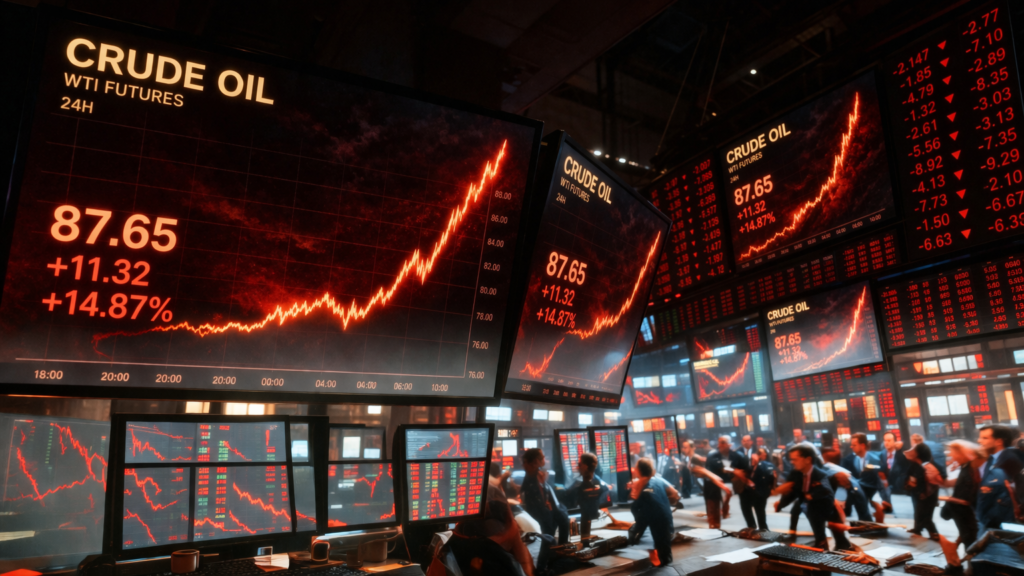
There is a particular cruelty embedded in the structure of this crisis. It is not the cruelty of an event that destroys something and then allows reconstruction to begin. It is the cruelty of a problem that resists every solution available to it, that defeats the tools designed to address it, that gets handed from military planners to diplomatic negotiators to energy engineers and comes back from each of them essentially unchanged, still sitting there, still bleeding, still defying the collective intelligence and institutional power of the most capable governments on earth.
Understanding why the Hormuz crisis cannot be resolved quickly requires understanding three distinct categories of limitation: the physical, the temporal, and the political. They operate independently. They reinforce each other. And together they form a wall that good intentions and emergency measures can lean against without meaningfully moving.
Infrastructure Limits
The question that every energy minister, every refinery operator, and every anxious head of government asked in the first days of the crisis was the same question, framed in different languages with different degrees of urgency but identical in its essential content: can we route around this?
The answer that came back from every engineering assessment, every logistics review, and every honest conversation with pipeline operators and port authorities was the same. Not at anything approaching the required volume. Not in any timeframe the market would accept. And not without creating new bottlenecks and vulnerabilities that would simply relocate the problem rather than solve it.
The arithmetic is unforgiving. The Strait of Hormuz handles approximately 20 million barrels of oil per day. The entire pipeline bypass infrastructure available across the Gulf region, operating simultaneously at theoretical maximum capacity with no allowance for maintenance, bottlenecks, or the kind of operational friction that real infrastructure always generates, could redirect perhaps 6.5 to 7 million barrels per day to non-Strait export routes. Saudi Arabia’s East-West Pipeline to Yanbu on the Red Sea. The UAE’s Habshan-Fujairah pipeline to its east coast terminal. The Iraq-Turkey pipeline, running north through Kurdistan to the port of Ceyhan on the Mediterranean, already operating below capacity due to pre-existing technical and political complications between Baghdad and Erbil that the crisis had done nothing to resolve and everything to aggravate.
Seven million barrels per day against a twenty-million-barrel-per-day requirement is not a partial solution. It is a 35% solution, leaving a structural daily shortfall of thirteen million barrels that no combination of strategic reserve releases, demand suppression, and alternative supply could bridge in any timeframe that modern economies could absorb without fundamental damage. The strategic petroleum reserves of the entire IEA membership, released at maximum drawdown rates, would cover that thirteen-million-barrel daily shortfall for approximately three weeks before the reserves themselves were critically depleted.
The deeper infrastructure problem was not just the gap in bypass capacity but the physical impossibility of closing that gap at speed. The East-West Pipeline took years to build and has been operating for decades without the maintenance investment that would be required to push it significantly beyond its design capacity. The Fujairah terminal, ambitious and well-engineered, was designed to handle a fraction of the UAE’s normal export volume and had no realistic prospect of scaling to multiples of its nameplate capacity regardless of how urgently Abu Dhabi needed it to. New pipeline infrastructure, hypothetically the correct long-term answer, requires environmental surveys, engineering design, procurement, construction, and commissioning timelines measured in years under optimal conditions. The conditions were not optimal. They were the opposite of optimal. They were a live military conflict over the waterway that any new bypass infrastructure would be designed to circumvent.
The world had forty years of knowing that the Strait of Hormuz was its single most consequential energy vulnerability. It had built infrastructure that could handle roughly a third of the required bypass volume. The gap between what was needed and what existed was not an oversight or a planning failure. It was a rational, if deeply shortsighted, economic calculation made by dozens of governments and hundreds of companies over decades: bypass infrastructure was expensive, the Strait had always reopened before, and the premium for resilience over efficiency had never found a compelling enough constituency to fund it properly.
March 2026 was the invoice for that calculation. It was a very large invoice.
Time to Recovery
On March 18, the IEA published a supplementary assessment to its emergency market report. It was titled, with a directness that the agency’s communications team had clearly decided was more appropriate than diplomatic softening, Pathways and Timelines for Gulf Supply Restoration. Its central conclusion, buried in the executive summary beneath a paragraph of methodological caveats that every serious reader skipped, was the sentence that energy ministers in a dozen capitals had been dreading:
Under the most optimistic scenario involving a near-term ceasefire, rapid diplomatic resolution, and immediate restoration of Strait transit, full Gulf supply normalisation would require a minimum of six months from the date of reopening.
Six months. Not six weeks. Not six months from the date of the original crisis but six months from the date the shooting stopped, an event that showed no imminent signs of occurring. In the IEA’s baseline scenario, which incorporated what it diplomatically described as “realistic assumptions about political and military resolution timelines,” the figure was closer to nine months. In its adverse scenario, which the agency noted it was including not as a prediction but as a risk-planning reference, it declined to offer a timeline at all.
The six-month minimum figure was driven by a sequence of logistical and operational realities that stacked on top of each other with the patience of physics rather than the urgency of a crisis. Even assuming an immediate end to hostilities, tankers would not return to the Strait until insurance markets restored coverage, a process that Lloyd’s market intelligence estimated at six to ten weeks from the date a credible security guarantee could be established. Even assuming insurance coverage restored, the 150-plus vessels stranded in Gulf anchorages could not simply restart operations simultaneously without creating a traffic management and port scheduling crisis that would suppress throughput for additional weeks. Even assuming orderly vessel movements resumed, Gulf oil production facilities that had been shut in, partially damaged, or operating in degraded modes would require inspection, testing, maintenance, and recommissioning before returning to pre-crisis output levels.
Abqaiq, the Saudi processing facility that had absorbed drone strikes during the Iranian retaliation phase, had damage assessments still incomplete as of mid-March. Saudi Aramco’s engineers were working under the shadow of a security environment that complicated everything from equipment delivery to contractor access to the basic operational norms that complex industrial facilities depend upon. Iraq’s southern fields, shut in at 70% below normal output, would need weeks of careful, staged restart procedures to avoid the wellbore damage that can result from improperly managed resumption of production at scale.
The pipeline infrastructure that had been running at maximum capacity through the crisis would need its own maintenance cycle before it could sustain the elevated throughput that the recovery period would demand of it. Terminal facilities at Fujairah and Yanbu, pushed beyond their design parameters for weeks, would need engineering assessments before they could continue operating at crisis-level throughput.
Each of these steps was sequential in ways that frustrated the natural human desire for parallel processing as a solution to every logistical problem. You could not recommission production facilities while the security environment prevented contractor access. You could not fully restore tanker traffic before insurance coverage was re-established. You could not establish insurance coverage before a credible security guarantee existed. You could not establish a credible security guarantee before a political resolution was in place or military dominance was established and sustained.
Six months, in other words, was the absolute floor of an optimistic case built on assumptions about political resolution that the military and diplomatic situation on the ground, as of mid-March 2026, offered no particular reason to find credible.
Risk of Prolonged Conflict
The optimistic case required the conflict to end. And the conflict, viewed honestly, had no clear ending in sight.
The military logic of the situation was one that strategists recognise as deeply dangerous precisely because it is internally coherent on both sides. The United States and its partners had destroyed Iran’s nuclear programme and killed its Supreme Leader. Withdrawal without having achieved a stable post-crisis outcome would represent a strategic defeat of a scale that no American administration could politically absorb. The pressure to escalate until the Strait was fully open, until Iranian military capacity for Strait interdiction was degraded beyond operational effectiveness, until some form of enforceable security arrangement could be declared and sold domestically, was immense and growing.
Iran, navigating a succession crisis while simultaneously conducting an active military campaign and absorbing American naval action against its forces, had its own logic of persistence. A government that stopped fighting immediately after having its Supreme Leader killed and its nuclear facilities destroyed would be projecting a weakness that its remaining internal power structures, its regional proxies, and its international audience in Moscow and Beijing would read as terminal. The IRGC’s institutional culture, its self-conception as a force that fights regardless of cost, made a negotiated early withdrawal from the Strait confrontation essentially incompatible with the organisation’s survival in anything like its current form.
The proxy dimensions of the conflict added further layers of self-sustaining escalation. Hezbollah’s continued engagement along Israel’s northern border was consuming Israeli military attention and resources in ways that made a purely Israeli bilateral de-escalation with Tehran politically impossible. Houthi forces in Yemen, whose Strait and Red Sea disruption capabilities had already demonstrated their potency in 2024, were conducting operations that complicated the maritime security picture beyond the Strait itself, extending the zone of commercial shipping risk south into the Gulf of Aden. Iraqi Shia militia groups were conducting episodic attacks on American logistics infrastructure in Iraq that were not severe enough to trigger a decisive American response but persistent enough to sustain a constant background level of attrition and political pressure on the Baghdad government.
The conflict had the structure of something that could last. Multiple actors with independent operational decision-making. Geographical spread that made containment difficult. Economic stakes that made all parties unwilling to accept a settlement that left their core interests unprotected. A military balance that gave neither side the overwhelming dominance that historically produces the kind of decisive outcome on which durable ceasefires are built.
Energy analysts, who were not in the habit of making geopolitical predictions, were being asked to model supply disruption scenarios out to twelve, eighteen, and twenty-four months. The fact that those scenarios needed to be modelled at all, the fact that investors and governments were paying for analysis of what a two-year Strait closure would mean for global energy markets, told its own story about where informed opinion had arrived regarding the likely duration of the crisis.
It was a story without a clear final chapter. A crisis that had started fast and was showing every sign of resolving slowly, through attrition and exhaustion and the grinding accumulation of costs on all sides rather than through any clean diplomatic or military resolution.
The world that had been caught unprepared by the speed of the disruption now faced the harder test of enduring its duration. And duration, as every military historian and energy economist in the room understood, had a way of producing consequences that the initial shock, dramatic as it was, had only begun to suggest.
Future Scenarios: What Happens Next

Forecasting is an act of structured honesty about uncertainty. The best analysts are not the ones who predict correctly. They are the ones who map the territory of possibility with sufficient rigour that decision-makers can navigate it without being ambushed by outcomes they should have seen coming. In the Hormuz crisis of March 2026, the territory of possibility spans a range so wide, from cautious institutional optimism to scenarios that senior economists are describing in private with the word depression, that the distance between the best and worst cases is not a matter of degree. It is a matter of civilisational trajectory.
Three scenarios have emerged from the modelling desks of the IEA, the major investment banks, and the classified assessment units of governments that have both the analytical capacity and the motivation to think these questions through with rigour. They are not predictions. They are the three rooms the world might walk into, depending on decisions being made right now by people in Washington, Tehran, Beijing, Riyadh, and a dozen other capitals whose choices will determine which door opens.
Best Case: Controlled Reopening
The optimistic scenario requires a sequence of events that is individually plausible and collectively demanding. It requires them to occur in the right order, at sufficient speed, with enough political will on enough sides to sustain the momentum through the inevitable setbacks and provocations that any de-escalation process generates.
It begins with the naval escort programme achieving critical mass. American Fifth Fleet assets, reinforced by British, French, and Australian surface combatants operating under a reformed multinational maritime security framework, establish a corridor of credible protection through the Strait that makes systematic commercial tanker transit possible, if not yet comfortable. The mine clearance operations that US Navy Avenger-class vessels and allied EOD teams have been conducting since mid-March clear the primary navigable channels of the most acute explosive hazards. The insurance market, watching the military protection architecture solidify and calculating that the probability of vessel loss has dropped below its threshold for outright refusal, begins offering war risk coverage again at elevated but transactable premiums. Not cheap. Not anything approaching pre-crisis rates. But coverage that shipping companies, backed by cargo owners desperate for supply and willing to absorb extraordinary freight costs, can work with.
Limited tanker traffic resumes. Not the 100-plus vessels per day of the pre-crisis world. Perhaps 20 to 30 laden transits daily in the initial phase, moving under naval protection at prescribed speeds through corridors that both sides have tacitly agreed to treat as the operational boundary of the confrontation. The oil that moves is not enough to restore markets to anything like stability. But it is enough to demonstrate that the Strait is not permanently closed, that the worst-case permanent disruption scenario can be taken off the table, and that the recovery trajectory, however slow, has begun.
Brent crude, responding to the psychological shift as much as the physical supply change, retreats from its peak. Not to pre-crisis levels. Not for many months. But from $126 to perhaps $95 to $100 in the weeks following the corridor announcement, as the fear premium that had been embedded in every barrel traded globally begins to deflate in proportion to the returning certainty that some oil, at least, will keep moving. Global inflation pressures ease at the margins. Central banks, which had been paralysed between the competing imperatives of fighting supply-shock inflation and avoiding the contraction of an already stressed global economy, recover a degree of policy clarity. The IMF revises its growth forecasts upward, modestly, with enough caveats to make clear that it is not declaring victory but merely acknowledging that the absolute worst outcome has been avoided.
The political pathway to this scenario runs through backchannel negotiations that the French and Omani intermediaries have been quietly facilitating since the second week of March. Tehran, facing an economy in acute distress, a succession struggle that requires domestic stabilisation rather than indefinite military confrontation, and a Chinese interlocutor that has been privately but firmly communicating its preference for a managed de-escalation, agrees to a framework in which IRGC naval operations in the Strait are suspended in exchange for commitments on American military posture that neither side will publicly acknowledge but both will privately observe. It is the kind of agreement that gets described in official statements as an “understanding reached through diplomatic channels” and in honest private conversation as a face-saving arrangement for all parties who have concluded that the cost of continuing exceeds the value of whatever they were fighting for.
It is achievable. It requires things from multiple parties that their domestic politics make genuinely difficult. It does not require anything that is structurally impossible.
Under this scenario, the IEA’s six-month recovery timeline begins to run in late April or early May. Global oil supply is substantially normalised by the fourth quarter of 2026. The economic damage is severe and lasting. Several economies that were pushed into recession by the shock do not recover quickly. The energy security architecture of the Western world is fundamentally redesigned in the years that follow, with the political will that the crisis generated finally funding the bypass infrastructure and strategic reserve expansions that forty years of warnings had failed to produce. The world is worse than it was before February 28. It is not broken.
Worst Case: Prolonged Closure
The pessimistic scenario does not require any single catastrophic escalation. It requires something more mundane and more difficult to prevent: the continuation of the status quo for longer than the global economy can absorb it.
Six months of 17 to 20 million barrels per day disruption. Eight months. A year. Each additional month loading additional damage onto an economic structure that was already under severe stress from the initial shock, compounding supply shortfalls, draining strategic reserves toward the critical depletion thresholds that change the nature of the crisis from manageable to systemic, and accumulating the kind of second and third order economic damage that does not appear in the initial shock statistics but that shows up, months later, in bankruptcy filings and unemployment figures and the quiet collapse of businesses that simply ran out of runway to survive on.
Oil prices in this scenario do not stay at March’s peak and then decline. They climb further, driven not by new physical events but by the market’s updating assessment of how long the disruption will persist. The $150 threshold that Goldman Sachs and JPMorgan had placed in their adverse scenario forecasts is crossed, probably within sixty days of any credible signal that diplomatic resolution is not imminent. At $150 Brent, the economic arithmetic of the global economy changes in ways that produce their own momentum. Airlines begin failing. Not cutting routes. Failing. The economics of aviation at sustained $150 oil are incompatible with the fare levels that a consumer base simultaneously facing $6 or $7 per gallon gasoline and elevated food prices can afford to pay. Several major carriers file for bankruptcy protection. The ones that do not are operating on financial reserves that the market can see are finite, which produces the kind of forward-looking equity destruction that makes refinancing impossible and bankruptcy self-fulfilling.
Manufacturing sectors in Europe and East Asia that have been operating at reduced capacity since mid-March begin permanent curtailments as the energy cost outlook extends beyond any viable planning horizon. Factory closures are not like reduced operating rates. They generate immediate unemployment, trigger supplier insolvencies through the supply chain, and create the kind of community economic damage that takes years to reverse even when conditions improve. German automotive output falls by a quarter. South Korean semiconductor production, already constrained by helium shortages, faces additional pressure from the power rationing that the country’s grid operators implement when LNG imports remain critically below requirements for an extended period.
Global GDP contraction becomes the central case rather than the tail risk. The IMF’s downward revisions, already the largest since 2008 in its March update, are revised further downward in April and again in May. The technical definition of global recession, two consecutive quarters of contraction in world output, is met by the middle of 2026 in the most widely respected forecasts. It is not met uniformly. China contracts less than the Western average. India contracts less than China. The United States, with its domestic energy production providing a partial buffer that pure import-dependent economies lack, contracts less than Europe. The recession is real and it is global but it maps precisely onto the fault lines that the crisis has already revealed, with the least energy-independent economies bearing the heaviest burden and the most geopolitically flexible nations bearing the least.
Emerging market economies at the vulnerable end of the energy import spectrum, the ones that the IMF had already classified as being in or approaching debt distress, begin defaulting on external obligations. Pakistan, Egypt, Bangladesh, several sub-Saharan African nations are first. Their defaults are individually manageable from the perspective of global financial markets. Their cumulative effect on regional stability, on migration patterns, on the political legitimacy of governments that can no longer provide basic energy services, is not manageable. It is a humanitarian crisis running parallel to the economic crisis, visible to anyone watching and outside the effective reach of institutions that are already overwhelmed by the primary emergency.
At $150 oil sustained for six months, the world is in recession. At $150 oil sustained for twelve months, the conversation shifts from recession to something economists reach for longer words to describe.
Wildcard Scenario: The Wider Regional War
The third scenario does not emerge from the logical extension of current trends. It emerges from the event that everyone is trying to prevent and that the current configuration of forces, interests, and institutional failures makes possible in ways that none of the careful people managing the crisis can entirely rule out.
It begins with an incident. Not a policy decision. An incident. A targeting error that kills Iranian civilians in numbers that Tehran’s political succession dynamics make it impossible to absorb without response. Or an IRGC strike on an escorted convoy that kills American sailors, crossing the threshold that American domestic politics cannot permit to pass without escalation. Or an Israeli operation against Iranian proxies in Syria or Lebanon that Tehran interprets as the opening of a second front and responds to with the full weight of its missile arsenal against Gulf state infrastructure. Or a Chinese vessel damaged by American ordnance in the course of a Strait engagement, triggering a bilateral crisis between Washington and Beijing that transforms a regional military confrontation into something that no institution on earth has a mechanism to manage.
The trigger matters less than the topology it creates. In a wider regional war, the distinction between the Hormuz crisis and the global security crisis collapses entirely. Iranian ballistic missiles, held in reserve through the initial retaliation phase as a deterrent rather than a deployed capability, are used against Saudi infrastructure at a scale that goes beyond the drone attacks of March and enters the territory of strategic bombardment. Abqaiq, already damaged, is struck again, this time severely enough to take it offline for months rather than weeks. The East-West Pipeline, Saudi Arabia’s primary bypass route, is targeted and successfully disrupted. The Fujairah terminal on the UAE’s east coast, the facility that has been carrying more than its designed share of Gulf oil exports through the crisis, is hit by a combination of ballistic missiles and drone swarms that its air defences cannot fully absorb.
In this scenario, the 20 million barrels per day disruption does not recover toward 7 million through bypass infrastructure. It deepens toward 25 million as Gulf production and export capacity is physically destroyed rather than merely bottlenecked. Oil does not reach $150. It reaches $200 and the question becomes not what price the market will settle at but whether the market is still functioning in any recognisable sense at all.
The military escalation draws in actors who had been managing their exposure with the careful hedging of powers that understand the cost of full commitment. Russia, watching Western economies in acute distress, calculates that the strategic opportunity exceeds the risks of a more active posture and moves accordingly in ways that extend the crisis geographically. China, whose energy supply chains have been partially protected through its bilateral relationship with Tehran but whose broader economic interests require stability it is no longer receiving, faces its own internal debate between the faction that sees the chaos as competitive opportunity and the faction that sees it as systemic threat. That debate, playing out in Beijing’s leadership structures with the opacity that characterises all significant Chinese political processes, produces the kind of ambiguous signals that American intelligence analysts spend weeks trying to read and that Washington policymakers have to act on before the reading is complete.
The global institutions that exist to manage exactly this kind of cascading crisis, the UN Security Council, the G20, the multilateral financial architecture, find themselves paralysed by the same alignment dynamics that produced the crisis. The Security Council, with permanent members on opposite sides of the foundational question of whether the original strikes were legitimate, cannot produce a resolution with enough teeth to change anyone’s behaviour. The G20, which had been the effective global economic governance forum since 2008, cannot convene a credible emergency session when its members are simultaneously managing national energy emergencies, political crises at home, and bilateral tensions with each other that the crisis has generated or accelerated.
In this wildcard room, the world does not manage its way to a settlement. It exhausts itself toward one, through a process measured in months of escalating damage and declining capacity on all sides, eventually reaching the point where the cost of continuation exceeds every party’s calculus simultaneously, which is the only reliable mechanism history has ever produced for ending wars that institutions cannot stop.
The settlement, when it comes, leaves a world that is structurally different in ways that no postwar reconstruction effort can fully address. Energy geography has been rewritten. Alliance architectures have been tested to their limits and found wanting in places nobody was willing to admit were weak. The global economy has been set back by a period of disruption long enough to have changed the relative positions of its major participants in ways that compound over time.
The Strait of Hormuz reopens. The tankers move again. The oil flows.
But the world that receives it is not the world that lost it. And that difference, invisible in the commodity price data and the quarterly GDP figures but present in the recalibrated ambitions and permanent vigilance of every energy-importing nation on earth, is the true and lasting cost of having built a civilisation on a chokepoint and then been surprised when it choked.
Final Take: A Crisis Bigger Than Oil
Step back far enough from the price charts and the tanker tracking screens and the emergency parliamentary sessions and the IMF revision notices, and something larger comes into focus. Something that the daily data obscures precisely because it moves too slowly to generate headlines but too consequentially to be ignored by anyone trying to understand what March 2026 actually was.
This was not an oil crisis. Oil was the medium. The message was something else entirely.
What the world witnessed in the five weeks between Operation Epic Fury and the paralysis of the G7 communiqué was not a supply disruption in the conventional sense, not the kind of event that energy security frameworks were designed to absorb, manage, and recover from within the boundaries of normal institutional response. It was a geopolitical reset, conducted at the speed of a military campaign but with consequences that will compound across decades. The kind of event that historians, with the luxury of distance, will identify as a before and after, a hard crease in the timeline separating the world that existed from the world that followed.
The oil price explosion that has dominated the financial press and the political conversation is real and it is serious. But it is the symptom, not the disease. Prices are not exploding because demand surged or because a weather event disrupted production or because a cartel decided to reduce output through the managed coordination of a Vienna meeting. Prices are exploding because supply is not merely reduced. It is structurally blocked. There is a categorical difference between those two conditions that most price models were not built to handle and that most policymakers had not thought through with sufficient seriousness before the moment arrived to think it through under fire.
A reduction in supply can be compensated. Reserves can be released, alternative suppliers can be activated, demand can be managed, and the market can find a new equilibrium at a higher price while the underlying problem is addressed. Every energy shock in the modern era, from 1973 through 2022, has operated within this framework. Painful, yes. Expensive, certainly. But ultimately addressable through the tools that the global energy system, over fifty years of crisis management, had become reasonably good at deploying.
A structural blockage is different in kind. When the physical infrastructure through which a fifth of global oil supply must pass is contested, mined, patrolled by hostile naval forces, and subject to active military interdiction, the problem is not one that reserve releases and demand management can solve. It is a problem that only military and diplomatic resolution can address. And military and diplomatic resolution operates on timelines, through processes, and with uncertainties that no energy market, however sophisticated, can efficiently price. The market’s response to genuine structural uncertainty is not orderly repricing. It is the kind of volatility and fear premium that makes planning impossible and economic damage self-compounding.
This is why the numbers are so large. Not because traders are irrational or because speculators are exploiting the crisis for personal gain, though both of those things are also happening. But because the market is correctly identifying that the problem at the centre of this crisis is not amenable to the solutions that have worked before. The price of oil is telling the truth about the world right now, and the truth is that the world built its energy architecture on a single chokepoint and is now discovering, in the most expensive way available, what that decision costs when the chokepoint is held by a hostile force with nothing left to lose.
The oil is the first domino. Not the last.
What follows the oil, in the sequence of consequences already visible and accelerating, is a reorganisation of the global economic and geopolitical order that the pre-crisis world had been moving toward gradually and that the crisis has simply accelerated into a timeframe nobody was prepared for. The alliance fractures visible in the G7 session are not temporary disagreements to be papered over when the immediate crisis passes. They are expressions of structural divergence between nations whose energy dependencies, strategic interests, and domestic political constraints have been pulling in different directions for years. The crisis has not created those divergences. It has made them impossible to manage with the usual instruments of diplomatic courtesy and communiqué language.
The selective survival of Chinese and Indian energy supply chains is not an episode to be noted and forgotten. It is a demonstration, conducted on the largest possible stage, of what genuine strategic autonomy looks like in practice and what the absence of it costs. Every energy-importing nation that watched the events of March 2026 will carry a revised calculation in its strategic planning for the next generation: the calculation of what it means to have your energy security dependent on relationships and infrastructure that someone else controls, and what it is worth to build the kind of bilateral architecture that protects you when the system comes apart.
The energy security investments that every serious government will now make, the bypass infrastructure that should have been built decades ago, the strategic reserve expansions that were always underfunded relative to the risk they were meant to cover, the renewable energy acceleration that suddenly makes geopolitical sense to constituencies that had previously argued about it purely in environmental terms, these are not post-crisis reflections. They are already being planned in the same emergency sessions that are managing the immediate disruption. The crisis has generated the political will that years of warnings could not produce, in the way that crises always do, at a cost that makes the will feel like cold comfort.
But here is what needs to be said clearly, at the end of this account, about what this crisis fundamentally is and why it matters beyond the energy economics and the military tactics and the diplomatic failures.
The modern world was built on a bet. The bet was that the systems enabling global commerce, the shipping lanes and the chokepoints and the supply chains and the just-in-time logistics and the single-point infrastructure that nobody wanted to pay to duplicate, would continue to function because they had always continued to function, because the cost of disrupting them was too high for any rational actor, because the global order had enough shared interest in their operation to protect them even through serious disagreements about everything else.
That bet has been called. The chokepoint choked. The supply chain broke. The shared interest in maintaining the system proved, under sufficient pressure, to be less universal and less durable than the architecture built upon it required.
Oil prices are exploding because 20 million barrels per day of global supply is not just disrupted. It is structurally blocked by a military confrontation with no clear resolution timeline, in a waterway with no adequate alternative, operated by producers with no viable bypass capacity, and insured by markets that have concluded the risk is currently unquantifiable.
That is the immediate answer to the immediate question. But the larger answer, the one that will be written in policy documents and strategic reviews and the reshaped infrastructure investments of the next two decades, is that the crisis revealed something the price of oil was always encoding but that prosperity had made easy to ignore.
The world is not as resilient as it believed itself to be. The systems it depends on are not as redundant as comfort required them to appear. And the geopolitical assumptions on which the global energy order rested, assumptions about rational actors and shared interests and the self-correcting logic of interconnected economies, were always more fragile than the decades of their functioning made them seem.
The Strait of Hormuz did not create this fragility. It simply found it.
What the world does with that discovery, how it rebuilds, what it prioritises, which relationships it invests in and which dependencies it refuses to carry forward, will determine whether March 2026 is remembered as the crisis that finally forced the reckoning the global energy system had been deferring for half a century.
Or merely as the first one.
Sources and Further Reading
The factual foundations of this analysis, including data on oil flows, shipping mechanics, insurance markets, military infrastructure, and economic modelling, draw from the following organisations, publications, and reports. All links were current at time of research.
Primary Sources: 2026 Strait of Hormuz Crisis
These sources directly document the events, data, and analysis central to this article.
Wikipedia — 2026 Strait of Hormuz Crisis Comprehensive timeline of the crisis including the escalation beginning February 28, 2026, disruption of tanker traffic, and confirmation that nearly 20% of global oil supply flows through the Strait. https://en.wikipedia.org/wiki/2026_Strait_of_Hormuz_crisis
Reuters — What is the Strait of Hormuz and Why It Matters Detailed breakdown of the Strait’s geography, its narrow shipping lanes, and its critical role as the world’s most important oil transit chokepoint. https://www.reuters.com/world/middle-east/what-is-strait-hormuz-why-is-it-so-important-oil-2026-02-28/
Reuters — Oil Prices Expected to Stay High Amid Hormuz Disruption Market reactions, price forecasts, and analysis of how supply disruptions in the Strait are directly driving oil price spikes. https://www.reuters.com/business/energy/oil-prices-expected-stay-high-days-all-eyes-strait-hormuz-flows-2026-03-02/
Reuters — Gulf Producers Struggle to Bypass Hormuz Details why alternative pipelines and export routes cannot fully replace the massive volume of oil transported through the Strait, with specific analysis of bypass infrastructure limitations. https://www.reuters.com/world/middle-east/gulf-oil-producers-scramble-bypass-hormuz-iran-locks-down-strait-2026-03-17/
Trading Economics — Brent Crude Oil Prices Real-time and historical price data showing the sharp and sustained rise in Brent crude prices across the crisis period. https://tradingeconomics.com/commodity/brent-crude-oil
RTE News — World Oil Prices Surge Coverage of the rapid increase in global oil prices, documenting the direct connection between Strait of Hormuz disruption and market volatility across trading sessions. https://www.rte.ie/news/business/2026/0320/1564306-world-oil-prices/
CSIS — No One, Not Even Beijing, Getting Through the Strait of Hormuz Strategic analysis explaining the near-total shutdown of shipping traffic, risks to vessels, and the broader geopolitical implications of the effective blockade. https://www.csis.org/analysis/no-one-not-even-beijing-getting-through-strait-hormuz
IEA via Anadolu Agency — Global Energy Impact and Demand Measures Documents the International Energy Agency’s formal warning about the largest supply shock in recorded history and its recommended emergency measures including consumption reduction, remote work adoption, and reduced air travel. https://www.aa.com.tr/en/world/iea-urges-swift-oil-demand-cuts-promotes-remote-work-less-air-travel-amid-mideast-crisis/3873046
Energy Data and Market Analysis
International Energy Agency (IEA) Oil Market Report and World Energy Outlook https://www.iea.org/reports/oil-market-report https://www.iea.org/reports/world-energy-outlook-2024
U.S. Energy Information Administration (EIA) World Oil Transit Chokepoints Report, including Strait of Hormuz data https://www.eia.gov/international/analysis/special-topics/World_Oil_Transit_Chokepoints
EIA Strait of Hormuz Factsheet https://www.eia.gov/todayinenergy/detail.php?id=41073
OPEC Annual Statistical Bulletin https://www.opec.org/opec_web/en/publications/202.htm
S&P Global Platts (Commodity Intelligence) https://www.spglobal.com/commodityinsights/en/market-insights/latest-news/oil
Rystad Energy Gulf supply disruption modelling and spare capacity analysis https://www.rystadenergy.com/news
Shipping, Maritime, and Insurance
Lloyd’s of London War Risk and Marine Insurance Market Updates https://www.lloyds.com/news-and-insights/market-news
Baltic and International Maritime Council (BIMCO) Shipping market data and vessel traffic analysis https://www.bimco.org/news
MarineTraffic Real-time and historical AIS vessel tracking data https://www.marinetraffic.com
VesselsValue Tanker market valuations and fleet analysis https://www.vesselsvalue.com
International Maritime Organization (IMO) Maritime security and safety frameworks https://www.imo.org/en/MediaCentre/Pages/WhatsNew.aspx
Splash247 Global shipping industry news and analysis https://splash247.com
Geopolitical and Strategic Analysis
U.S. Central Command (CENTCOM) Official operational updates and press releases https://www.centcom.mil/MEDIA/NEWS-ARTICLES
International Institute for Strategic Studies (IISS) Military Balance reports and Gulf security analysis https://www.iiss.org/research/defence-and-military-analysis
Brookings Institution Iran, Gulf security, and energy geopolitics research https://www.brookings.edu/topic/iran https://www.brookings.edu/topic/energy-security
Council on Foreign Relations Strait of Hormuz and Gulf security backgrounders https://www.cfr.org/backgrounder/strait-hormuz https://www.cfr.org/global-conflict-tracker
Carnegie Endowment for International Peace Iran nuclear programme and regional security analysis https://carnegieendowment.org/programs/middle-east
Chatham House Energy security and Middle East programme reports https://www.chathamhouse.org/topics/energy-environment https://www.chathamhouse.org/regions/middle-east-north-africa
RAND Corporation Hormuz closure scenario modelling and Gulf military analysis https://www.rand.org/topics/persian-gulf.html
Center for Strategic and International Studies (CSIS) Tanker War historical analysis, Gulf military assessments, and contemporary crisis coverage https://www.csis.org/programs/middle-east-program
Economic and Financial Analysis
International Monetary Fund (IMF) World Economic Outlook and emergency country assessments https://www.imf.org/en/Publications/WEO
World Bank Commodity Markets Outlook and oil price forecasting https://www.worldbank.org/en/research/commodity-markets
Goldman Sachs Global Investment Research Oil market forecasts and energy sector notes https://www.goldmansachs.com/intelligence/pages/gs-research.html
JPMorgan Global Research Commodity and energy market analysis https://www.jpmorgan.com/insights/global-research
Morgan Stanley Research Energy sector risk modelling https://www.morganstanley.com/ideas/energy-outlook
Oxford Economics Global macroeconomic impact modelling https://www.oxfordeconomics.com/resource/global-economic-model
Regional Energy Infrastructure
Saudi Aramco Annual reports, production data, and operational infrastructure details https://www.saudiaramco.com/en/investors/annual-report https://www.saudiaramco.com/en/creating-value/our-operations/oil
Abu Dhabi National Oil Company (ADNOC) Habshan-Fujairah pipeline and export infrastructure https://www.adnoc.ae/en/about-us/our-operations
Kuwait Petroleum Corporation Upstream and export operations https://www.kpc.com.kw/en
Iraq Ministry of Oil Basra oil terminal operations and southern field data https://oil.gov.iq/index.php?name=Pages&op=page&pid=1
Fertilizers Europe Production curtailment data and energy cost impact assessments https://www.fertilizerseurope.com/news
LNG and Gas Markets
International Gas Union (IGU) World LNG Report and trade flow analysis https://www.igu.org/resources/world-lng-report-2024
Quantum Commodity Intelligence LNG spot market pricing and Asian demand data https://www.quantumcommodityintelligence.com
Shell LNG Outlook Annual liquefied natural gas market forecasting https://www.shell.com/energy-and-innovation/natural-gas/liquefied-natural-gas-lng/lng-outlook.html
Historical Context and Precedents
EIA Historical Oil Disruptions Dataset Comparative data on 1973, 1979, 1990, and 2019 supply shocks https://www.eia.gov/finance/markets/crudeoil/supply-opec.php
Congressional Research Service Strait of Hormuz: Background and Issues for Congress https://crsreports.congress.gov/product/pdf/RL/RL34395
U.S. Naval Institute (USNI) News Fifth Fleet operations, Gulf naval history, and current force posture https://news.usni.org/category/fleet-tracker
Disclaimer
This article is a speculative analytical narrative produced for journalistic and educational purposes only. The events described, including named military operations, specific political developments, and crisis timelines, are fictional scenarios constructed to illustrate real geopolitical and economic vulnerabilities based on verified publicly available data. This content does not constitute financial, investment, legal, or policy advice. All opinions expressed are analytical in nature and do not represent the views of any government, institution, or organisation. This article carries no hostility toward any nation, government, religion, ethnicity, or community. All source links are provided in good faith for reference purposes. Readers are encouraged to consult primary sources and qualified professionals before drawing conclusions or making decisions based on this content.
Frequently Asked Questions
Why are oil prices so high right now?
Oil prices are surging because the Strait of Hormuz, the narrow waterway through which approximately 20% of the world’s entire oil supply flows every single day, has been effectively closed by military conflict following American and Israeli strikes on Iran. This is not a ordinary supply reduction that reserves and alternative producers can compensate for. It is a structural blockage of the world’s most critical energy corridor, affecting roughly 20 million barrels of daily supply with no adequate bypass route available. When that volume disappears from global markets simultaneously and without a clear timeline for restoration, prices do not rise gradually. They spike violently, because fear and physical scarcity arrive at the same moment.
Could this have been prevented?
Arguably, yes, and on two distinct levels. At the infrastructure level, the world had four decades of clear warning that the Strait of Hormuz represented an unacceptable single point of failure in global energy supply. The bypass pipelines that exist today handle roughly a third of the required volume. Adequate redundancy was never built because it was expensive, the Strait had always reopened before, and the political will to fund resilience over efficiency never materialised until the moment resilience was desperately needed. At the geopolitical level, the decision to conduct strikes of this magnitude on Iranian soil, including the killing of its Supreme Leader, was a choice with foreseeable consequences that the crisis has now made impossible to describe as unforeseeable
How long will this crisis last?
The honest answer is that nobody knows with confidence, and anyone claiming otherwise is selling certainty the situation does not support. The IEA’s most optimistic scenario, assuming a near-term ceasefire and rapid diplomatic resolution, estimates a minimum of six months from the date of Strait reopening before global supply normalises. The baseline scenario sits closer to nine months. In a prolonged conflict scenario involving continued military escalation, no credible timeline has been offered by any serious analytical institution. What is clear is that even a best-case resolution produces a recovery measured in months, not weeks, because the physical infrastructure of Gulf oil production, export, and maritime logistics cannot be restarted quickly even after the security environment stabilises.
Which countries are being hit hardest?
The damage is real across virtually every economy on earth but it is distributed unequally. The hardest hit are pure energy importers with limited strategic reserves, high industrial dependence on oil and gas, and no special bilateral relationships protecting their supply chains. Europe, Japan, South Korea, Pakistan, Egypt, and Bangladesh are among the most acutely exposed. The United States, with its substantial domestic production, absorbs pain primarily through retail fuel prices rather than supply shortages. China and India have fared comparatively better, maintaining partial access to Gulf oil flows through bilateral relationships with Tehran that have functioned as informal protection during the crisis, a development with significant long-term implications for how the world thinks about energy security and geopolitical alignment.
Is a global recession now inevitable?
Not inevitable, but the probability has shifted dramatically from tail risk to serious central scenario. The IMF’s March 2026 downward revision of 2.1 percentage points was the largest outside of 2008 and the COVID pandemic. Several major economies including Germany and Japan are already projected to contract in the second quarter. The determining factor is duration. A crisis resolved within two to three months, with oil prices retreating from peak levels and supply chains beginning to normalise, would produce severe but survivable economic damage. A crisis extending beyond six months at current disruption levels, with Brent crude sustained above $130 to $150, moves the global economy from recession risk into something that economists are reaching for considerably more serious vocabulary to describe. The difference between those two outcomes lies entirely in decisions being made right now in Washington, Tehran, Beijing, and the diplomatic back channels running between them.