

-
- No Comments
- April 8, 2026

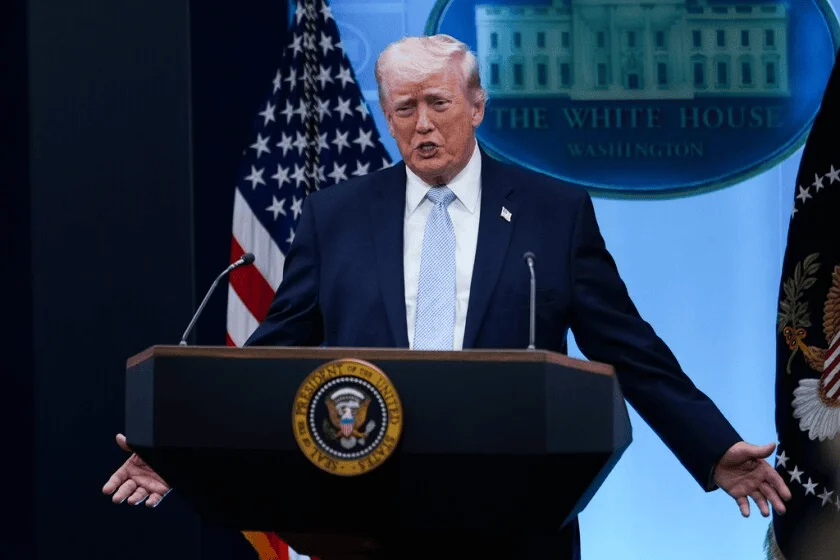
US and Iran agree to 2-week ceasefire as Trump pulls back on threats
Introduction: Why the world is watching this moment
The headline US and Iran agree to 2-week ceasefire as Trump pulls back on threats is not just another line in the endless scroll of global news it is a pressure valve release in a moment that was inching dangerously close to full scale war. In early April 2026, the world stood on edge as oil routes tightened, military threats escalated, and political rhetoric reached a boiling point. At the center of it all sat the Strait of Hormuz a narrow waterway that quietly carries the weight of the global economy. When that artery was choked, the ripple effects were immediate fuel prices surged, markets trembled, and governments braced for impact. This ceasefire is not peace it is a pause loaded with consequence, where war, النفط, and power politics collide in a fragile balance that could tip again at any moment.
US and Iran agree to 2-week ceasefire as Trump pulls back on threats: What actually happened
The moment US and Iran agree to 2-week ceasefire as Trump pulls back on threats became reality unfolded in the shadow of a ticking clock. Just hours before his self imposed 8 p.m. deadline, President Donald Trump had warned that Iran would face devastating strikes if the Strait of Hormuz was not reopened. The threat was blunt, massive attacks on infrastructure, signaling a potential escalation into a broader regional war. But in a dramatic shift, the narrative flipped. Iran moved to unblock the Strait of Hormuz, allowing commercial shipping to resume, while the United States stepped back from immediate military action. The result was a two week ceasefire agreement where both sides committed to halt offensive operations. The phrase US and Iran agree to 2-week ceasefire as Trump pulls back on threats now defines this turning point a moment where brinkmanship gave way to temporary restraint, and where a single decision prevented a conflict that could have reshaped global stability overnight.
What the ceasefire includes and what both sides agreed to

At its core, US and Iran agree to 2-week ceasefire as Trump pulls back on threats is built on a tightly balanced exchange of restraint. The United States and Israel agreed to suspend bombing campaigns and missile strikes targeting Iranian infrastructure including power plants, bridges, and strategic facilities, effectively pausing a wave of attacks that had been intensifying by the day. In return, Iran committed to fully reopening the Strait of Hormuz, restoring the flow of commercial shipping through one of the world’s most critical النفط corridors. The agreement operates as a double sided ceasefire, meaning neither side is supposed to initiate offensive military action during this two week window. But beneath the surface, this is not a peace deal it is a conditional pause. Every move is being watched, every action weighed. If either side steps out of line, the fragile calm could shatter instantly, bringing the threat of escalation right back to the forefront.
The 48-hour crisis that forced the deal
The phrase US and Iran agree to 2-week ceasefire as Trump pulls back on threats only makes sense when you understand just how close the world came to the edge in the 48 hours before it. This was not quiet diplomacy it was high voltage brinkmanship. President Donald Trump issued a stark ultimatum, warning that Iran would face overwhelming destruction if the Strait of Hormuz remained blocked past his 8 p.m. deadline. The language was intense, signaling potential strikes on infrastructure that could cripple the country and ignite a broader regional war. As the clock ticked down, global pressure mounted. Oil markets reacted, governments scrambled, and behind the scenes, diplomatic channels raced to prevent disaster. The timing of the ceasefire is everything it arrived not as a long planned agreement but as a last minute pivot, a split second decision that pulled both sides back from what could have been a catastrophic escalation with global consequences.
How Pakistan helped broker the US and Iran ceasefire deal

Behind the headline U.S. and Iran agree to a two week ceasefire as Donald Trump pulls back on threats lies a quieter story of last minute diplomacy and at the center of it stands Shehbaz Sharif backed by the institutional weight of Pakistan’s military leadership including Field Marshal Syed Asim Munir Ahmed Shah
As tensions peaked and the deadline loomed Pakistan stepped in as a critical intermediary opening a channel that both United States and Iran could cautiously trust Islamabad proposed a structured pause a two week ceasefire tied directly to action Iran would reopen the Strait of Hormuz as a goodwill signal and in return the United States and its allies would halt military strikes
This was not مجرد mediation it was strategic timing Iran submitted a detailed 10 point proposal through this channel laying the groundwork for broader negotiations while Pakistan positioned itself as the host for upcoming talks scheduled to begin within days
In a crisis driven by threats and counter threats Pakistan’s role became the quiet pivot turning escalation into dialogue and shaping the outcome from behind the scenes with both civilian leadership and military command aligned in a rare moment of calibrated diplomacy
Inside Iran’s strategy and the 10 point peace framework
To understand why US and Iran agree to 2-week ceasefire as Trump pulls back on threats happened, you have to look beyond the surface and into Tehran’s long game. This ceasefire is not simply a pause for Iran it is leverage. The 10 point framework presented during negotiations reveals a strategy aimed at reshaping the regional balance of power. At the top of the list is the lifting of US and international sanctions, a move that would unlock Iran’s economic potential and ease years of financial pressure. Alongside that sits the demand for the release of frozen Iranian assets held abroad, injecting billions back into its economy. Tehran is also pushing for a reduction or complete withdrawal of US military presence across key الخليج bases, framing it as a step toward regional sovereignty. Beyond that, there are calls for guarantees against future attacks and recognition of Iran’s right to nuclear development within defined limits. This transforms the ceasefire into something much bigger a negotiation blueprint where every concession during these two weeks could feed into a long term deal. In Iran’s view, this is not retreat it is recalibration, using a moment of global tension to press for lasting strategic gains.
Why Trump pulled back on threats and chose a ceasefire
The shift behind US and Iran agree to 2-week ceasefire as Trump pulls back on threats was not a sudden change of heart it was pressure converging from every direction. Donald Trump had pushed the situation to the edge with hardline rhetoric, but the realities of escalation began to bite. النفط prices were climbing fast, and with the Strait of Hormuz effectively choked, the risk of a global energy shock was no longer theoretical it was unfolding in real time. A prolonged conflict threatened to drag in Gulf states, disrupt global shipping lanes, and potentially pull larger powers into the الأزمة. At home, rising fuel costs and economic anxiety started to ripple through voters, creating political pressure that could not be ignored. On the global stage, diplomatic signals from countries like China and Russia added another layer, quietly urging restraint while resisting full alignment with Washington’s stance.
This move also fits a familiar pattern. Trump has often leaned into maximum pressure loud threats, dramatic deadlines, and high stakes ultimatums only to pivot into controlled pauses that can be framed as victories. By stepping back while claiming that military objectives had already been achieved, he preserved leverage without committing to a deeper war. In that sense, the ceasefire is not a retreat it is a calculated reset, keeping the threat alive while buying time for a deal that can be sold as a win.
Global impact of US and Iran agree to 2-week ceasefire as Trump pulls back on threats

When US and Iran agree to 2-week ceasefire as Trump pulls back on threats, the impact stretches far beyond Washington and Tehran it ripples across the global economy. At the heart of it is the Strait of Hormuz, a narrow passage that carries a massive share of the world’s oil supply. Even a partial reopening of this route immediately shifts market sentiment. النفط prices, which had surged amid fears of prolonged disruption, begin to stabilize as tankers cautiously return to the water.
Global trade breathes, if only slightly. Shipping insurers reassess risk, supply chains adjust expectations, and governments recalibrate their economic outlooks. But the stability is fragile. This is a temporary ceasefire, not a resolution, meaning forecasts remain volatile and investors remain cautious. Geopolitically, the agreement reduces immediate war risk while exposing how quickly tensions can spiral into global crises. The message is clear the world economy is tightly bound to this region, and even a two week pause can redraw short term expectations while leaving long term uncertainty wide open.
Tensions after the ceasefire: Is the conflict really paused
The headline US and Iran agree to 2-week ceasefire as Trump pulls back on threats may suggest calm, but the reality on the ground tells a more restless story. Within hours of the announcement, missile alerts were reported across parts of the Gulf, including in United Arab Emirates, a reminder that even as leaders pause, the machinery of conflict does not instantly switch off. الدفاع systems remain on high alert, and regional القوات continue to track drones and incoming threats. The Strait of Hormuz may be reopening, but trust is not.
This ceasefire is fragile by design. It is a double sided agreement built on conditions, not confidence. Any misstep whether a rogue strike, a proxy escalation, or even a miscalculation could unravel the entire arrangement. For now, both sides are watching, waiting, and recalibrating. This is not peace. It is a loaded silence, where tension hums beneath the surface and the possibility of escalation remains just one decision away.
What happens after the two week ceasefire ends
As the clock ticks on US and Iran agree to 2-week ceasefire as Trump pulls back on threats, the bigger question looms what comes next. This two week window is less an ending and more a اختبار of intent. If negotiations gain traction, especially through talks expected in Islamabad, the ceasefire could evolve into a longer diplomatic process, potentially delaying or even preventing further escalation. That is the best case a slow pivot from confrontation to controlled negotiation.
But the opposite path is just as real. If either side accuses the other of violating terms or if key demands around sanctions, military presence, or regional influence stall, the الوضع could snap back into conflict. That could mean renewed strikes, sharper retaliation, and a wider regional الحرب pulling in allies and proxies across the Middle East. There is also a middle ground a tense extension of the ceasefire, where neither side commits fully to peace nor returns to full الحرب, creating a prolonged state of instability.
In every scenario, one thing is clear. This ceasefire is a crossroads. Whether it becomes a stepping stone toward de escalation or a brief pause before a deeper crisis depends entirely on what unfolds in the days that follow.
Conclusion: A pause between escalation and uncertainty
The moment US and Iran agree to 2-week ceasefire as Trump pulls back on threats will be remembered not as peace, but as a sharp pivot away from the edge. It is a turning point, yes, but not a resolution. The الحرب has not ended, the tensions have not disappeared, and the forces driving this conflict remain firmly in place. What this ceasefire offers is time limited, fragile, and deeply conditional time for diplomacy, for recalculation, for both sides to decide whether they step back or surge forward. And hanging over it all is a global reality the world’s economy, energy stability, and geopolitical balance are tightly tied to what happens next. This is not the end of the story. It is the quiet before a decision that could either cool the region or ignite something far bigger.
Sources and further reading
For credibility and deeper insight into US and Iran agree to 2-week ceasefire as Trump pulls back on threats, here are the verified reports and coverage you can explore in detail:
TIME Magazine
Title: Trump Agrees to Ceasefire With Iran, Backs Off Threat of Sweeping Destruction
Published: April 6 to 7, 2026
Read here:https://time.com/article/2026/04/07/trump-iran-war-threat-steps-back/
WHRO Public Media
Title: U.S. and Iran agree to 2 week ceasefire suspending Trump’s threat to annihilate Iran
Updated: April 7, 2026
Read here:https://www.whro.org/2026-04-07/u-s-and-iran-agree-to-2-week-ceasefire-suspending-trumps-threat-to-annihilate-iran
Deutsche Welle
Title: Iran war Trump announces two week ceasefire
Published: April 7, 2026
Read here:https://www.dw.com/en/iran-war-trump-announces-two-week-ceasefire/live-76700191
Yahoo Finance
Title: U.S. and Iran agree to 2 week ceasefire as Trump pulls back on threats
Published: April 7, 2026
Read here:https://ca.finance.yahoo.com/news/bridge-linking-saudi-arabia-bahrain-042545849.html
Reuters
Title: Trump vows hell for Iran if Strait stays shut says deal is possible
Published: April 5 to 6, 2026
Read here:https://www.reuters.com/business/aerospace-defense/trump-vows-hell-iran-if-strait-stays-shut-says-deal-is-possible-2026-04-06/
Wikipedia
Topic: Twelve Day War ceasefire context
Read here:https://en.wikipedia.org/wiki/Twelve-Day_War_ceasefire
If you want to explore more
If anyone want to read more blog about current affairs and understand the deeper risks behind this conflict, you can explore detailed breakdowns here
- https://eadoz.com/iran-vs-west-is-europe-at-risk-of-missile-attacks/
- https://eadoz.com/oil-shock-2026-how-rising-fuel-prices-could-crash-global-markets/
- https://eadoz.com/how-the-us-iran-war-could-trigger-a-global-recession-in-2026/
- https://eadoz.com/strait-of-hormuz-crisis-why-oil-prices-are-exploding-right-now/
Frequently Asked Questions (FAQ)
1. Why did the US and Iran agree to a 2 week ceasefire
The decision came at a critical moment when tensions were close to escalating into full scale war. Rising oil prices, global pressure, and diplomatic mediation pushed both sides to temporarily pause military actions.
2. What does the ceasefire actually include
The agreement includes a suspension of US and Israeli strikes on Iranian targets and Iran reopening the Strait of Hormuz for commercial shipping, along with a commitment from both sides to avoid offensive actions for two weeks.
3. Is this ceasefire a sign that the conflict is over
No, this is not a permanent resolution. It is a temporary and conditional pause designed to allow negotiations. The risk of escalation still exists if terms are violated.
4. How does this ceasefire affect global oil prices
The reopening of the Strait of Hormuz helps stabilize oil supply, which can reduce immediate price spikes. However, uncertainty remains, so markets are still volatile.
5. What could happen after the two week ceasefire ends
Several outcomes are possible, including extended negotiations, renewed military conflict, or a longer term agreement. The situation depends on how both sides respond during this critical window.
Disclaimer
This article is published for informational and educational purposes only. The content reflects publicly available reports, analysis, and interpretations of ongoing global events related to US and Iran agree to 2-week ceasefire as Trump pulls back on threats. We do not claim absolute accuracy or real time completeness, as geopolitical situations can evolve rapidly.
This content does not intend to harm, defame, or disrespect any country, government, religion, or community. All views are presented in a neutral and journalistic manner with full respect for all nations, beliefs, and perspectives.
Readers are encouraged to verify information through official sources and use their own judgment when interpreting global events. The publisher shall not be held responsible for any decisions, actions, or consequences arising from the use of this content.


