

-
- No Comments
- August 11, 2026

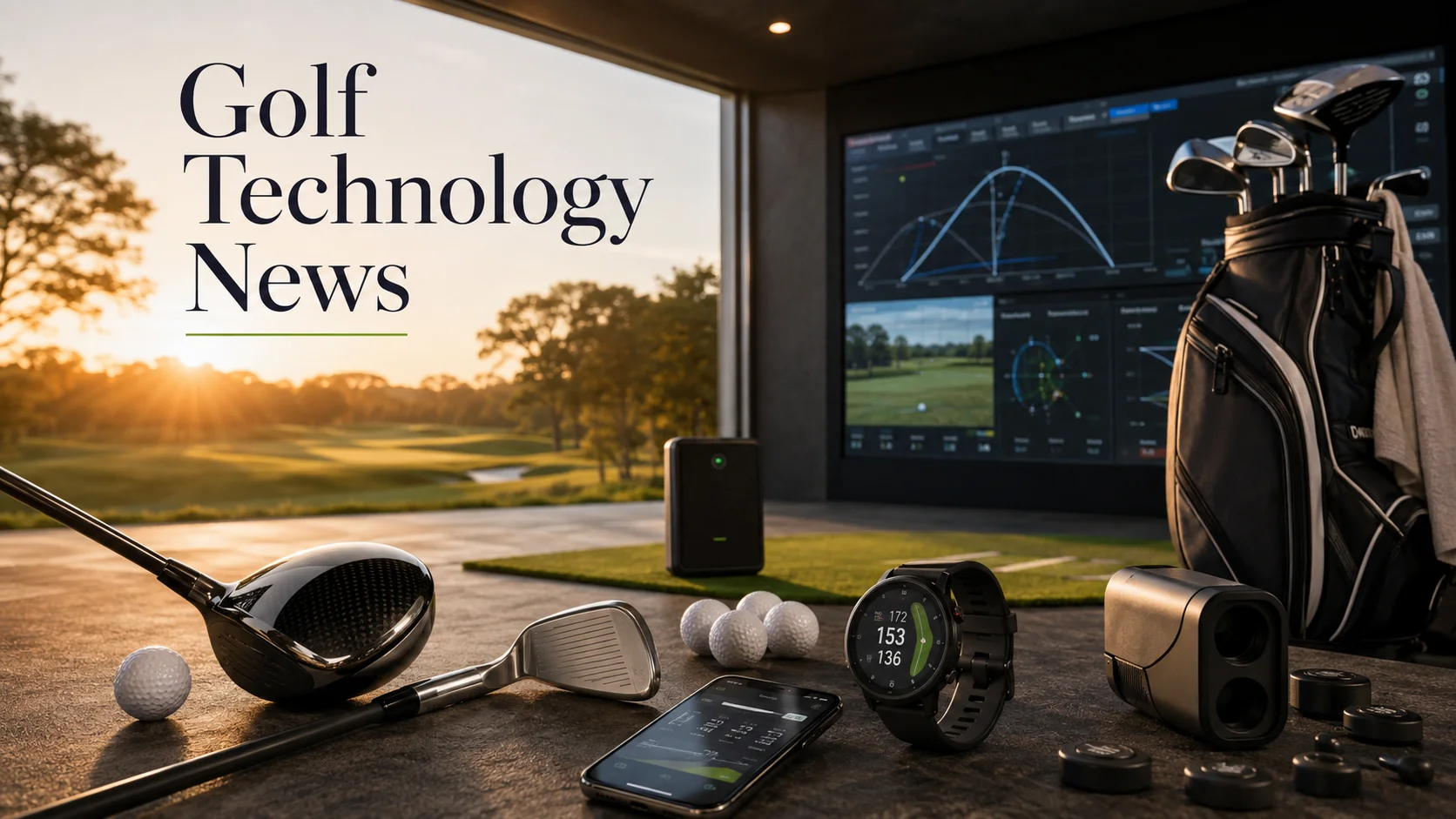
Golf Technology News
Golf Technology News: Latest Innovations and Insights
Golf used to be a game where improvement often came down to practice, feel, coaching, and plenty of patience. Those things still matter, but technology has added something new to the picture: useful data that ordinary golfers can actually understand.
That is why Golf technology news has become much more interesting in 2026. The latest products are not simply trying to look futuristic. They are helping golfers answer practical questions. How far do I really hit each club? Why am I losing distance? Where am I dropping shots? Is my swing speed improving? Which club makes the most sense from this position?
The biggest change is accessibility. Technology that once belonged mostly in professional fitting studios and elite training centers is now appearing in pockets, golf bags, watches, phones, practice ranges, and home setups. Affordable launch monitors are measuring important swing numbers. GPS devices are becoming smarter. Artificial intelligence is turning raw performance data into recommendations. Automatic trackers are recording rounds with less effort from the golfer.
Some of the most notable developments in Golf technology news during 2026 include the arrival of Arccos Air, Shot Scope’s first launch monitor, Garmin’s new Approach G82, and wearable devices designed for increasingly specific types of golfers. Together, these releases show where the industry is heading: more information, less complicated setup, and technology that tries to stay out of the golfer’s way.
Recent Golf Technology News and Product Launches

One of the clearest themes in recent Golf technology news is that manufacturers are trying to make advanced performance information easier to access. Instead of expecting golfers to understand dozens of complicated numbers, many newer products focus on useful information that can be applied during practice or a round.
Arccos Air Makes Automatic Golf Tracking Simpler
Arccos Air is one of the more interesting examples of this change. Introduced in March 2026, the compact device is designed to automatically detect and record shots without requiring golfers to attach individual sensors to every club or carry their phone during the round. It combines GPS, a gyroscope, an accelerometer, and artificial intelligence to recognize golf shots and distinguish them from practice swings.
The important part is not simply that Arccos Air collects data. It is how quietly it does the job. A golfer can place the device in a pocket or attach it to a belt and continue playing normally. After the round, the collected information feeds into the Arccos platform, where golfers can review areas such as Strokes Gained Analytics, club distances, strategy, and performance patterns. Arccos says its AI models were trained using more than 1.5 billion golf shots.
That approach reflects an important direction for Golf technology news. The best golf technology increasingly tries to reduce the amount of work required from the player. Golfers generally do not want to stop after every shot to enter information into an app. Automatic tracking makes the technology more useful because it becomes part of the round rather than another task during the round.
Arccos Air was listed at $349.99 with the first year of its game tracking subscription included. Golfers considering devices like this should still pay attention to ongoing subscription costs because the purchase price may not represent the complete long term cost of using the platform.
Shot Scope LM1 Brings Launch Monitor Data to More Golfers
Another major development is happening at the affordable end of the launch monitor market.
Shot Scope introduced the LM1 as a compact launch monitor aimed at golfers who want useful practice information without paying for a high end professional system. It officially became available in March 2026 with a United States suggested retail price of $199.99 and no subscription fee.
The LM1 measures club speed, ball speed, smash factor, carry distance, and total distance. These are fairly simple numbers compared with the huge datasets produced by premium launch monitors, but they can answer some of the questions that matter most during everyday practice.
A golfer working on speed can watch club speed change. Someone trying to improve contact can use smash factor as an indication of how efficiently speed is being transferred to the ball. Carry distance can help players understand their actual club distances instead of relying on optimistic guesses.
That simplicity is part of the appeal. Not every golfer needs an expensive system measuring every possible element of impact and ball flight. For many recreational players, five understandable numbers may be more useful than a screen filled with information they do not know how to use.
The LM1 is therefore an important product in Golf technology news because it represents a wider shift toward affordable performance tracking. Serious golf data is gradually moving beyond professional coaching studios and into the bags of everyday golfers.
Garmin Approach G82 Combines GPS With Practice Data
Garmin has taken a different approach with the Approach G82. Rather than making golfers choose between a GPS handheld and a practice device, the G82 combines both ideas.
Garmin announced the Approach G82 in January 2026. The device includes a five inch color touchscreen, a built in launch monitor, GPS information for more than 43,000 preloaded courses, and radar based practice features. It can measure ball speed, club speed, smash factor, and swing tempo. Garmin also added putting measurements including stroke length, tempo, club speed, and ball speed. The United States suggested retail price at launch was $599.99.
What makes the G82 particularly interesting is the way it connects practice with actual course management. Golfers can map their typical club distances during practice and then use those numbers with Garmin’s virtual caddie features while playing. The device can also consider information such as elevation, hazards, and supported environmental data when helping golfers make decisions.
That combination may become increasingly common. Instead of owning one gadget for the driving range, another for GPS distances, another for shot tracking, and another for statistics, golfers are beginning to see devices that combine several functions into one connected system.
For anyone following Golf technology news, that convergence is worth watching closely. The competition is no longer simply about which device collects the most data. It is increasingly about which device turns that information into something useful without making golf more complicated.
Golf Technology News: Wearable Tech Trends

Wearable technology is quietly becoming one of the most practical areas of golf innovation. Golfers can now carry considerable computing power on a wrist, in a pocket, or attached to their equipment without dramatically changing the way they play.
Golf Wearables Are Becoming Digital Caddies
The easiest way to understand modern golf wearables is to think of them as small digital caddies.
A GPS watch can show distances to different areas of the course. A shot tracking device can record where shots were played. Connected sensors can build a history of club distances. Software can then study those rounds and identify patterns the golfer may never have noticed alone.
The result is a shift from simple distance measurement toward decision support.
Older GPS products were mainly useful for answering one question: how far is it?
Modern golf technology can go further. It can help players understand how far they normally hit a particular club, where hazards are positioned, what happened during previous rounds, and which parts of their game are costing them shots.
This development is one reason wearable products continue to appear prominently in Golf technology news.
Arccos Air Shows Where Wearable Tracking Is Heading
Arccos Air is technically small enough to disappear into a golfer’s pocket, but its design says a lot about the future of wearables.
The device uses motion sensors, GPS, and AI based shot recognition to record play automatically. There is no need to attach a separate sensor to every club, and the golfer does not need to keep a phone in a pocket throughout the round.
That matters because convenience can determine whether golf technology becomes genuinely useful.
A complicated tracker might collect excellent information, but it will not help much if the golfer stops using it after three rounds. A device that works quietly in the background has a better chance of becoming part of a player’s normal routine.
The broader trend is therefore clear. Wearable technology is becoming less about constantly looking at a device and more about allowing that device to collect useful information while the golfer focuses on playing.
GPS Watches Are Becoming More Specialized
Another interesting development in Golf technology news is the move toward devices designed for specific groups of players.
Garmin’s Approach J1 is a good example. Announced in January 2026, it was created specifically for junior golfers rather than simply shrinking an adult golf watch. Garmin built the device around features intended to help younger players understand the course and develop better playing habits.
The watch includes tee guidance based on ability, personal par settings, club suggestions, a pace of play timer, scoring, and GPS information for more than 43,000 courses. It is also designed with a lighter body and a strap suited to smaller wrists.
This is an important change because it shows golf companies thinking beyond professional players and serious adult enthusiasts. Technology can also be designed to make golf easier to learn.
For junior golfers, that might mean simpler information and realistic goals. For experienced players, it might mean detailed statistics and strategy tools. For casual golfers, it may simply mean accurate distances without unnecessary complexity.
That personalization is likely to remain a major theme as Golf technology news continues to develop. The future of wearables may not be one device trying to serve every golfer. It may be different products delivering the right amount of information for different players, skill levels, and goals.
The most useful wearable is ultimately not the one with the longest feature list. It is the one that gives a golfer information they can understand, trust, and actually use while still allowing golf to feel like golf.
Golf Technology News: Launch Monitors and Tracking Devices

Launch monitors may be one of the biggest reasons Golf technology news feels so different in 2026. Golfers no longer need access to a professional fitting center just to see useful information about their shots. The market now stretches from simple devices costing around $200 to professional systems costing tens of thousands of dollars.
That range matters because different golfers need very different levels of information. Someone working out how far they actually carry a 7 iron may need only a few basic numbers. A coach, club fitter, or competitive player may want detailed information about spin, club path, face angle, impact location, launch conditions, and complete ball flight.
Shot Scope LM1 Makes Launch Data More Affordable
At the affordable end of the market is the Shot Scope LM1. Released in March 2026, the LM1 has a United States suggested price of $199.99 and does not require a subscription. It uses Doppler radar and measures five core numbers: club speed, ball speed, smash factor, carry distance, and total distance.
That sounds basic compared with premium launch monitors, but basic is not necessarily bad.
For a recreational golfer, these numbers can answer some very useful questions. Are you actually gaining speed after changing your swing? Are you striking the ball efficiently? Does your 7 iron carry 155 yards or are you remembering the one perfect shot that flew 165? A simple monitor can replace guesswork with numbers without overwhelming the player with twenty different measurements.
Hands on testing published by Golf Monthly found the LM1 particularly impressive for its price, although the review also noted greater limitations indoors and with heavily curving shots. That is a useful reminder that affordable technology should be judged by what it is designed to do rather than compared blindly with professional equipment.
What Carry Distance, Club Speed, and Smash Factor Actually Mean
Launch monitor terminology can sound more complicated than it really is.
Carry distance tells you how far the ball travels before reaching the ground at the same elevation from which it was hit. For golfers trying to choose clubs correctly, this can be much more useful than total distance because total roll changes depending on turf, slope, weather, and landing conditions.
Club speed measures how fast the clubhead is moving immediately before impact. More club speed creates the potential for more distance, but speed alone does not guarantee a good shot.
Smash factor tells a slightly different story. It is calculated by dividing ball speed by club speed. In simple words, it shows how effectively the golfer turned clubhead speed into ball speed. A golfer can swing extremely hard, but if contact is poor, that extra effort may not produce the expected result.
This is why Golf technology news increasingly focuses on meaningful numbers rather than simply giving golfers more data. The important question is not how many statistics a device can display. It is whether the golfer understands what those numbers are telling them.
Garmin Approach G82 Blends GPS and Launch Monitor Technology
The Garmin Approach G82 takes a different approach because it combines launch monitor functionality with a premium GPS golf handheld.
Garmin introduced the G82 in January 2026 with a suggested retail price of $599.99. It has a five inch color touchscreen, radar based training features, putting measurements, and maps for more than 43,000 preloaded golf courses. During practice, it can provide information including ball speed, club speed, smash factor, and swing tempo.
The interesting part is how the device moves between practice and actual play.
A golfer can work on distances before a round and then use the same device for course maps, target distances, GPS information, and connected golf features once the round starts. Garmin also allows the G82 to work with compatible club tracking sensors and laser rangefinders.
This kind of combination is likely to become increasingly important. Golfers already carry phones, watches, rangefinders, speakers, and other equipment. A product becomes more attractive when it can handle several useful jobs without turning the golf bag into an electronics store.
Blue Tees Rainmaker Targets the Middle of the Market
Blue Tees entered the launch monitor category with the Rainmaker, currently listed at $599.99 in the United States. The portable radar based device has its own display and can provide immediate feedback for measurements such as ball speed, spin rate, and club speed without requiring a separate phone screen for basic operation.
That built in display is important for golfers who want to arrive at the range, switch on a device, hit balls, and see their information without spending the first ten minutes connecting several pieces of equipment.
Blue Tees has also connected Rainmaker to its wider software ecosystem. Through the company’s LAUNCH app, golfers can access additional analysis, session tracking, dispersion information, and simulator compatibility.
This shows another major direction in Golf technology news. Hardware companies increasingly want to build ecosystems rather than sell isolated gadgets. The launch monitor collects the information. The app stores it. Other connected devices can then use that information to help with club selection, strategy, and performance analysis.
Square Golf Omni Pushes Camera Technology Below Premium Prices
Another interesting 2026 launch is the Square Golf Omni Edition.
The Omni arrived at around $1,600 and uses four cameras for tracking. It is designed for both indoor and outdoor use and adds a built in display, club information, ball measurements, and simulator support without a required annual hardware subscription.
Its position in the market is important.
A golfer can spend a few hundred dollars on basic radar technology, move into products around the $600 level, or spend considerably more for camera based systems with deeper information. The Omni attempts to bring more advanced camera technology into the space between consumer products and professional systems.
Testing has also shown why buyers should look beyond a specification sheet. Golf Monthly found the Omni particularly strong indoors but reported less consistent outdoor performance in bright sunlight. That does not make the product poor. It simply demonstrates why golfers should choose technology according to where they actually intend to use it.
TrackMan 4 Shows What Premium Golf Tracking Looks Like
At the professional end sits TrackMan 4.
TrackMan currently lists the system from $25,495. Instead of offering only a small set of measurements, TrackMan 4 combines two radar systems with a camera and provides more than 40 club and ball data parameters. It is designed for indoor and outdoor use and can track the complete ball flight when conditions allow.
This is a completely different category from a $200 personal launch monitor.
A club fitter may need to understand exactly how a different shaft changes delivery. A coach may want club path, face information, spin, attack angle, launch, and impact data. A serious player may need tiny changes measured over hundreds of shots. Those users can justify depth that a casual golfer may never use.
The useful lesson from current Golf technology news is therefore not that everybody should buy a TrackMan. It is that the market now offers meaningful choices at almost every level.
A golfer should begin with the problem, not the product.
If the goal is simply learning club distances and tracking speed, an affordable monitor may be enough. If the goal is building a home simulator, camera performance, software compatibility, required hitting space, and subscriptions become more important. If the device will be used for professional coaching or fitting, measurement depth and proven accuracy deserve much greater weight.
More technology is only better when you actually need it.
Golf Technology News: Smart Clubs and Sensors

The phrase smart golf equipment can be slightly misleading. Golf clubs themselves are not suddenly turning into smartphones.
What is actually happening is more practical. Sensors, grips, rangefinders, connected apps, advanced shafts, and automatic tracking systems are becoming part of the equipment around the club. Together, they can tell golfers where shots were played, how far each club normally travels, what environmental conditions are doing to yardage, and where performance is being lost.
That connected approach is becoming an important part of Golf technology news.
Arccos Smart Sensors Turn Ordinary Clubs Into Tracking Tools
Arccos Smart Sensors show how a normal golf club can become part of a connected data system without changing the clubhead itself.
The current Arccos system uses lightweight sensors that attach to clubs and communicate with compatible devices and the Arccos platform. Arccos says the sensors can automatically track shots and build club level performance information that feeds into Strokes Gained analysis, strategy tools, and other insights.
The practical benefit appears after several rounds.
Many golfers think they know how far they hit each club. Their memory, however, tends to favor the great shots. Tracking systems can build distance information from actual play instead.
That can change decisions.
If your 8 iron normally finishes well short when you have 155 yards left, the data can expose that pattern. If most missed approaches finish to one side, that pattern becomes visible too. Golf technology becomes more valuable when it shows what really happens rather than what the golfer believes happens.
Arccos Smart Laser Adds Weather and AI to Yardage
Arccos has also expanded its connected equipment with the Smart Laser Rangefinder, currently listed at $299.99.
Traditional rangefinders are excellent at answering the basic question of how far away a target is. The Arccos Smart Laser adds environmental information to that calculation. Its connected features can account for factors including slope, wind direction, wind speed, temperature, humidity, and altitude when producing an adjusted Plays Like distance.
Through the Arccos app, the system can also provide AI Strategy, green information, and club recommendations based on the player’s data and course conditions.
There is an important buying detail here. The first year of the Smart Laser subscription is included with the product, while Arccos currently lists renewal at $199.99 per year for the complete connected experience. Golfers comparing smart devices should therefore look at ongoing software costs as carefully as the price on the box.
This is a growing theme across Golf technology news. The physical device is increasingly only one part of what the golfer is buying. Software, data, AI analysis, maps, and future updates can form the rest of the product.
Shaft Technology Is Becoming More Specialized
Not every important golf innovation needs electronics.
Breakthrough Golf Technology’s current FORTA wood shaft range shows how materials and engineering continue to change equipment performance. The company positions the standard FORTA around lighter weight, speed, launch, stability, and carry, while FORTA Tour is intended for faster players who want greater spin control, tighter dispersion, and a stronger flight.
The standard FORTA is currently listed at $399.99, while FORTA Tour is listed at $429.99.
This technology is very different from an electronic sensor, yet it belongs in the same Golf technology news conversation because the goal is similar: make the equipment behave more predictably for a particular golfer.
It also explains why fitting still matters.
A premium shaft is not automatically an upgrade simply because it contains advanced engineering. Weight, flex, launch profile, swing speed, transition, clubhead, and player preference all influence whether a shaft actually works.
Golf technology works best when the product matches the golfer instead of asking the golfer to adapt to the product.
Connected Clubs Are Really Becoming Connected Golf Ecosystems
The bigger story is not one smart grip, sensor, rangefinder, or shaft.
It is the connection between them.
Arccos, for example, currently offers Smart Sensors, Air tracking, the Smart Laser, AI Strategy, Strokes Gained information, and app based course intelligence within the same broader ecosystem.
That points toward a future where golf equipment knows more about the player over time.
Instead of recommending a club based only on the distance to the flag, software can potentially consider your normal club distance, typical miss, wind, elevation, hazard position, and previous performance.
The golfer still makes the decision. Technology simply gives that decision more context.
That difference matters. Good golf technology should support judgment rather than remove the thinking that makes golf interesting.
Golf Technology News: Golf Simulators and Virtual Experiences
Indoor golf is no longer just a rainy day substitute for the real game.
Golf simulators are developing into practice studios, coaching environments, entertainment spaces, competitive platforms, and in some cases entirely new versions of what a golf facility can be.
That is why simulator developments have become a major part of Golf technology news in 2026.
Golf Simulators Now Offer Much More Than Virtual Ball Flight
The basic idea behind a simulator remains simple. A golfer hits a real ball. Cameras, radar, or other sensors capture what happened. Software then recreates the shot inside a digital golf environment.
What has changed is everything surrounding that process.
Modern systems can provide detailed club information, ball data, swing video, virtual courses, online competition, practice games, coaching tools, and long term performance tracking. Some systems combine multiple cameras with launch monitor data so golfers can see not only where a shot went but also what the club and body were doing during the swing.
For golfers living in areas with long winters, limited daylight, or expensive course access, the attraction is obvious. A simulator can turn golf into a year round activity.
GOLFZON CityGolf Rethinks What Indoor Golf Can Be
GOLFZON’s CityGolf concept takes indoor golf much further than the familiar simulator bay.
The company describes CityGolf as a full 18 hole urban golf experience combining advanced simulator technology with real putting greens and bunker areas. Instead of playing every shot into a screen, golfers can move between digital long game environments and physical short game spaces.
GOLFZON says the concept is intended for large urban venues and is designed to recreate the feeling of moving through an actual course while using dramatically less land than a traditional 18 hole facility.
That idea could become significant for Golf technology news because it changes the question from “How realistic can a simulator become?” to “Can technology create a completely different kind of golf course?”
In dense cities where building hundreds of acres of fairways is unrealistic, hybrid digital golf may create opportunities that traditional course development cannot.
It is still different from walking a real course under an open sky, of course. That may be exactly the point. Technology does not always need to replace traditional golf. Sometimes it creates another way to experience it.
Uneekor GameDay Makes Simulator Golf More Immersive
Simulator hardware gets much of the attention, but software is becoming equally important.
Uneekor’s GameDay platform focuses heavily on the playing experience. It supports 4K course environments, local play, real time multiplayer competition, practice modes, and games such as longest drive and closest to the pin. GameDay currently starts at $199 per year as a separate option, while it is also included in higher Uneekor software packages.
That tells us something important about where simulator technology is moving.
Accuracy gets golfers into the system. Experience keeps them there.
Once launch monitors reach a useful level of measurement quality, companies must compete on graphics, ease of use, course libraries, multiplayer features, coaching tools, and how enjoyable the entire setup feels.
A simulator may therefore be purchased for serious practice on Monday and used for a four player virtual round with friends on Saturday.
Overhead Launch Monitors Make Permanent Simulator Rooms Cleaner
For permanent indoor installations, overhead launch monitors have become particularly attractive because the tracking hardware can remain mounted above the hitting area.
Uneekor’s EYE XO2, for example, uses three photometric cameras and provides a larger hitting zone for indoor simulation. ProTee’s VX is another ceiling mounted system aimed at home and commercial simulator environments.
The advantage is convenience.
A portable launch monitor may need to be positioned carefully each time someone plays. An overhead unit can stay in place, leaving the floor around the golfer cleaner and allowing both right handed and left handed players to use the same hitting area more easily.
For a permanent home golf room or commercial facility, that can matter almost as much as the list of available data points.
Cameras and Radar Are Increasingly Working Together
Another major development in Golf technology news is the combination of different tracking technologies.
TrackMan 4 combines radar and camera information. Rapsodo’s MLM2PRO combines radar processing with two cameras. Other simulator systems use several high speed cameras to capture impact and club movement from different angles.
Each approach has strengths.
Radar is particularly useful for tracking ball flight over distance. Camera based systems can capture very detailed information around the moment of impact. Combining technologies can give software more information to work with.
Rapsodo’s MLM2PRO is a useful consumer example. The system combines radar with dual camera vision, supports indoor and outdoor use, records up to 15 metrics, and provides simulator access to more than 30,000 courses.
The bigger trend is clear. Golfers increasingly want more than a number showing carry distance. They want to watch the swing, see ball flight, understand impact, compare sessions, and then take that information into virtual practice.
Virtual Golf Is Becoming Its Own Experience
The most interesting thing about simulator growth may be that virtual golf is slowly developing its own identity.
A simulator can let someone practice a difficult approach repeatedly. It can turn distance control into a game. It can allow golfers in different locations to compete online. It can make famous courses accessible digitally to people who may never have an opportunity to play them physically. Uneekor and TrackMan both now emphasize virtual course libraries, practice experiences, and multiplayer play alongside measurement technology.
Future systems are also likely to make greater use of motion tracking, artificial intelligence, wearable sensors, and increasingly immersive visual environments. Recent 2026 research has even demonstrated the possibility of estimating full body golf swing movement using information from a single wrist worn inertial sensor, showing how much more compact motion analysis may eventually become.
For the reader following Golf technology news, the lesson is simple.
The simulator industry is no longer trying only to recreate where the golf ball goes.
It is trying to recreate the whole experience around the shot, then add things that traditional golf cannot provide: instant data, repeatable practice situations, online competition, video analysis, and personalized feedback.
That does not mean virtual golf replaces the course. It means golfers now have another place to learn, practice, compete, and enjoy the game.
Golf Technology News: AI Coaching and Training Tools

Golf instruction has always depended heavily on human eyes. A coach watches the swing, spots a movement that looks wrong, explains the problem, and gives the golfer something to work on.
Artificial intelligence is beginning to add another layer to that process.
One of the biggest developments in Golf technology news is the rise of AI coaching systems that can study swing video, launch monitor information, club movement, body position, tempo, and ball flight before turning all that data into understandable feedback.
The attraction is easy to understand. Golfers cannot always have a coach standing beside them at the range. An AI training tool can potentially provide feedback after almost every swing, making practice more focused between traditional coaching sessions.
Uneekor Is Bringing AI Deeper Into Golf Training
Uneekor has become one of the companies pushing AI further into simulator based golf instruction.
Its current AI Trainer works inside Uneekor VIEW software and uses Swing Optix cameras to analyze more than 60 swing checkpoints in less than five seconds. The software connects swing mechanics with club movement and ball flight, then provides personalized feedback and a dynamic Swing Score that golfers can use to monitor progress.
Uneekor expanded the system in June 2026 so AI Trainer could analyze almost every club from driver through pitching wedge. That matters because a driver swing and a wedge swing are not supposed to look exactly the same. The software can adjust its analysis according to the club being used instead of judging every movement against one universal swing model.
That makes AI coaching more useful than a simple app that tells every golfer to copy the same textbook position.
AIMY Could Take Personalized Coaching Further
Uneekor also previewed another AI platform called AIMY at the 2026 PGA Show.
AIMY is designed as a broader personalized guidance system that connects player performance information with recommendations over time. Uneekor presented it as technology that can adapt to an individual golfer rather than giving the same generic advice after every session.
There is an important distinction for anyone following Golf technology news.
As of the latest official Uneekor information available in August 2026, AIMY should still be treated as an upcoming platform rather than an established product with years of public use behind it. Uneekor demonstrated the system at the PGA Show and described more development as being ahead.
That distinction matters because golf technology announcements can sometimes make prototypes sound like products already sitting in thousands of homes. Readers should always separate technology being demonstrated from technology that can actually be purchased and used today.
Sportsbox AI Turns Smartphone Video Into 3D Swing Information
Sportsbox AI approaches swing analysis from another direction.
Instead of requiring golfers to wear a collection of physical motion sensors, Sportsbox can use video from a compatible smartphone or camera system to create a three dimensional model of the golf swing. Its software uses artificial intelligence and markerless motion capture to calculate body movement and biomechanics from the recorded video.
That gives golfers and coaches another way to look at the swing.
Traditional video is useful, but it is still a flat picture. A golfer may see their hips turning or their body moving toward the ball without knowing exactly how much movement occurred.
Three dimensional analysis can make those changes easier to measure.
A coach can compare different swings, monitor body positions, establish benchmarks, and see whether a golfer is actually making the movement they have been practicing. Sportsbox says its system can create the three dimensional swing model within seconds without requiring markers or body mounted sensors.
That is an important direction for Golf technology news because advanced motion capture used to require specialized laboratories and expensive equipment. Smartphone based systems are making parts of that analysis available in much more ordinary coaching environments.
How AI Golf Coaching Actually Works
AI golf coaching sounds complicated, but the basic process is fairly simple.
First, the system needs information.
That may come from cameras, a launch monitor, smartphone video, radar, or several sensors working together. The software studies movements such as body rotation, swing path, tempo, posture, club delivery, and changes in position throughout the swing.
The system can then compare those movements with its trained models, the golfer’s previous swings, or other performance benchmarks.
Finally, it turns the analysis into feedback.
Instead of simply showing that the club path changed by a certain number of degrees, a useful AI coach should help the golfer understand what that means and what to work on next.
That final step is where the real battle in AI golf instruction will probably take place.
Collecting more numbers is relatively easy. Explaining which number actually matters to this particular golfer is much harder.
Can AI Replace a Golf Coach?
AI can be extremely useful, but golfers should be careful about treating software like an all knowing instructor.
Even Uneekor describes the strongest approach as combining AI with human coaching. AI can provide consistent feedback, identify repeatable patterns, analyze large amounts of information, and support practice between lessons. Human coaches remain valuable for areas such as long term development, physical limitations, strategy, communication, confidence, and understanding how one swing change affects the rest of a golfer’s game.
There is also a danger in trying to fix every unusual number.
Golf swings are individual. A movement that looks different from an ideal model is not automatically a problem if the golfer delivers the club consistently and produces the desired ball flight.
The most promising story in Golf technology news is therefore not AI replacing instructors.
It is AI giving golfers and instructors better information to work with.
Golf Technology News: Data Analytics and Performance Tracking
Golfers are very good at remembering the wrong things.
One terrible bunker shot can make someone believe their short game ruined the round. One missed three foot putt can feel like the reason they shot 88 instead of 84.
The numbers may tell a completely different story.
Modern golf analytics are designed to separate what a golfer feels happened from what actually cost them strokes. That is why performance tracking has become such an important area of Golf technology news.
Strokes Gained Gives Golf Statistics More Context
One of the most useful ideas in modern golf analytics is Strokes Gained.
Traditional statistics still have value. Fairways hit, greens in regulation, putts per round, and scrambling percentage can all reveal something about a golfer.
The problem is that they can sometimes hide important context.
Imagine two tee shots.
The first finishes one yard into the rough but leaves only 80 yards to the green. The second lands perfectly in the fairway but leaves 190 yards.
A basic fairways statistic marks the first shot as a failure and the second as a success. That does not necessarily tell us which shot gave the golfer the better chance of making a lower score.
Strokes Gained evaluates shots according to the golfer’s starting position, finishing position, and the expected number of strokes required from those positions. It can then show whether the shot gained or lost ground compared with a selected performance benchmark. Shot Scope divides its Strokes Gained analysis into tee shots, approaches, short game, and putting.
Arccos uses a similar idea while allowing golfers to compare performance with a target handicap. Its current app breaks Strokes Gained into driving, approach, short game, and putting, then provides deeper information such as distance breakdowns, dispersion information, and club performance.
Suddenly, the golfer is not simply asking, “Did I hit enough greens?”
They can ask, “Where am I actually losing shots?”
That is a much more useful question.
Arccos Turns Round Data Into Practice Priorities
Arccos has been pushing performance tracking beyond simply displaying statistics.
Its rebuilt 2026 app includes scoring trends, Strokes Gained information, club dispersion graphs, distance distributions, club comparisons, course history, AI generated course insights, and personalized practice recommendations.
One of its more useful features is called Where to Focus.
The system analyzes Strokes Gained information relative to the golfer’s selected goal handicap and identifies the shot category currently costing the player the most strokes. Golfers can then choose that area as an improvement target and monitor how the numbers change over future rounds.
This is where golf analytics become much more practical.
Suppose a golfer thinks putting is the problem because they keep facing long first putts. Data may show that approach shots are actually costing more strokes because the golfer rarely hits the ball close enough to the hole.
Instead of spending another month buying putting aids, that player might get more value from working on approach distance control.
That is the difference between collecting information and using information.
Does Arccos Really Help Golfers Lower Their Handicap?
Arccos currently states that new members lower their handicap by an average of 25 percent during their first year.
It is an eye catching number, but readers should understand what it represents.
This is a result reported by Arccos from its own member data. It should not be interpreted as a promise that purchasing a tracking system will automatically reduce every golfer’s handicap by 25 percent.
A sensor cannot hit the shot for you.
What analytics can do is make practice decisions more informed. If a golfer knows exactly where shots are being lost, practice can become more specific. Whether that information turns into a lower handicap still depends on practice quality, instruction, physical ability, course management, and how consistently the player applies what they learn.
That distinction is important whenever Golf technology news includes performance claims from manufacturers.
Shot Scope Provides Another Route Into Detailed Analytics
Shot Scope offers a similar idea without requiring golfers to interpret every round manually.
Its tracking products can send performance information into the Shot Scope mobile app and web dashboard, where golfers can review club distances, scoring performance, course history, Strokes Gained information, and more than 100 statistics. Shot Scope currently provides access to these statistics without an additional subscription fee for users of its performance tracking products.
Its MyStrategy feature adds another interesting layer.
Golfers can use their own recorded shot patterns when planning how to play a course. Instead of assuming every driver travels down a perfect straight line, the system can use recent shot data to show the player’s actual dispersion pattern.
That can influence decisions before the golfer even reaches the first tee.
Maybe driver brings too much trouble into play on a narrow hole. Maybe a shorter club produces a better scoring opportunity. Maybe the golfer’s normal miss means aiming directly at the flag makes little sense.
Those are strategy questions, not swing questions.
Analytics are increasingly helping with both.
Club By Club Data Can Expose Expensive Guesswork
One of the simplest benefits of golf tracking is learning actual club distances.
Shot Scope provides longest distance, average distance, and what it calls Performance Average. Performance Average removes extreme shots to provide a number closer to what the golfer can normally expect from that club.
That sounds almost too simple to matter.
It matters a lot.
Golfers routinely choose clubs using their best remembered distance rather than their normal distance. If someone once hit a 7 iron 175 yards, that number can become permanently attached to the club in their mind even if most solid shots travel 160.
A tracking system has no interest in protecting the golfer’s ego.
It simply records what happened.
Over enough rounds, those numbers can make club selection much more realistic.
The Best Analytics Tell You What to Practice Next
The future of performance tracking is not another page containing fifty graphs.
The more valuable direction is interpretation.
Arccos is already moving toward personalized focus recommendations. Shot Scope combines performance statistics with handicap benchmarks and course strategy tools. AI systems are beginning to connect swing information with launch monitor results.
That means Golf technology news is gradually moving from data collection toward decision making.
Instead of telling a golfer they lost 1.4 strokes on approach shots, software can increasingly help answer the next question.
What should I do about it?
That is when statistics become coaching rather than just numbers.
Golf Technology News: Sustainability and Green Innovations
Not every important golf technology development is designed to make a ball travel farther.
Some of the most meaningful innovation is happening behind the scenes, where manufacturers and golf facilities are trying to reduce waste, improve material use, manage water more accurately, and make course operations more efficient.
Sustainability has therefore become another growing part of Golf technology news.
Recycled Materials Are Appearing Across Golf Products
Golf equipment relies on materials such as steel, titanium, carbon fiber, rubber, plastics, fabrics, and synthetic compounds. Producing all of that equipment carries an environmental cost, so manufacturers are increasingly looking for ways to reuse materials or reduce waste during manufacturing.
Callaway says every Callaway Golf club head includes steel recycled from scrap generated during the casting process. The company’s wider sustainability program also includes products made with recycled materials and initiatives designed to extend the usable life of equipment.
The same trend is visible in apparel and accessories.
Callaway’s sustainability reporting says TravisMathew’s Eco Collection has included garments made using postconsumer recycled polyester or organic cotton. OGIO golf travel covers have also used recycled materials and manufacturing processes designed to reduce water consumption during fabric dyeing.
These changes may not produce the excitement of a new driver launch, but they show that golf product innovation is beginning to include questions about what equipment is made from and what happens to it after the golfer is finished using it.
Longer Product Life Can Matter as Much as New Materials
Sustainability is not only about creating something from recycled material.
Keeping existing products in use for longer can also reduce waste.
Callaway highlights programs including Trade In! Trade Up!, repair initiatives, resale, and equipment donations as part of its broader product lifecycle approach.
For golfers, this offers a useful way to think about buying equipment.
The most environmentally responsible choice is not automatically the newest product carrying a green label. A durable golf bag used for many seasons or a club that can be traded, resold, or passed to another player can also keep equipment out of the waste stream.
Sustainability becomes more meaningful when the entire product lifecycle is considered.
Golf Courses Are Using Technology to Save Water
The bigger sustainability story may be happening on the golf course itself.
Water is one of the most important resources required to maintain golf facilities, especially in dry areas of the United States. The USGA reported in 2025 that total golf course water use in the United States had fallen by almost 30 percent since 2005, largely because of improvements in irrigation practices.
Technology can push those savings further.
Modern systems can use soil moisture sensors, weather stations, remote sensing, irrigation software, and site specific scheduling to determine where water is actually needed. The USGA Water Conservation Playbook specifically recommends data from soil moisture sensors, weather stations, and remote sensing platforms as part of smarter irrigation scheduling.
Instead of watering a large section of the course simply because the calendar says it is irrigation day, a superintendent can make decisions using actual turf and weather conditions.
That means water can be applied where it is needed rather than everywhere equally.
Moisture Sensors Are Turning Turf Management Into a Data Problem
The USGA introduced its own Moisture Meter in 2025 to provide superintendents with information about soil moisture, salinity, and temperature. Measurements can be uploaded into the USGA DEACON management platform, creating a digital record that helps course teams make more informed decisions about irrigation and turf health.
Real world projects show what that approach can look like.
In a 2026 sustainability example published by GEO Foundation for Sustainable Golf, Rock Golf in Finland reported using soil sensors, a moisture meter, an onsite weather station, and connected irrigation software to target water more precisely.
Another 2026 example from Golf Gerre Losone described technology that collects georeferenced soil moisture information during normal maintenance work and turns it into maps that help staff identify where irrigation is actually required.
That may not sound as glamorous as an AI swing coach, but it is exactly what useful technology should do.
Measure the problem more accurately, then use fewer resources solving it.
GEO Certified Is Giving Golf Facilities a Sustainability Framework
Technology alone cannot make a golf course sustainable.
Management practices, land use, energy, water, biodiversity, waste, and community impact all play a role.
GEO Certified provides an international certification framework for golf facilities, developments, and tournaments that want to demonstrate environmental and social responsibility. The certification is administered through GEO Foundation for Sustainable Golf and is designed around ongoing improvement rather than a single piece of equipment.
This matters because sustainability claims can otherwise become vague very quickly.
A club installing one electric machine does not automatically become an environmentally responsible operation. Certification and measurement give facilities a more structured way to show what they are actually changing.
Electric Caddies Are Changing the Walking Experience
Technology is also changing how golfers move around the course.
MGI introduced E BOOST at the 2026 PGA Show as a lightweight pushcart with a concealed electric motor. Instead of behaving like a fully autonomous caddie, the golfer pushes it normally and activates powered assistance when extra help is needed on hills, rough ground, or later in the round.
The United States version is currently priced at $599. MGI says the system uses a hidden 240 watt brushless motor to provide powered assistance while preserving the basic experience of walking and pushing the cart.
It is worth being precise about where this fits into sustainability.
An electric caddie should not automatically be described as environmentally friendly simply because it uses a battery. Manufacturing batteries and electronics also has an environmental impact.
The more defensible benefit is that technology such as E BOOST can make walking the course practical for golfers who want assistance without moving to a ride on golf cart.
That is a different claim, and a more useful one.
Sustainable Golf Technology Is Becoming More Measurable
The most encouraging sustainability trend in Golf technology news is measurement.
Courses can measure soil moisture instead of guessing. Irrigation systems can respond to actual conditions. Facilities can monitor water consumption over time. Manufacturers can document recycled content. Golf organizations can create certification standards and publish progress.
That approach matters because sustainability becomes much easier to discuss when results can be measured.
Golf technology is often sold with the promise of helping players save strokes.
Some of its most important future developments may instead be about helping the industry save water, materials, energy, and waste.
Golf Technology News: Pricing and Buying Guide
Golf technology can cost less than a new wedge or more than a small car.
That huge price range is one reason buying golf technology can become confusing. A golfer looking for a simple way to learn carry distances may see a $200 launch monitor sitting beside equipment costing thousands of dollars and wonder whether the cheaper product is missing something essential.
Usually, the better question is not which device has the most technology.
It is which device gives you the information you actually need.
Current Golf technology news shows a market with products for almost every budget. Entry level launch monitors have brought basic performance numbers within reach of recreational players, while professional systems continue to offer much deeper measurements for coaches, fitters, simulator businesses, and elite golfers.
How Much Do Golf Launch Monitors Cost?
Launch monitors now cover one of the widest price ranges in golf technology.
At the affordable end, products such as the Shot Scope LM1 sit around $200 and concentrate on the measurements most recreational golfers understand immediately, including club speed, ball speed, smash factor, carry distance, and total distance.
Move higher and products become more sophisticated.
Blue Tees currently lists its Rainmaker portable launch monitor at $599.99. It tracks more than 20 performance measurements when its hardware and software features are combined, while also supporting simulator applications and deeper session analysis.
At the professional end, the price difference becomes enormous.
TrackMan currently lists TrackMan 4 at $25,995, with an additional software subscription of $1,100 per year. The system is intended for serious indoor and outdoor analysis and provides more than 40 club and ball measurements.
That does not mean a $25,995 system makes somebody more than 100 times better than a golfer using a $200 monitor.
It means the professional system is solving a different problem.
A club fitter, teaching professional, equipment manufacturer, or elite player may need extremely detailed information and proven measurement performance. A recreational golfer trying to establish reliable club distances may never use most of those extra measurements.
How Much Do GPS Golf Watches Cost?
GPS golf watches generally occupy a more approachable part of the market.
Garmin has products across several price points. Its Approach S44 launched at $299.99 and the Approach S50 at $399.99, while the premium Approach S70 series launched from $649.99. Garmin’s junior focused Approach J1 had a suggested price of $299.99 and was recently listed below that price on Garmin’s United States store.
For most buyers, paying more generally brings a combination of better displays, richer maps, additional course features, health tracking, longer feature lists, and deeper integration with other devices.
But plenty of golfers do not need all of that.
If you mainly want front, middle, and back distances to the green, paying for advanced fitness information and detailed course mapping may not improve your golf experience very much.
The best golf watch should match how you actually play.
How Much Should You Spend on a Rangefinder?
Premium laser rangefinders generally sit in the few hundred dollar range.
Arccos currently lists its Smart Laser Rangefinder at $299.99. The device combines traditional laser yardage with connected features such as weather adjusted Plays Like distances, AI Strategy, Green Maps, and app integration.
Bushnell’s Tour V7 Shift is currently listed at $399.99 and includes its Slope technology, an OLED display, yardage recall, and connected features.
This is another category where feature lists can make purchasing more complicated than necessary.
If all you want is an accurate distance to the flag, a straightforward laser may be enough.
If you want slope information, environmental adjustments, connected course information, club recommendations, and other software features, paying more may make sense.
The extra money should buy something you will actually use.
Arccos Air Shows Why Purchase Price Is Only Part of the Cost
Arccos Air provides a useful example of why golfers should look beyond the number shown beside the Buy button.
Arccos currently lists Air at $349.99. It automatically tracks shots while sitting in the player’s pocket and connects that information with the company’s broader analytics platform.
The first year of Arccos game tracking access is included for qualifying new customers, but Arccos game tracking products use an ongoing membership model. Its Smart Sensors, for example, currently renew at $16.67 per month when billed annually.
Subscriptions are not automatically a bad thing.
Cloud based maps, AI analysis, software development, course databases, weather information, and new features cost money to maintain.
The problem comes when somebody buys a $300 or $400 device without realizing that keeping the features they care about may require another payment every year.
Before purchasing any connected golf product, check the total cost over two or three years.
That number can look very different from the original purchase price.
Bushnell Tour V7 Shift Shows the Value of Simplicity
Bushnell’s Tour V7 Shift sits around $400, making it considerably more expensive than many basic laser rangefinders.
What buyers are paying for is not simply the ability to produce a distance.
Premium rangefinders compete through optics, target locking, display quality, slope calculations, build quality, speed, consistency, and convenience.
For some golfers, those differences matter every round.
For others, a less expensive laser that locks onto a flag and gives a reliable number does everything they need.
This is where personal priorities become more important than rankings.
A product can be excellent and still be unnecessary for you.
Check Subscription Fees Before Buying
Subscription costs deserve special attention in modern Golf technology news because software is becoming a larger part of golf hardware.
Arccos Smart Laser is another good example. The device currently costs $299.99 and includes its first year of Smart Laser access. After that, the connected Smart Laser subscription is listed at $199.99 per year.
TrackMan 4 also has an ongoing software cost, currently listed at $1,100 per year.
Before purchasing, ask what happens if you stop paying.
Does the hardware continue working?
Do you lose only advanced analytics?
Do simulator courses disappear?
Can you still see basic measurements?
Do historical rounds remain available?
Those questions matter because the best value is not determined by today’s price alone.
Do Not Ignore Warranty and Support
Golf electronics live a harder life than many other gadgets.
They get thrown into golf bags. They sit in hot cars. They encounter dust, rain, vibration, accidental drops, and thousands of trips around the course.
Warranty and customer support therefore deserve more attention than they usually receive.
Arccos, for example, currently provides a one year limited warranty on its Smart Laser Rangefinder along with a 30 day return period for direct purchases.
Coverage varies between manufacturers and products, so buyers should check warranty length, water resistance, battery replacement, repair options, return policies, and software support before spending serious money.
A slightly cheaper product becomes much less attractive if getting help after something breaks is difficult.
Which Golf Technology Features Actually Matter?
Start with your problem.
If you struggle to choose the right club because you do not know your real distances, look for reliable carry information and club tracking.
If you practice speed, club speed and ball speed become useful.
If you want a home simulator, software compatibility, indoor accuracy, hitting area, computer requirements, and subscription fees become important.
If you mainly want faster decisions on the course, GPS or a laser rangefinder may provide more value than a launch monitor.
If you are serious about improving, Strokes Gained analysis and automatic shot tracking may expose weaknesses that ordinary scorecards miss.
Buying technology because it is new is easy.
Buying technology because it solves a specific problem is usually much smarter.
Golf Technology News: Pro vs Amateur Perspectives
Professional golfers and weekend golfers may use some of the same technology, but they often use it for completely different reasons.
A professional is looking for tiny advantages.
An amateur may simply want to stop guessing.
That difference explains a lot about how each group responds to Golf technology news.
How Professional Golfers Use Technology
At the professional level, data can become extremely detailed.
PGA TOUR technology includes ShotLink and newer tools such as TOURCAST Range. At THE PLAYERS Championship in March 2026, TOURCAST Range began tracking practice swings and displaying information including carry distance, ball speed, apex, curve, and launch and landing angles.
For a Tour player, a few yards can matter.
A tiny change in spin may change how a driver behaves in the wind. A different launch window may determine whether an iron stops close to the hole. A small change in putting alignment may matter over four competitive rounds.
The purpose of technology at that level is not usually to explain basic golf.
It is to find small areas where an already exceptional player can become slightly more predictable.
Arccos Is the Official Game Tracker of the PGA TOUR
Arccos is officially listed by the PGA TOUR as its Official Game Tracker. The TOUR describes the platform as combining artificial intelligence with real course data to provide performance insights.
That does not mean Tour players are all carrying Arccos devices during tournament rounds.
It means Arccos has an official relationship with the PGA TOUR and offers amateur golfers a form of detailed shot tracking and analytics inspired by the kind of performance analysis used at elite levels.
Major champion Matt Fitzpatrick is also an Arccos investor and ambassador. Arccos says he has used detailed performance information as part of his preparation and analysis, and Fitzpatrick describes the platform’s insights as transformational for his game.
The interesting part is not the endorsement itself.
It is what Fitzpatrick represents.
He has long been associated with detailed statistical tracking, showing how seriously professional golfers can treat information that many recreational players never record.
Professionals Use Data to Find Small Gains
A professional golfer generally already knows how far a 7 iron goes.
The questions become much more precise.
How does that distance change from a certain lie?
What happens when the strike moves slightly toward the toe?
Which driver setting produces the tightest dispersion?
What happens to launch and spin when a different shaft is installed?
How does a particular target strategy change expected score?
That is why premium launch monitors and sophisticated fitting systems make more sense at professional level.
They can measure details that may be unnecessary for somebody who plays twice a month.
Amateur Golfers Usually Need Simpler Answers
For most amateurs, the useful questions are more basic.
How far do I actually carry my clubs?
Am I losing most of my shots with the driver or approaches?
Does my miss usually go left or right?
Would driver or 3 wood leave me in a better position on this hole?
Is my swing getting faster?
Those questions can often be answered without professional level equipment.
That is why affordable launch monitors, automatic shot trackers, GPS watches, and straightforward rangefinders remain so important to Golf technology news.
A $200 device that answers the golfer’s real question can provide more practical value than a $20,000 system filled with measurements they never use.
Amateur Golfers Care More About Convenience
Another difference is setup.
A professional golfer may spend hours testing clubs with a fitter or working through data with a coach.
The average player often wants to arrive at the range, put a device behind the ball, and start hitting shots.
Plug and play simplicity matters.
Shot tracking that happens automatically matters.
A rangefinder that produces a number immediately matters.
A GolfWRX discussion among recreational golfers about buying launch monitors reflects this divide. Some users described personal launch monitors as valuable when paired with serious, regular practice, while others questioned whether the expense made sense for golfers who would not consistently use the information.
That is probably the fairest way to judge golf technology.
Value depends on use.
A $500 product used intelligently every week can be excellent value. A $5,000 device collecting dust in the garage is not.
Professionals Have Teams to Interpret the Numbers
There is another difference people sometimes overlook.
Professional golfers rarely work alone.
They may have coaches, club fitters, caddies, equipment representatives, statisticians, and other specialists helping interpret performance information.
An amateur may open an app and see ten unfamiliar numbers with no idea which one matters.
That is why consumer golf technology increasingly needs to explain information rather than merely display it.
AI coaching, personalized practice suggestions, simple dashboards, and automated strategy tools are partly solving that problem.
The most useful technology for an amateur may therefore be the device that provides fewer numbers but explains them better.
Golf Technology News: Future Trends in Golf Tech
The next phase of golf technology will probably not be defined by one spectacular gadget.
It will be defined by connection.
Your swing data, club data, course information, weather, shot history, GPS position, and equipment may increasingly communicate with one another.
That is the direction becoming visible across Golf technology news in 2026.
AI Will Move From Analysis to Real Time Assistance
Artificial intelligence already analyzes golf swings, recommends clubs, identifies weaknesses, and helps players plan holes.
The next step is making that intelligence easier to access during the game.
Arccos and Meta provided a strong example in June 2026. Arccos now works with compatible Meta AI glasses in the United States and Canada, allowing golfers to ask for distances, club recommendations, weather information, score information, and course strategy without taking out a phone.
That is a significant change.
Golf apps traditionally required players to look down at a screen.
Wearable AI can move information into the normal flow of a round.
A golfer may eventually be able to walk toward a ball, ask a question naturally, receive context about the shot, make a decision, and continue playing.
The technology becomes less visible even while becoming more powerful.
Equipment Sensors Will Become Better Hidden
Connected golf equipment is also moving toward sensors that disappear inside the product.
CONECTD GOLF provides a current example. Its putting sensor captures information such as face alignment, stroke path, impact dynamics, and tempo. The PGA TOUR has invested in the company and designated CONECTD as its Official Putting Technology.
The company’s longer term goal is particularly interesting.
Instead of attaching a noticeable gadget to a putter, CONECTD wants the technology embedded into the equipment itself. The current module weighs 32 grams, and the company has discussed working with manufacturers to integrate connected measurement directly into putter designs.
That is a more realistic near term direction than dramatic ideas about mysterious implantable club technology.
The sensors will probably become smaller, lighter, and harder to notice until data collection simply becomes part of the club.
AI Equipment Fitting Will Become More Personalized
Artificial intelligence is already involved in equipment design.
Callaway’s 2026 Quantum driver uses AI optimized face mapping to tune different parts of the clubface around real impact patterns. The system works with the driver’s multi material face construction to optimize factors such as speed, spin, launch, and accuracy across the face.
Fitting is also becoming increasingly data driven.
Professional fittings already combine launch conditions, strike patterns, club delivery, speed, spin, and player preferences. The logical next stage is software that can process those variables faster and narrow down equipment combinations before the golfer hits dozens of options.
That does not mean AI will simply tell everyone which driver to buy.
Golfers respond differently to appearance, feel, sound, shaft weight, head shape, and confidence.
The strongest future systems will probably combine machine analysis with human fitting rather than remove the fitter entirely.
Predictive Course Management Will Become Smarter
Today’s course strategy tools already know more than distance.
Arccos can combine a golfer’s tendencies with course layout, wind, elevation, and other conditions when providing strategy recommendations. Its Meta AI integration can then make portions of that information available through natural voice interaction.
Future systems could go further.
A strategy engine could know that your driver normally misses right, your 5 iron performs poorly from rough, the wind is increasing, the green is firm, and the left side of the hole creates the easiest next shot.
Instead of saying only, “You have 172 yards,” it could help answer, “What is the smartest way for me to play this hole?”
That shift from distance information to probability based decision making may become one of the most useful developments in golf technology.
Augmented Reality Could Change How Golf Information Is Displayed
Augmented reality already exists in parts of professional golf coverage.
The PGA TOUR has previously used AR technology to place interactive three dimensional models of tournament holes onto real surfaces, allowing users to explore player shots and course layouts digitally.
For players, the more interesting future possibility is bringing useful information into glasses or other lightweight displays.
Imagine looking toward a green and seeing a safe target area, the distance to a bunker, or your normal shot dispersion without reaching for a phone.
Arccos integration with Meta AI glasses shows that hands free golf information has already moved beyond the concept stage. Full visual augmented reality for everyday golf, however, remains an emerging direction rather than a normal feature on courses in 2026.
That distinction matters.
Interesting technology should not be described as widely available before it actually is.
Golf Technology Will Become More Connected
The larger future trend is the Internet of Things idea applied to golf.
A rangefinder can already communicate with an app.
A watch can communicate with club tracking sensors.
A launch monitor can send information into simulator software.
A tracking platform can combine past shots with weather and course information.
AI glasses can retrieve strategy information without requiring the golfer to touch the phone.
As these systems connect, the golfer develops something close to a digital performance profile.
The system knows your distances.
It knows your common misses.
It knows which areas of the game cost you strokes.
It knows which courses you play.
It knows how weather changes your expected shot.
That could make future golf technology far more personal than today’s standalone gadgets.
The Future Will Be About Better Decisions, Not More Numbers
For years, golf technology competed partly by offering more measurements.
Ten metrics became fifteen. Fifteen became twenty. Twenty became forty.
That race will continue, but it may become less important to ordinary golfers.
The next real breakthrough will be turning those measurements into one useful answer.
What should I practice today?
Which club should I choose?
Where should I aim?
Why did that shot curve?
Which equipment actually suits my swing?
That is where AI, connected sensors, analytics, and smarter software are beginning to meet.
The future of Golf technology news may therefore be surprisingly simple.
More technology in the background.
Less confusion in front of the golfer.
FAQs
What Is a Golf Launch Monitor?
A golf launch monitor is a device that measures what happens when you hit a golf ball. Depending on the model, it may track information such as ball speed, club speed, launch angle, spin, carry distance, club path, face angle, and total distance.
Affordable models usually concentrate on a smaller set of important measurements, while professional systems can provide dozens. TrackMan 4, for example, offers more than 40 club and ball data parameters.
How Does AI Golf Coaching Work?
AI golf coaching uses information from cameras, smartphones, launch monitors, sensors, or tracking systems to study a player’s movement and shot results.
Software can identify patterns in the swing, compare movements across different shots, and provide feedback about areas that may need attention. More advanced systems can also connect swing information with ball flight and club data.
AI is most useful as an additional source of feedback. It does not automatically replace the judgment of an experienced instructor.
Are Smart Golf Clubs and Sensors Worth It?
They can be, particularly if you use the information regularly.
A shot tracker can reveal actual club distances and common misses. A putting sensor can measure stroke movement. A smart rangefinder can account for more than simple line of sight distance.
However, golfers who do not review their information or change anything based on it may receive little value from the extra cost.
Buy the data you intend to use.
Do I Need Golf Data Analytics to Improve?
No.
People improved at golf long before Strokes Gained dashboards and AI existed.
Analytics simply make it easier to identify where improvement may produce the largest benefit. Instead of guessing that putting is ruining your scores, tracking may reveal that approach shots are the bigger problem.
You still need practice and good decisions to turn information into improvement.
What Golf Technology Is Best for Beginners?
Beginners usually benefit most from simple technology.
A GPS device can make course navigation easier. A basic rangefinder can provide clear yardages. An affordable launch monitor can help establish club distances. Automatic shot tracking can become useful once the golfer begins playing regularly enough to build meaningful data.
There is usually no reason for a beginner to start with the most expensive professional system available.
Is an Expensive Launch Monitor More Accurate?
Premium systems generally provide more measurements, more advanced tracking technology, deeper software, and features intended for professional coaching, fitting, or simulator use.
That does not mean every golfer needs one.
A recreational player may get everything required from a much cheaper monitor if the main goals are club speed, ball speed, carry distance, and basic practice feedback.
Choose accuracy and features according to how you plan to use the device.
Do Golf Technology Products Require Subscriptions?
Some do and some do not.
Arccos uses subscriptions for parts of its connected tracking and Smart Laser ecosystem. TrackMan 4 also has an annual software subscription. Other golf devices may provide their core functions without recurring payments.
Always check what is included before buying and what features disappear if you decide not to renew.
Can Professional Golfers Use Technology During Tournaments?
The answer depends on the device, feature, competition, and applicable Rules of Golf.
Technology that is perfectly useful during practice may have features that cannot be used during competitive rounds. Some devices include tournament modes that disable functions such as slope or environmental adjustments.
Golfers competing in an event should always check the specific competition rules before using advanced technology during play.
Will AI Replace Golf Coaches?
AI is more likely to change coaching than eliminate coaches.
Artificial intelligence can analyze many swings quickly, identify patterns, store progress, and provide immediate feedback. A human coach can understand the golfer’s goals, physical limitations, emotions, learning style, strategy, and the wider consequences of a swing change.
The strongest training environment may combine both.
What Is the Biggest Trend in Golf Technology News for 2026?
The biggest trend is connection.
AI, launch monitors, shot tracking, smart rangefinders, simulator systems, wearable technology, and performance analytics are beginning to work together rather than exist as separate gadgets.
Arccos integration with Meta AI glasses, the PGA TOUR investment in connected putting technology, AI designed clubfaces, and increasingly sophisticated performance platforms all point in the same direction.
Golf technology is becoming less about owning another gadget and more about building a connected system that understands how an individual golfer actually plays.


