

-
- No Comments
- December 20, 2025

How to implement long-tail keywords for SEO
1. Introduction
Long-tail keywords are the quiet workhorses of SEO. They don’t shout. They don’t chase vanity traffic. Instead, they whisper directly to users who already know what they want and are closer to taking action.
In a search landscape dominated by fierce competition and increasingly intelligent algorithms, ranking for broad keywords alone is no longer a realistic or profitable strategy. Long-tail keywords allow you to bypass the noise, reach specific audiences, and attract visitors who are more likely to convert.
This guide breaks down how to implement long-tail keywords step by step from understanding what they are, to placing them strategically within your content, and finally optimizing them for measurable SEO gains. No theory overload. Just practical, implementation-focused guidance.
2. What Are Long-Tail Keywords and Why They Matter
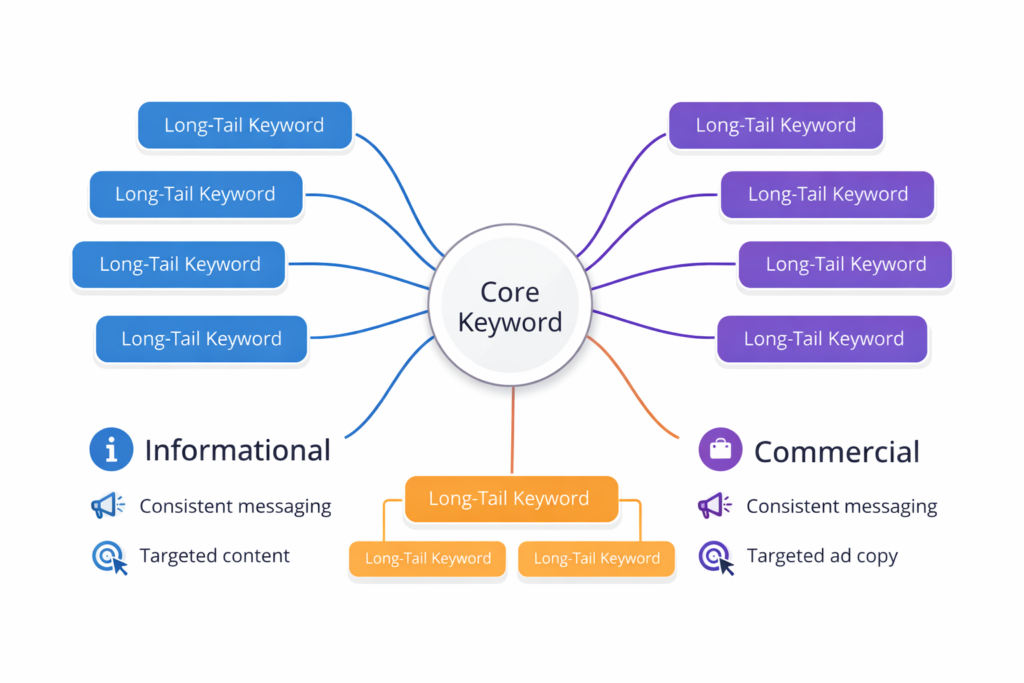
2.1 Definition of Long-Tail Keywords
Long-tail keywords are longer, more specific search phrases, typically made up of three or more words. Unlike broad keywords, they reflect clear user intent and target niche searches rather than mass traffic.
Key characteristics of long-tail keywords include:
- Length: Usually 3–6+ words
- Specificity: Narrowly focused on a product, solution, or question
- Intent-driven: Strong signals of what the user actually wants
For example, instead of targeting “earbuds,” a long-tail keyword would be “best wireless earbuds for running in rain.” The difference isn’t just length—it’s intent clarity.
2.2 Benefits of Using Long-Tail Keywords
Long-tail keywords aren’t just easier to rank for they’re smarter to target.
Lower competition
Broad keywords are battlegrounds dominated by established sites. Long-tail phrases face significantly less competition, making them ideal for newer websites or pages looking to gain traction faster.
Higher conversion rates
Users searching with specific phrases are further down the decision funnel. They’re not browsing—they’re choosing. That specificity translates directly into higher conversion potential.
More qualified traffic
Long-tail keywords attract visitors who are aligned with your content, offer, or solution. This means better engagement, lower bounce rates, and traffic that actually matters.
In short, long-tail keywords trade volume for value and in modern SEO, that trade is almost always worth it.
3. Understanding Search Intent Behind Long-Tail Keywords
Long-tail keywords are powerful because they reveal intent. Every detailed search phrase tells a story about what the user wants, how urgently they want it, and where they are in the decision process. Understanding this intent is what separates random keyword placement from strategic SEO implementation.
3.1 Types of Search Intent
Informational intent
These searches are driven by curiosity or problem-solving. The user wants answers, explanations, or guidance.
Example: “how to implement long-tail keywords for SEO”
Commercial intent
Here, the user is researching options before making a decision. They’re comparing, evaluating, and narrowing choices.
Example: “best SEO tools for long-tail keyword research”
Transactional intent
These searches signal readiness to act—buy, sign up, or request a service.
Example: “SEMrush subscription pricing for keyword research”
Long-tail keywords often sit squarely in the commercial and transactional stages, which is why they convert so well.
3.2 Why Intent Matters for Implementation
Matching content to user expectations
If your content doesn’t align with the intent behind a keyword, rankings won’t stick—even if you rank temporarily. Google prioritizes pages that satisfy the searcher’s goal, not just keyword usage.
Examples of intent-based phrases
- Informational: “what are long-tail keywords in SEO”
- Commercial: “long-tail keyword research tools comparison”
- Transactional: “buy SEO keyword research software”
When you implement long-tail keywords correctly, you’re not just optimizing for search engines—you’re optimizing for human behavior.
4. How to Find Long-Tail Keywords
Finding long-tail keywords isn’t about guessing. It’s about systematic expansion, data filtering, and intent validation.
4.1 Start With a Core Keyword
Begin with a seed keyword related to your topic or service. This core keyword acts as the foundation for discovering longer, more specific variations.
From there, expand it by:
- Adding modifiers like best, affordable, for beginners, near me
- Turning it into questions
- Including use cases or problems
A single core keyword can generate dozens of viable long-tail opportunities when expanded strategically.
4.2 Best Tools for Long-Tail Keyword Research
Several SEO tools specialize in uncovering long-tail phrases with actionable data:
- Ubersuggest – Ideal for quick expansion and beginner-friendly insights
- Google Keyword Planner – Reliable for volume estimates and trend validation
- SEMrush Keyword Magic Tool – Excellent for intent-based filtering and clustering
- Ahrefs Keywords Explorer – Strong for competition analysis and SERP insights
Using multiple tools helps validate keyword quality and avoid relying on a single data source.
4.3 Filtering the Right Long-Tail Keywords
Not all long-tail keywords are worth targeting. Filtering ensures you focus on phrases that can actually drive results.
Word count (4+ words)
Longer phrases usually indicate clearer intent and lower competition.
Search volume benchmarks
Aim for keywords with at least 100+ monthly searches to ensure demand without excessive competition.
SEO difficulty thresholds
Target keywords with an SEO difficulty score below 40, especially if your site is still building authority.
The goal is balance keywords that are specific enough to convert, yet realistic enough to rank for consistently.
5. Creating Long-Tail Keyword Clusters
Targeting long-tail keywords one by one is inefficient. Search engines now reward topical depth, not isolated optimization. That’s where keyword clustering comes in.
5.1 What Keyword Clustering Is
Keyword clustering is the process of grouping related long-tail keywords based on shared search intent and topic relevance. Instead of creating multiple thin pages, you build one strong piece of content that satisfies several closely related searches.
Grouping by intent ensures that:
- Each cluster answers a single user goal
- Content remains focused and cohesive
- Rankings improve across multiple variations simultaneously
This approach signals topical authority and improves internal content structure.
5.2 Examples of Keyword Clusters
Comparison-focused cluster
- “best wireless earbuds for running”
- “wireless earbuds for running vs gym”
- “top running earbuds comparison”
Budget-focused cluster
- “cheap wireless earbuds under $50”
- “best budget earbuds for workouts”
- “affordable running earbuds with good battery”
While both clusters revolve around earbuds, the intent is different—one compares performance, the other prioritizes price. They should be handled in separate sections or pages.
5.3 Choosing the Right Variations
Not all keyword variations carry equal value.
Questions
Question-based keywords are ideal for FAQ sections and informational subsections, capturing voice and conversational searches.
Broad match variations
These expand topical reach and help search engines understand semantic relevance.
Phrase match variations
Phrase matches maintain intent while allowing natural language flexibility within content.
Avoiding low-click SERP features
Be cautious with keywords that consistently trigger featured snippets or instant answers. While they may rank, they often result in fewer clicks due to zero-click searches.
Effective clustering isn’t about quantity—it’s about intent alignment and strategic coverage.
6. How to Implement Long-Tail Keywords in Content
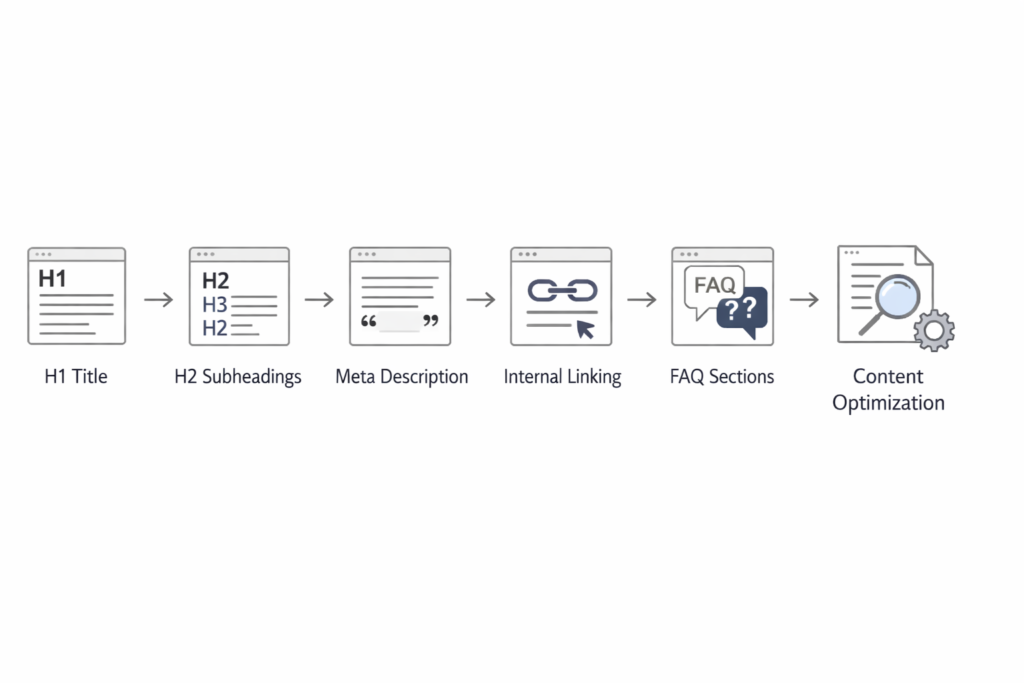
Once you’ve identified and clustered your keywords, implementation becomes the deciding factor between ranking and invisibility.
6.1 Where to Place the Primary Long-Tail Keyword
H1
Your primary long-tail keyword should appear naturally in the main heading. This establishes immediate relevance for both users and search engines.
First paragraph
Include the keyword within the opening lines to reinforce topical alignment without forcing it. Early placement improves clarity and crawlability.
6.2 Using Variations Naturally
H2s and subheadings
Secondary long-tail variations fit naturally into subheadings, helping structure content around specific user questions or subtopics.
Body content placement
Use variations two to three times throughout the content, focusing on readability. The goal is contextual relevance, not repetition.
Search engines are sophisticated enough to understand meaning—forced keyword insertion weakens content quality.
6.3 Internal Linking With Long-Tail Keywords
Anchor text usage
Use descriptive, intent-based anchor text rather than generic phrases like “click here.” This strengthens topical signals across your site.
Contextual relevance
Internal links should connect related content logically. When long-tail keywords are used within meaningful context, they improve both SEO performance and user experience.
Strategic internal linking turns isolated pages into a connected system—one that search engines trust and users navigate with ease.
7. Using Long-Tail Keywords in On-Page SEO Elements
Long-tail keywords don’t stop at body content. When used correctly in on-page SEO elements, they reinforce relevance and improve visibility across the SERP.
7.1 Meta Titles and Descriptions
Relevance signals
Including your primary long-tail keyword in the meta title and description sends a strong topical signal to search engines. More importantly, it helps users instantly understand whether your page matches their search intent.
Best practices include:
- Placing the long-tail keyword naturally in the meta title
- Supporting it with a benefit-driven description
- Avoiding truncation and over-optimization
Well-written meta elements improve click-through rates, which indirectly supports stronger rankings over time.
7.2 FAQ Sections
Capturing question-based searches
FAQ sections are ideal for implementing question-based long-tail keywords. These phrases align perfectly with how users search and how search engines interpret conversational queries.
By addressing common questions directly:
- You expand keyword coverage without adding fluff
- You improve user experience and dwell time
- You increase visibility for voice and mobile searches
FAQ sections also provide a clean structure for addressing multiple variations within a single page.
8. Creating New Pages vs Optimizing Existing Content
Not every long-tail keyword requires a new page. The decision depends on intent, value, and topical overlap.
8.1 When to Create Dedicated Pages
High-value keyword clusters
Create a new page when a long-tail cluster:
- Has clear, distinct intent
- Represents a meaningful traffic or conversion opportunity
- Cannot be fully satisfied within an existing page
Dedicated pages allow deeper coverage, stronger intent alignment, and higher conversion potential.
8.2 Updating Existing Pages
Enhancing relevance
For related or supporting long-tail keywords, updating existing content is often the smarter choice. Adding sections, examples, or FAQs can improve relevance without fragmenting authority.
Avoiding keyword stuffing
Implementation should feel natural. Overloading pages with variations weakens readability and risks algorithmic penalties. Focus on clarity, not density.
The goal is simple: expand coverage without sacrificing quality.
9. Optimization and Performance Tracking
Implementing long-tail keywords is not a one-time task. True SEO gains come from continuous monitoring, analysis, and refinement based on real performance data.
9.1 Monitoring Rankings and Traffic
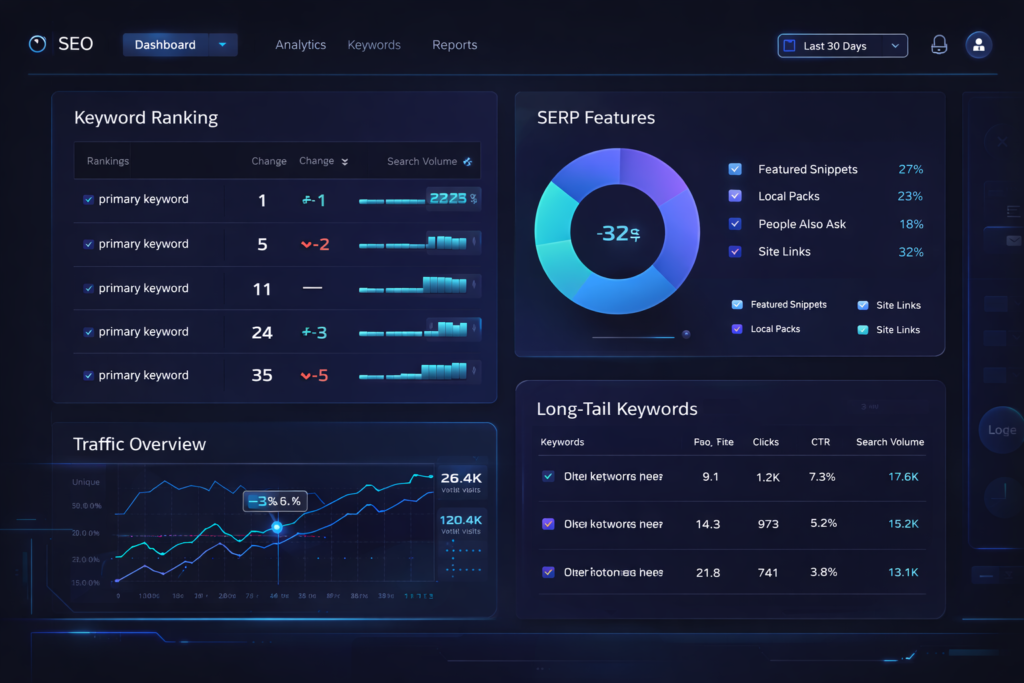
SERP feature tracking
Track whether your long-tail keywords trigger featured snippets, People Also Ask boxes, or other SERP features. These elements affect click-through rates and help you understand how search engines are presenting your content.
Cluster performance analysis
Instead of tracking keywords in isolation, measure performance at the cluster level. This reveals which topics are gaining traction, which intents perform best, and where content depth may be lacking.
Monitoring clusters provides clearer insight into topical authority and long-term ranking stability.
9.2 Refining Strategy Over Time
Data-driven updates
Use traffic trends, engagement metrics, and ranking movement to guide updates. Expand sections that perform well, revise those that stagnate, and remove elements that no longer align with search intent.
Long-tail SEO thrives on iteration. Small, informed adjustments compound into sustained visibility and stronger conversions over time.
10. Combining Long-Tail Keywords With PPC Strategies
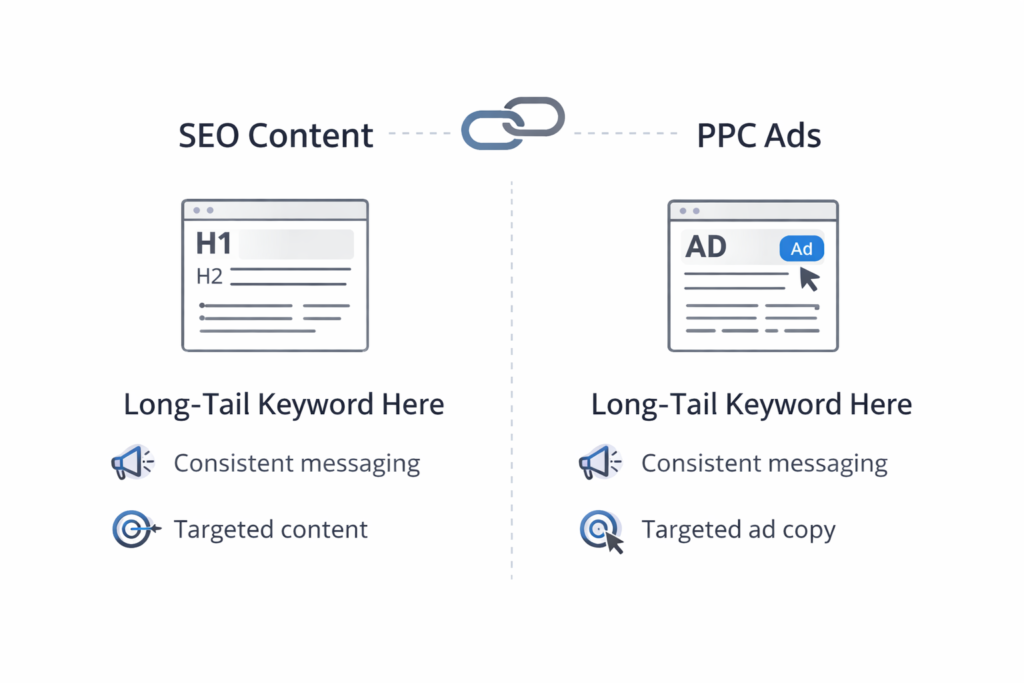
Long-tail keywords become even more powerful when SEO and paid advertising work together.
10.1 The SEO + PPC Advantage
Mirroring search intent
When the same long-tail phrases perform well in organic search, they often perform just as effectively in paid campaigns. Mirroring intent across SEO and PPC creates consistency and reinforces relevance at multiple touchpoints.
This alignment improves Quality Scores, reduces wasted ad spend, and strengthens brand recall.
10.2 Structuring Themed Ad Groups
Consistent messaging
Group PPC ads around the same long-tail keyword clusters used in your content. Each ad group should reflect a single intent, with copy that matches the language users search for.
Consistent messaging between ads and landing pages improves click-through rates, conversion rates, and overall campaign efficiency.
When SEO and PPC reinforce each other, long-tail keywords stop being tactics—and become a system.
11. Key Resources for Long-Tail Keyword Implementation
Learning how to implement long-tail keywords effectively becomes much easier when you study proven frameworks and real-world examples. The following resources provide practical, trusted guidance:
- Semrush Guide
In-depth explanation of choosing, analyzing, and prioritizing long-tail keywords using intent-driven data.
👉 https://www.semrush.com/blog/how-to-choose-long-tail-keywords/ - Backlinko Hub
Strategic insights on building content authority and structuring pages around long-tail keyword targeting.
👉 https://backlinko.com/hub/seo/long-tail-keywords - Yoast SEO Resource
Practical advice on writing naturally with long-tail keywords while maintaining strong on-page SEO.
👉 https://yoast.com/focus-on-long-tail-keywords/ - Neil Patel Strategies
Actionable methods for integrating long-tail keywords into blog posts and content strategies.
👉 https://neilpatel.com/blog/how-to-integrate-long-tail-keywords-in-your-blog-posts/
12. Related Topics
To deepen your understanding and expand your long-tail keyword strategy, explore these related resources:
- Steps to create long-tail keyword clusters for a blog
👉 https://www.semrush.com/blog/keyword-clustering/ - How to use keyword research tools for long-tail ideas
👉 https://ahrefs.com/blog/keyword-research/ - Where to place long-tail keywords on a webpage
👉 https://backlinko.com/on-page-seo - Best practices for writing content around long-tail phrases
👉 https://yoast.com/seo-copywriting/ - How to measure long-tail keyword performance
👉 https://neilpatel.com/blog/seo-metrics-that-matter/
These resources complement the guide by covering clustering, placement, writing techniques, and performance tracking—helping you turn long-tail keywords into a measurable SEO advantage.
FAQ: Long-Tail Keywords for SEO
1. What are long-tail keywords and why are they important?
Long-tail keywords are longer, more specific search phrases (typically 3+ words) that target niche user intent. They are important because they face lower competition, attract more qualified traffic, and often lead to higher conversion rates.
2. How do I find the best long-tail keywords for my content?
Start with a core keyword and use tools like Ubersuggest, Google Keyword Planner, SEMrush Keyword Magic Tool, or Ahrefs Keywords Explorer. Filter for longer phrases (4+ words), decent search volume (100+ monthly searches), and low SEO difficulty (under 40).
3. Where should I place long-tail keywords in my content?
Place the primary keyword in the H1 and first paragraph, with variations in H2s, body content, meta titles, meta descriptions, FAQ sections, and anchor text for internal links. Always maintain natural flow to avoid keyword stuffing.
4. Should I create new pages for every long-tail keyword?
Not necessarily. Use dedicated pages for high-value keyword clusters with distinct intent, and update existing pages for related variations. The goal is to cover intent comprehensively without fragmenting authority.
5. How do I track the performance of long-tail keywords?
Monitor rankings, traffic, and engagement using tools like SE Ranking, SEMrush, or Ahrefs. Track performance at the cluster level, analyze SERP features, and refine your strategy based on data-driven insights over time.