

-
- No Comments
- July 27, 2026

Is a Digital Marketing Degree Worth It?
Intro:Is a Digital Marketing Degree Worth It?
Digital marketing is a fast-growing field and you may be wondering if getting a degree in this area is a smart move. In this Article, we’ll explore a Digital Marketing Degree Worth It, what you’ll learn, and how it might shape your career. We’ll look at the courses you can expect, the jobs you can get , and the long-term benefits. By the end, you’ll have a clear idea of whether investing in a digital marketing degree makes sense for you.
What Is a Digital Marketing Degree?
A digital marketing degree is an academic program focused on online marketing strategies and tools. These programs teach you how to market products and services using digital media. Courses usually cover topics like search engine optimization (SEO), social media marketing, content creation, email campaigns, and many more. In short, you’ll learn the skills to help businesses reach their customers online. Most programs also offer hands-on projects and internships, so you can apply what you learn in your client business.
What You’ll Learn in a Digital Marketing Program
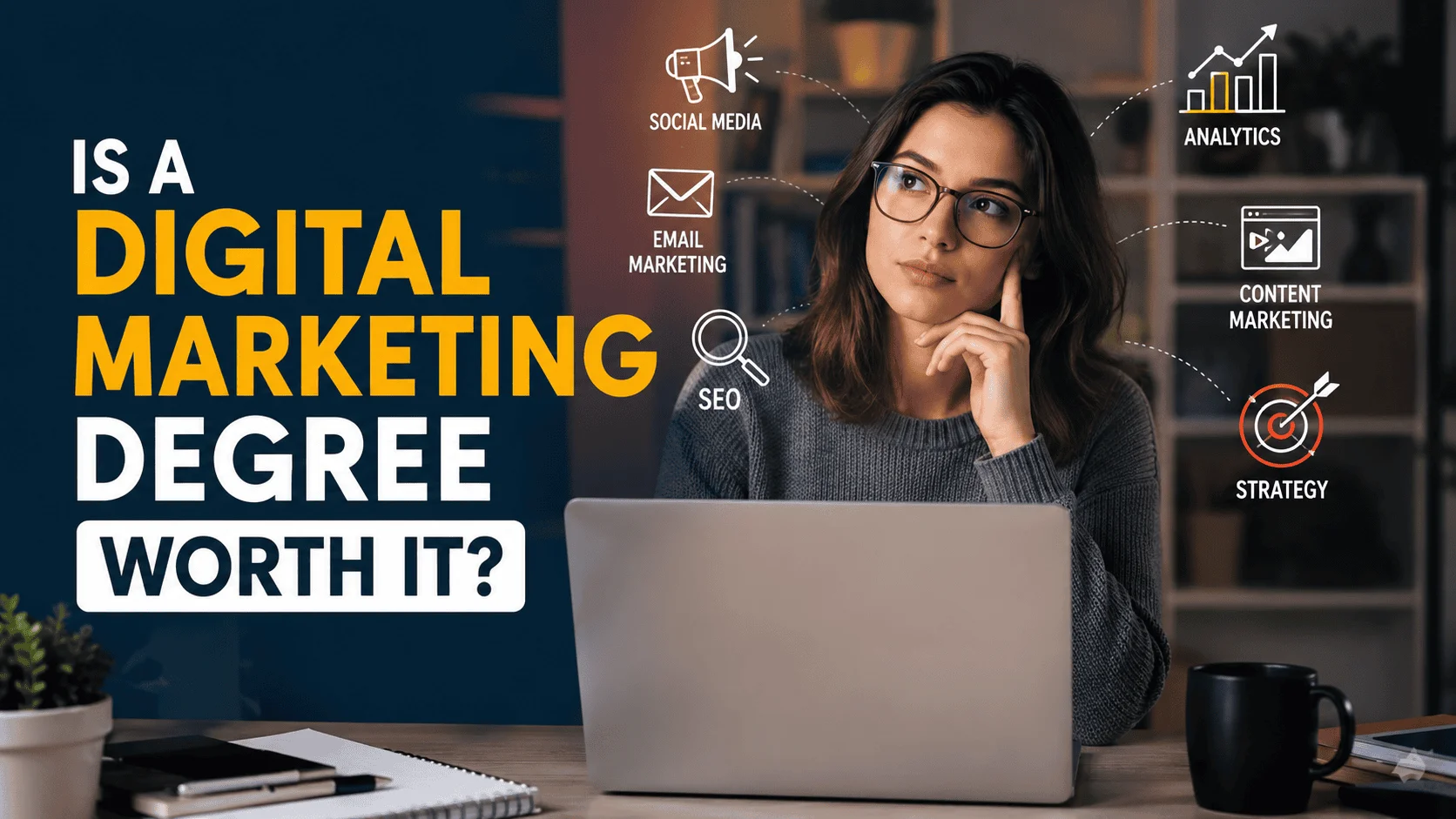
In a digital marketing program, you’ll get a mix of theory and practice. You’ll dive deep into SEO, learning how to improve a website’s visibility in search engines like Google , Bing. You’ll study social media marketing, including strategies for Facebook, Instagram, LinkedIn and other platforms. Content marketing will teach you how to create blog posts, videos and other content that attracts readers and watchers. Email marketing shows you how to build and run campaigns to get customers. You’ll also learn digital advertising using tools like Google Ads, and data analytics so you can track campaign performance. These key topics prepare you to handle real marketing challenges after graduation.
Career Opportunities and Job Market

One of the biggest reasons many students ask is a digital marketing degree worth it is because of the career opportunities it can unlock. Today, almost every business depends on digital channels to reach customers, build brand awareness, and increase sales. Whether it is a small local business, a fast growing startup, or a global company, digital marketing has become an essential part of business success. This growing demand means employers are constantly looking for professionals who understand how to create effective online marketing strategies.
A digital marketing degree gives you a well rounded skill set that can be applied across different industries, including technology, healthcare, finance, education, real estate, retail, hospitality, and e commerce. Instead of limiting you to one career path, it opens the door to multiple roles, allowing you to choose a specialization that matches your interests and strengths. As you gain experience, you can also move into senior leadership positions, manage marketing teams, or even start your own agency or freelance business.
According to the U.S. Bureau of Labor Statistics (BLS), employment for advertising, promotions, and marketing managers is projected to grow by 6% between 2024 and 2034, which is faster than the average for all occupations. The BLS also reports a median annual salary of approximately $161,000 for marketing managers, making it one of the more rewarding career paths for professionals with the right education and experience. While entry level positions naturally pay less, digital marketers who continue developing their skills often see strong salary growth and long term career stability.
Another advantage is the flexibility that comes with this profession. Many digital marketing jobs can be performed remotely, giving professionals the opportunity to work with companies across the world or build their own client base. As artificial intelligence, automation, and online commerce continue to reshape how businesses operate, the need for skilled digital marketers is expected to remain strong for years to come.
Career Opportunities After a Digital Marketing Degree
A digital marketing degree can prepare you for a wide range of career paths, including:
- Digital Marketing Specialist
- SEO Specialist
- Social Media Manager
- Content Marketing Manager
- PPC (Pay Per Click) Specialist
- Email Marketing Specialist
- Digital Advertising Manager
- Marketing Automation Specialist
- E commerce Marketing Manager
- Web Analytics Specialist
- Digital Marketing Consultant
- Marketing Data Analyst
- Brand Marketing Manager
- Growth Marketing Specialist
- Marketing Manager
- Freelance Digital Marketer
- Digital Marketing Agency Owner
Whether your goal is to work for a leading global brand, join a creative agency, help Saas startups, or launch your own business, a digital marketing degree provides the knowledge and practical foundation to build a successful career in one of today’s fastest evolving industries. Naturally, if you’re asking is a digital marketing degree worth it, the growing demand, career flexibility, and diverse job opportunities make a strong case for its long term value.
Benefits of a Digital Marketing Degree
A degree in digital marketing offers several advantages. First, it gives you a structured learning path: you won’t have to guess what to study next. You get a broad foundation in all key areas, from social media to analytics. A recognized degree can also enhance your resume and help you stand out to employers who value formal education. University programs often include networking opportunities – you’ll meet professors, industry speakers, and peers who could become future colleagues. Many programs incorporate hands-on projects and internships, allowing you to build a real portfolio of work. Altogether, this combination of credibility, connections, and practical experience can boost your career prospects.
Considerations and Alternatives
Even with its benefits, a degree isn’t the only way to enter digital marketing. Degrees can be expensive and time-consuming. You’ll need to keep learning after graduation too, since digital marketing tools and platforms evolve quickly. Alternatives include professional certificates, bootcamps, and online courses in digital marketing. These options focus more on practical skills and can often be completed faster and for less money than a full degree. Some people start with self-learning through blogs, YouTube, and online communities. These paths can work, especially if you’re self-motivated or already have related experience. However, they may not offer the same depth, accreditation or networking as a degree program. It’s worth weighing how much hands-on experience versus formal education you need, and how a degree might fit with your goals.
Return on Investment (ROI) of a Digital Marketing Degree

A digital marketing degree can be a significant investment, but it also has the potential to pay off. Tuition and fees vary widely, but a bachelor’s degree can cost tens of thousands of dollars. On the upside, marketing jobs often pay well – recall that marketing manager roles averaged around $161k per year in 2024. Over a career, that higher earning potential can outweigh the cost of a degree. Data from the BLS shows that, on average, college graduates earn substantially more than those with only a high school diploma. Moreover, many students find that the career acceleration from a degree (landing a higher-level job or a better company) boosts their salary sooner. When calculating ROI, consider scholarships, financial aid, and how quickly you might move into a well-paying role. If the degree helps you reach a stable, growing career faster than without it, it could be worth the investment.
Is a Digital Marketing Degree Right for You?
By now you should have a clear idea of what a digital marketing degree offers and what it costs. If you enjoy both creative work (like content and campaigns) and analytical work (like data metrics and strategy), a degree could give you a powerful combination of skills. It’s especially valuable if you prefer a guided, supportive learning environment and the chance to connect with others in the industry. However, if you already have a strong online marketing background or limited time and budget, you might consider shorter courses or certifications first. Think about your career goals: do you want a broad marketing management career, or a specialized role? Are you comfortable learning on your own, or do you thrive in a classroom setting? Ultimately, the answer depends on your personal situation. For many people, a digital marketing degree can be worth it as a stepping stone to a dynamic career in a thriving field.
For more tips and industry updates, check out our latest blog post on career development in marketing.
Frequently Asked Questions
- What is a digital marketing degree? A digital marketing degree is a college program that teaches how to promote products and brands online. You’ll study topics like SEO, social media marketing, email marketing, content strategy, digital advertising, and data analytics. In short, it combines theory (marketing principles) with hands-on skills (using tools like Google Analytics and ad platforms) so you can create real-world campaigns.
- What can I do with a digital marketing degree? Graduates can pursue many roles. Common jobs include digital marketing specialist, social media manager, SEO analyst, content or email marketing manager, PPC manager, digital advertising manager, e-commerce manager, data analyst, or marketing consultant. The degree signals to employers you have a well-rounded skill set, which helps you stand out for internships and entry-level jobs. Over time, these roles often pay well – for example, U.S. marketing managers (who often lead digital efforts) earn a median ~$161K per year.
- What is the job outlook? Demand is strong. As businesses shift online, digital marketing jobs are growing faster than average. BLS data (U.S.) project about 6% growth in marketing manager roles from 2024–2034. Another labor study found global marketing jobs growing ~16% by 2032. Since every industry needs digital marketing (tech, finance, healthcare, retail, etc.), graduates have opportunities worldwide. Continuous learning is key, but a degree gives you a solid start.
- Is a digital marketing degree hard or necessary? It’s approachable if you enjoy creative work and data. Programs usually start at an introductory level, so you don’t need prior experience. You don’t strictly need a degree – many digital marketers succeed through certifications or self-study – but a degree provides structure, mentorship and networking. According to experts, a degree can give you an edge by teaching fundamentals and offering internships or project experience. If you’re motivated, alternatives (like short courses, bootcamps or certificates) can also work, but they often cover fewer topics.
- Is digital marketing a good long-term career choice? Yes. The field is dynamic and vital to modern business. As new platforms and technologies emerge, skilled digital marketers stay in demand. Employers value the versatile mix of skills (communication, analytics, creativity) that this degree teaches. Those skills remain useful even if specific tools change. In short, if you enjoy a mix of tech and creativity, it can be a rewarding and well-paid career. Just be prepared for ongoing learning, since digital trends evolve quickly.


