
-
- No Comments
- January 6, 2026

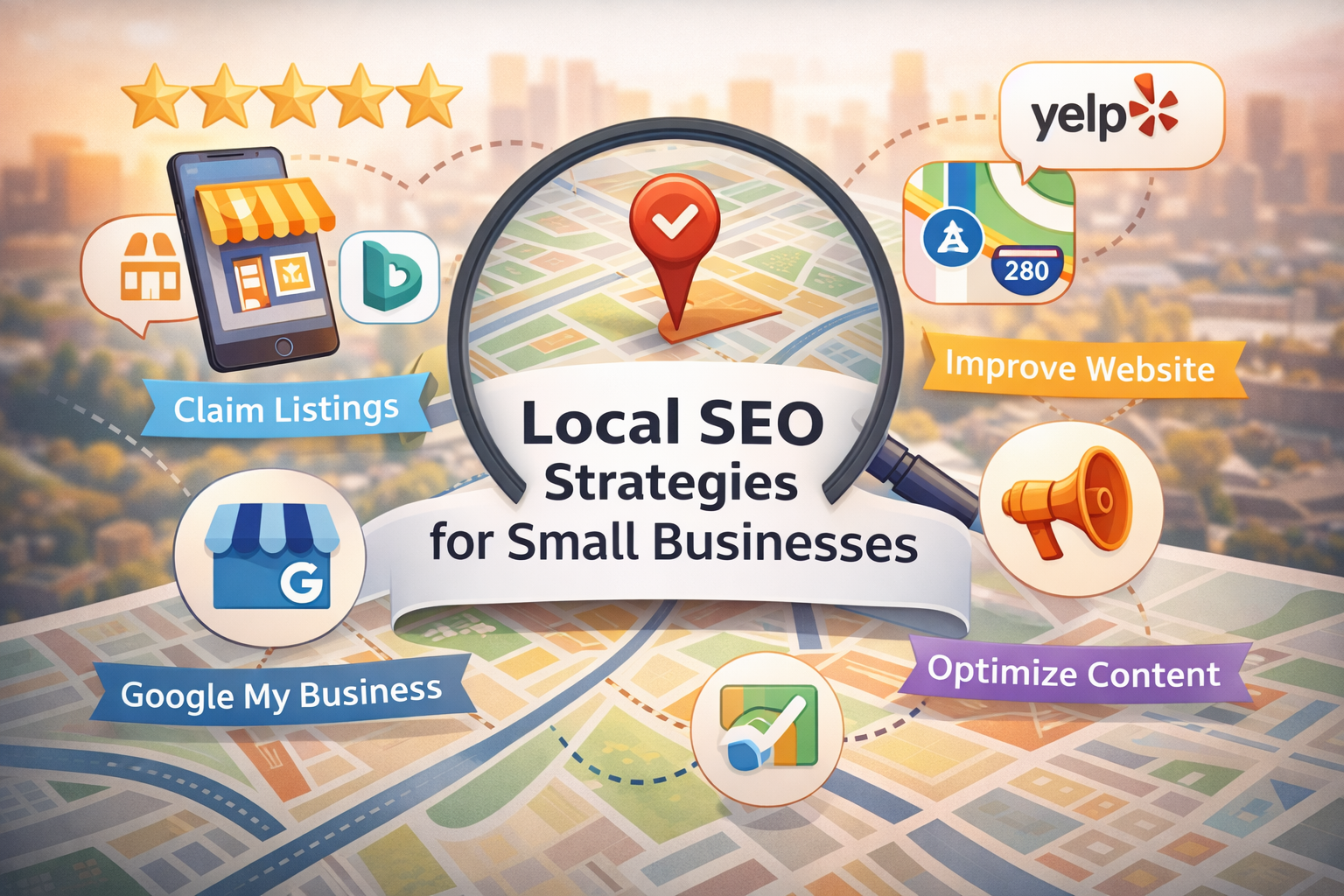
Local SEO strategies for small businesses
Introduction
Imagine this: a potential customer searches, “best coffee near me,” and your small business pops up at the top of the map. That one search could mean a new loyal customer walking through your door within minutes. This is the power of local SEO—a digital strategy that drives foot traffic, generates qualified leads, and puts small businesses directly in front of nearby customers actively looking for their services.
In this guide, we’ll dive deep into practical strategies to help your business dominate local search results. You’ll learn how to optimize your Google Business Profile, target high-intent local keywords, build credible citations, earn authoritative backlinks, and monitor your rankings to stay ahead of the competition. By the end, you’ll have a clear roadmap to increase visibility in your neighborhood and attract customers who are ready to engage with your business.
Quick insight: Businesses that appear in the local map pack receive 44% of clicks from local searches, and 78% of mobile local searches result in an offline purchase within 24 hours. The stakes for local SEO have never been higher.
1. Understanding Local SEO for Small Businesses
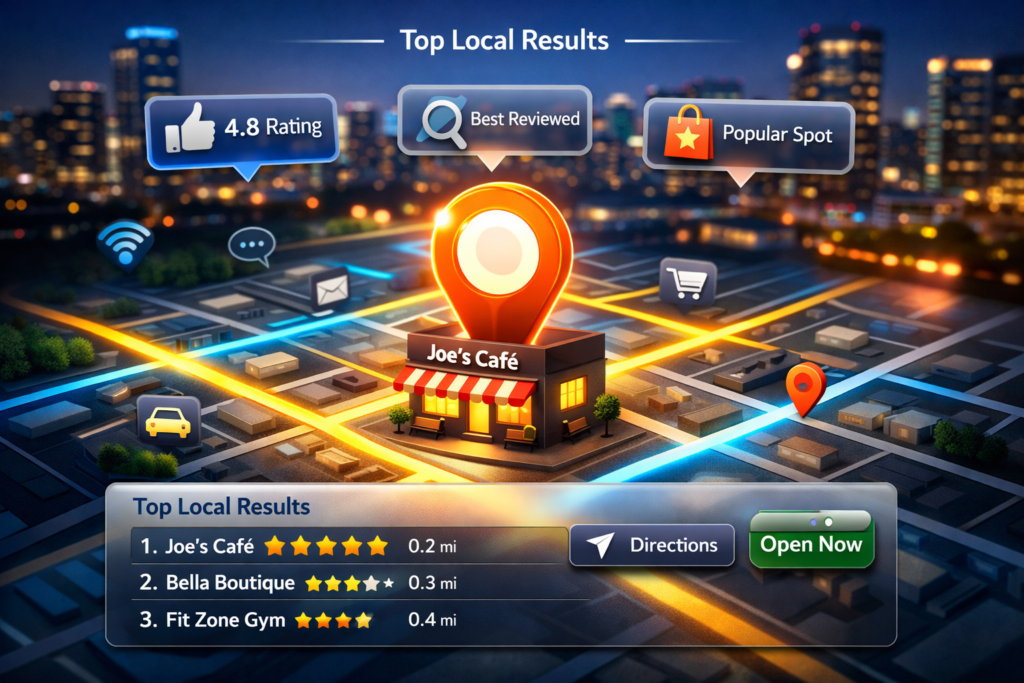
Local SEO is the practice of optimizing your online presence to rank higher in location-specific searches. Unlike general SEO, which targets broad audiences and global search queries, local SEO focuses on connecting your business with people in your immediate area who are actively seeking your products or services.
Why Local SEO Matters in 2026
The landscape is evolving. AI-driven search features, map packs, and hyper-local targeting are reshaping how small businesses get discovered. In 2026, appearing in local search isn’t just a nice-to-have—it’s a critical revenue driver for businesses of all sizes.
Local SEO vs. General SEO
| Aspect | General SEO | Local SEO |
| Audience | Broad | Nearby / Geo-targeted |
| Keywords | Generic | Location-specific (“service + city”, “near me”) |
| Results | Organic listings | Map packs, local packs, AI Overviews |
| Focus | Traffic volume | Qualified, high-intent leads |
Key Components of Local SEO
- Map Packs: The prominent local search box on Google that highlights top businesses nearby.
- “Near Me” Queries: Searches with immediate purchase intent like “pizza near me” or “plumber near downtown.”
- AI Overviews & Rich Snippets: Google now uses structured data and AI to summarize businesses directly in search results.
- Hyper-Local Search Trends: Targeting neighborhoods, districts, or smaller service areas to dominate micro-markets.
In short, local SEO helps small businesses stand out where it matters most—right in front of customers ready to buy.
2. Core Foundations: Google Business Profile & NAP Consistency

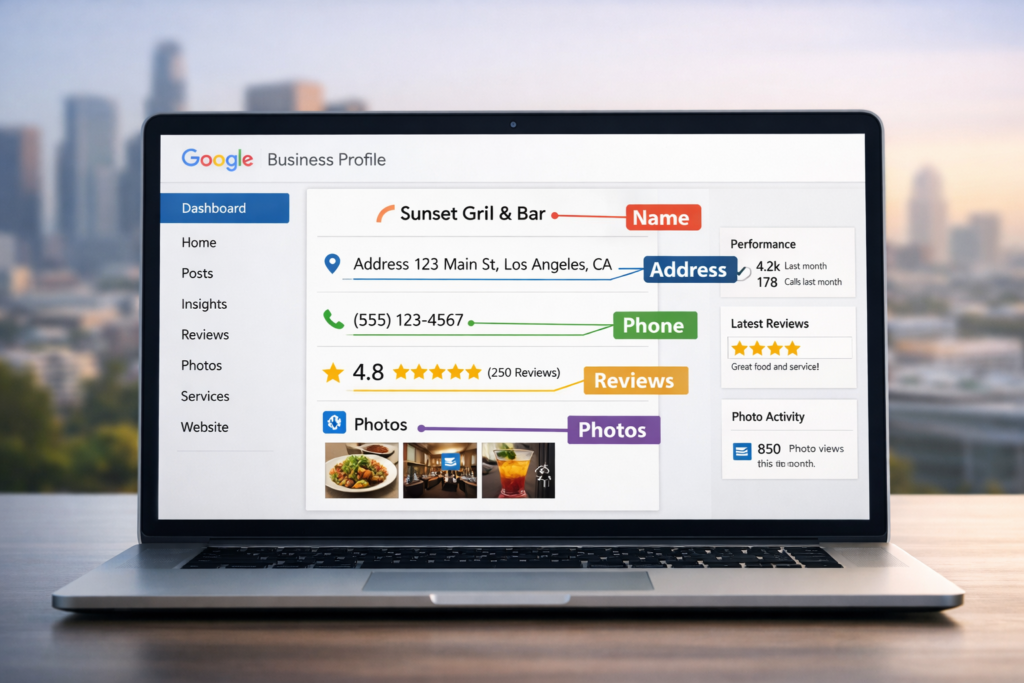
Your Google Business Profile (GBP) is the cornerstone of local SEO. It’s often the first thing potential customers see when searching for nearby businesses, and getting it right can make the difference between being found or overlooked.
Claiming and Optimizing Your GBP
Start by claiming your profile, then ensure every detail is accurate and complete:
- Name, Address, Phone (NAP): Must match exactly across all platforms.
- Categories: Choose primary and secondary categories that reflect your services.
- Hours: Keep them current, including special hours for holidays.
- Photos & Videos: Showcase your location, team, products, and services.
- Services: List all offerings clearly, using local terminology when possible.
Keyword-Rich Description
Craft a description that is natural, engaging, and locally focused. Include your main service and location keywords without overstuffing:
Example: “At Sunrise Café in downtown Austin, we serve fresh-brewed coffee and homemade pastries to our local community every morning.”
The goal is to signal relevance to search engines while still sounding human and approachable.
Review Management
Reviews are a major local ranking factor. Focus on:
- Quantity: More reviews = stronger credibility.
- Quality: Aim for detailed, positive feedback.
- Recency: Regular reviews show your business is active.
- Response: Reply promptly to all reviews, thanking customers or addressing concerns.
A strong review strategy not only improves rankings but also builds trust with potential customers.
NAP Consistency Across Directories
Consistency is critical. Your business name, address, and phone number should be identical across Google, Yelp, Bing, Apple Maps, and niche directories. Discrepancies can confuse search engines and hurt rankings. Tools like Semrush Listing Management help audit and correct inconsistencies efficiently.
Pro Tip: Think of NAP consistency as the backbone of your local reputation—it keeps your business credible in the eyes of both search engines and customers.
3. Local Keyword Research
Keyword research for local SEO isn’t about chasing high search volume it’s about targeting high-intent, location-specific phrases that drive customers ready to act.
Identifying High-Intent Local Keywords
Focus on searches that indicate immediate intent:
- “Service + city” → e.g., “plumber in Dallas”
- “Near me” variations → e.g., “coffee near me”
These queries signal active buying interest, making them more valuable than generic keywords.
Tools to Use
- Semrush: Identify local search volume, competition, and related terms.
- Google Keyword Planner: Find keywords with lower competition and reasonable monthly searches.
Analyzing SERPs and “People Also Ask”
- Study who currently ranks and the type of content appearing.
- Check “People Also Ask” sections for additional questions your audience is actively searching.
- This uncovers opportunities for content that answers real customer needs.
Incorporating Keywords
Place local keywords strategically:
- Titles & Meta Descriptions: Make your location and service clear.
- Headers & Subheaders: Guide readers and signal relevance to search engines.
- Content Body: Include naturally without stuffing; prioritize readability.
Pro Tip: Think like a customer—what would they type to find your business? Your keywords should mirror those exact phrases.
4. On-Site Optimization for Local SEO
Optimizing your website is the next critical step in local SEO. A well-structured site with hyper-local relevance tells search engines exactly where you operate and what you offer, increasing your chances of appearing in map packs and local search results.
Embedding LocalBusiness Schema Markup
Schema markup helps search engines understand your business details and display rich snippets in search results. Add structured data to:
- Contact pages: Include address, phone, and email.
- Geo-coordinates: Helps search engines pinpoint your exact location.
- Business hours: Ensure hours are up-to-date for accurate search results.
Tools like Google’s Structured Data Testing Tool or Schema.org make implementation easier and error-free.
Creating Hyper-Local Landing Pages
For businesses serving multiple neighborhoods or districts, dedicated landing pages are essential:
- Each page should target a specific neighborhood or service area.
- Include unique content relevant to that area.
- Embed a Google Map with your location to strengthen local signals.
- Add internal links to your main service pages for better crawlability and relevance.
Pro Tip: Avoid duplicating content across pages. Instead, highlight local landmarks, community events, or customer stories to make each page unique.
Using Internal Links and Embedded Google Maps
- Internal links connect neighborhood pages to your main site, improving authority flow.
- Embedded maps provide context to both search engines and users, showing exactly where you operate.
Tips for Unique Multi-Area Content
- Highlight location-specific benefits (e.g., “serving downtown clients since 2010”).
- Include client testimonials or case studies from each neighborhood.
- Mention local events, news, or landmarks to signal relevance to search engines.
Proper on-site optimization ensures that search engines can accurately associate your business with specific locations, giving you a competitive edge in local results.
5. Citations and Reviews: Building Trust & Relevance
Citations and reviews are the social proof and credibility signals that tell search engines your business is legitimate, trustworthy, and relevant to local searches.
Conducting a NAP Audit Across 50+ Directories
- Start by listing all current online mentions of your Name, Address, and Phone (NAP).
- Ensure 100% consistency—even minor differences can hurt local rankings.
- Prioritize accuracy in directories where your customers are most likely to search.
High-Authority Directories First
- Focus on top directories like Google Business Profile, Yelp, Bing Places, Apple Maps.
- Expand to niche or industry-specific directories to increase reach and credibility.
- Use tools like Semrush Listing Management to manage citations efficiently.
Encouraging Location-Specific Reviews
- Ask customers for reviews right after service, making it easy with direct GBP links.
- Include location references naturally in reviews: e.g., “Great pizza in downtown Denver!”
- More recent and detailed reviews help boost your prominence in map packs.
Leveraging Reviews for AI-Powered Local Search
- AI-driven features, like Google’s AI Overviews, summarize businesses based on reviews and structured data.
- Detailed, relevant reviews improve your chances of being featured in rich snippets, knowledge panels, and voice search results.
- Monitor reviews for insights—negative feedback can guide improvements, while positive feedback reinforces local relevance.
Pro Tip: Think of citations and reviews as your local SEO reputation system. The more consistent, authentic, and location-focused they are, the higher your chances of dominating local search results.
6. Link Building Tactics for Local Authority
Backlinks aren’t just for general SEO they’re a powerful trust and relevance signal in local search. The right links can position your small business as an authority in your area and boost your chances of appearing in map packs.
Earning Local Backlinks
- Chambers of Commerce:
- Join your local chamber and get a backlink on their member directory.
- These links signal credibility to search engines and connect you with other local businesses.
- Join your local chamber and get a backlink on their member directory.
- Event Sponsorships:
- Sponsor local events, fundraisers, or community projects.
- Request a backlink on event pages and press releases—these are high-quality, relevant links.
- Sponsor local events, fundraisers, or community projects.
- Nearby Business Partnerships:
- Collaborate with complementary local businesses (e.g., a bakery partnering with a coffee shop).
- Cross-promote services on each other’s websites with contextual NAP mentions to improve local relevance.
- Collaborate with complementary local businesses (e.g., a bakery partnering with a coffee shop).
Competitor Backlink Analysis
- Use tools like Semrush Backlink Gap to discover where competitors are earning local links.
- Identify opportunities to get similar backlinks in your community or industry.
Contextual NAP Mentions Matter
- Links that include your business name, address, and phone in context carry more weight for local SEO.
- They reinforce your presence in a specific area and help search engines associate your business with your neighborhood or city.
Pro Tip: Focus on quality and relevance over quantity. A few strong, location-specific backlinks will outperform dozens of generic links.
7. Monitoring Progress & Adapting

Even the best local SEO strategy requires regular tracking and adjustment. Monitoring ensures your efforts translate into higher rankings, increased traffic, and real-world customers.
Tools to Track Your Rankings
- Semrush Map Rank Tracker: Monitor your map pack positions by location.
- Google Search Console: Track organic rankings, clicks, and impressions for local keywords.
- Combine these insights to measure both visibility and engagement in local search.
Regular Updates to GBP and Local Content
- Post updates, promotions, or events regularly to your Google Business Profile.
- Refresh local landing pages with new content, testimonials, or case studies.
- Ensure your website reflects current hours, services, and offers.
Monitoring E-E-A-T Signals & Local Trends
- Keep an eye on Experience, Expertise, Authoritativeness, and Trustworthiness (E-E-A-T) signals.
- Watch for anonymous or user-generated reviews, as they can influence AI-powered summaries.
- Track hyper-local trends and search behavior changes in 2026 to stay ahead.
Adjusting Strategy Based on Insights
- If a neighborhood page or GBP post isn’t performing, tweak keywords, content, or internal links.
- Analyze which backlinks bring referral traffic and reinforce them.
- Keep testing new local SEO tactics like AI-powered snippets or interactive maps to maintain a competitive edge.
Pro Tip: Treat local SEO as a living system. Frequent monitoring and fine-tuning ensure your business stays visible where it matters most right in front of customers ready to buy.
8. Key Resources and Guides
For small business owners who want to dive deeper into local SEO, these resources provide expert insights, step-by-step instructions, and actionable tips:
- Backlinko: Local SEO Guide – Comprehensive strategies for improving local search visibility, including GBP optimization and local link-building.
- SEO.com: Local SEO Strategy – Practical advice for small businesses, covering keyword research, citations, and review management.
- Loganix: Local SEO Tips – Actionable tactics for map pack dominance, on-site optimization, and hyper-local targeting.
- Boulder SEO Marketing: Comprehensive Local SEO Guide – In-depth exploration of local SEO fundamentals, backlinks, and reputation management.
These guides complement the strategies in this blog, giving you the tools to take your local SEO to the next level.
9. Related Topics / Further Reading
If you’re looking to expand your knowledge and execution of local SEO, check out these related topics:
- How to optimize my Google Business Profile step by step – Learn detailed GBP optimization strategies for maximum visibility.
- Best local keyword research tools for small businesses – Tools and techniques to uncover high-intent local keywords.
- How to build high-quality local backlinks in 2026 – Tactics for earning authority links from community and industry sources.
- Review strategies that increase local search rankings – Methods to generate, respond to, and leverage customer reviews effectively.
- Creating location-specific landing pages that convert – Guide to crafting hyper-local pages that drive leads and foot traffic.
These readings provide a deeper dive into each component of your local SEO strategy, helping you maximize results and stay ahead in 2026.
10. Conclusion
Local SEO is no longer optional—it’s essential for small businesses seeking visibility, credibility, and customer engagement in their communities. By focusing on key strategies such as:
- Optimizing your Google Business Profile (GBP)
- Targeting high-intent local keywords
- Implementing strong on-site optimization and schema markup
- Building consistent citations and reviews
- Earning local backlinks and monitoring performance
…you can significantly increase foot traffic, attract qualified leads, and secure long-term growth.
Now it’s time to take action: audit your current local SEO efforts, implement these strategies, and track your progress. Small changes today can translate into big wins in local search tomorrow.
Pro Tip: Treat local SEO as an ongoing process—consistency, adaptation, and engagement are the keys to maintaining a competitive edge in 2026 and beyond.
FAQ – Local SEO Strategies for Small Businesses
1. What is local SEO, and why is it important for small businesses?
Local SEO focuses on optimizing your online presence for location-specific searches. It helps small businesses appear in map packs, “near me” searches, and local listings, driving qualified leads and foot traffic from nearby customers.
2. How do I optimize my Google Business Profile (GBP)?
Claim your profile and fill out all details: NAP (name, address, phone), categories, hours, services, photos, and a keyword-rich description. Respond to reviews promptly to boost credibility and map pack rankings.
3. Which tools are best for local keyword research?
Use Semrush or Google Keyword Planner to find high-intent local keywords like “service + city” or “near me” searches. Also, check “People Also Ask” sections in Google for additional relevant queries.
4. How do citations and reviews impact local SEO?
Consistent NAP citations across directories and positive, location-specific reviews improve your business’s authority and relevance. They signal trustworthiness to search engines and help you rank higher in local results.
5. How can I track and improve my local SEO performance?
Monitor rankings with tools like Semrush Map Rank Tracker and Google Search Console. Regularly update GBP posts, local landing pages, and backlinks. Adjust your strategy based on insights from reviews, citations, and performance trends.