-
- No Comments
- March 13, 2026

Major tech innovations announced in 2026
Introduction
Every few years, the tech industry stops iterating and starts reinventing. Features get bolder. Categories get blurred. And the gap between science fiction and your next product purchase narrows to something almost uncomfortable.
2026 is one of those years.
From the neon-lit floors of CES in Las Vegas every January, to the packed conference halls of Mobile World Congress in Barcelona every March, the first quarter of 2026 has delivered something the industry hasn’t seen in a while genuine, category-level disruption. Not marginal spec bumps. Not slightly thinner bezels. We’re talking about the kind of announcements that make you reassess what a phone is, what a network can do, and what “intelligent” actually means when applied to the devices sitting in your pocket or parked in your garage.
The throughline connecting all of it? Artificial intelligence not as a feature, but as infrastructure. Woven into displays, networks, processors, and even the way your lawnmower navigates your garden on a cloudy afternoon.
This is your definitive guide to the major tech innovations announced in 2026. Buckle in.
CES 2026: Where Consumer Tech Got Its Upgrade
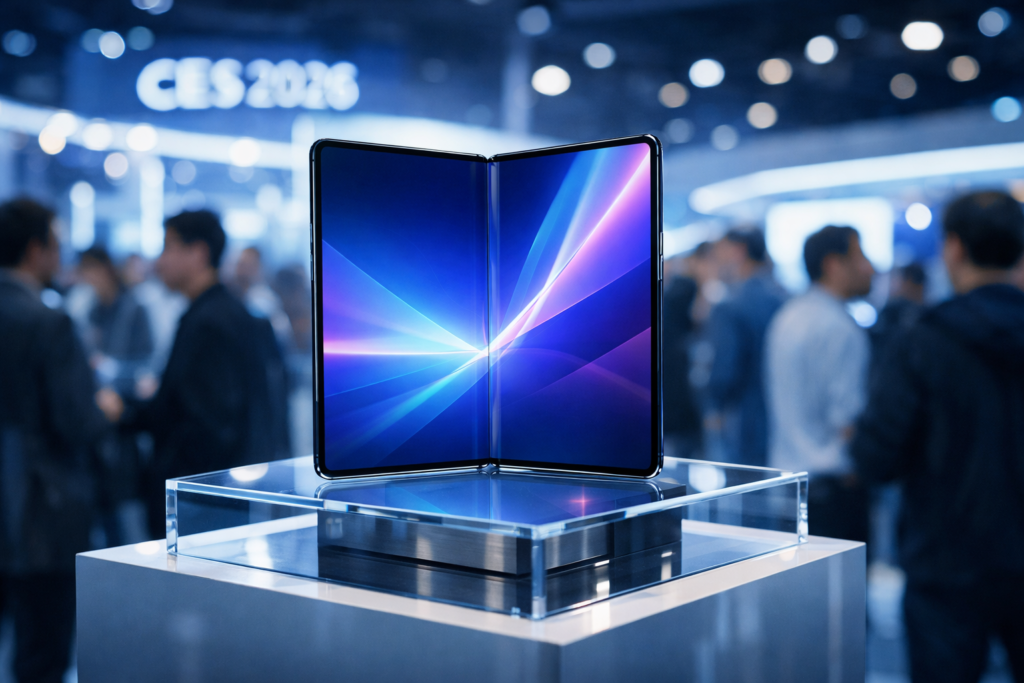
CES has always been a spectacle. But 2026’s edition felt different less like a trade show, more like a preview of a world that’s already decided where it’s going without waiting for the rest of us to catch up.
The Fold, Finally Fixed
Samsung arrived at CES with something the foldable phone market has been quietly desperate for since its inception: a crease-free OLED panel. For years, the fold line running down the centre of every foldable display has been the category’s most glaring compromise a constant, tactile reminder that the technology hadn’t quite grown up yet. Samsung’s new creaseless folding OLED panels change that calculus entirely.
The engineering behind it eliminates the visible hinge deformation that’s plagued every generation prior. For consumers who’ve been foldable-curious but crease-averse, this is the unlock. Expect these panels to appear in premium Samsung devices later in 2026 and watch every other manufacturer scramble to respond.
The Companions You Never Knew You Needed
If Samsung’s display was the show’s engineering headline, its emotional heart belonged to a pair of AI-powered companions that nobody saw coming and everyone stopped to photograph.
Ecovacs introduced LilMilo a small, expressive robot designed not to clean your floors or manage your calendar, but simply to be there. It reads mood through a combination of vocal tone analysis and environmental cues, responding with movement and expression designed to provide genuine companionship. SwitchBot followed with KATA Friends, a similar concept pitched at users seeking low-maintenance emotional connection through ambient, responsive AI presence.
Cynical? Perhaps. But the engagement at CES suggested something real — a market of people who want technology that meets them emotionally, not just functionally. Whether these become mainstream products or fascinating footnotes will be one of 2026’s more interesting stories to track.
Smart Glasses Get Serious
Augmented reality eyewear has been “almost ready” for so long that the tech press had largely stopped getting excited. CES 2026 changed the temperature. Asus and RayNeo both debuted smart glasses built for everyday carry — lightweight frames with high-refresh-rate AR overlays that finally prioritise wearability alongside capability.
The displays are sharper. The latency is lower. And critically, the designs no longer announce themselves as “tech products” from across a room. Mainstream AR isn’t here yet — but it’s closer than it’s been since Google Glass sparked the conversation over a decade ago.
The Lawnmower That Knows Your Garden Better Than You Do
Perhaps the most quietly significant CES story involved grass. Segway, Mammotion, and Roborock all unveiled LiDAR-equipped robot lawnmowers — and the implications go well beyond a neatly trimmed lawn.
By integrating LiDAR (the same sensing technology used in autonomous vehicles), these machines navigate complex outdoor environments with precision that GPS simply cannot match, particularly in conditions where satellite signal is unreliable. They map. They adapt. They work in the rain, under trees, and around the irregular contours of real gardens rather than the idealised flat rectangles of early robotic mower marketing. Outdoor automation, it turns out, has finally found its footing.
MWC 2026: The Network Revolution Begins

If CES is where consumer tech shows its face, Mobile World Congress is where the industry shows its spine — the infrastructure, the standards, the decisions made in Barcelona that will quietly determine what your phone can do in 2029.
MWC 2026 had a theme running through almost every keynote, panel, and product launch: the network itself is becoming intelligent.
Qualcomm’s 6G Vision: AI Built Into the Air
Qualcomm’s keynote — titled “Architecting 6G for the AI Era” — was the week’s defining statement of intent. Rather than framing 6G simply as faster 5G, Qualcomm laid out a vision of AI-native wireless architecture: networks that don’t just carry data, but actively optimise themselves in real time, reducing latency to levels that make current 5G feel sluggish by comparison.
The implications are vast. Ultra-low latency AI-native networks don’t just improve your streaming quality — they enable entirely new categories of application. Real-time remote surgery. Truly responsive autonomous vehicles. Industrial automation that reacts faster than human perception. Qualcomm isn’t promising 6G tomorrow. But they’re building the blueprint, and MWC 2026 is where that blueprint went public.
GSMA Opens the Telco AI Playbook
Alongside Qualcomm’s hardware vision, the GSMA — the industry body that organises MWC — launched the Open Telco AI initiative, a framework designed to bring AI automation into the operational core of telecommunications providers worldwide.
This is less glamorous than a 6G keynote, but arguably more immediate. The initiative targets network operations and optimisation — the unglamorous, expensive, error-prone back-end work that keeps global communications running. By standardising AI-driven automation across telecoms operators, GSMA is effectively industrialising intelligence at the network layer. The efficiency gains, if realised, will eventually feed through to better coverage, lower costs, and more reliable service for end users globally.
Foldables, Again — But With Intent
MWC also delivered its share of device hardware, with foldables dominating the conversation in ways that felt less experimental than previous years. Honor unveiled the Magic V6 — a refined, premium foldable that signals the category’s maturation in the Chinese market and its ambitions in Europe. Lenovo showed the Legion Go Fold, a gaming handheld with a folding display that reimagines portable gaming’s form factor entirely. And Tecno introduced a modular magnetic smartphone concept that raised questions about whether the future of mobile hardware is fixed at all — or whether adaptability becomes its own product category.
Taken together, MWC 2026’s device story was one of convergence: foldable technology moving from novelty to expectation, and manufacturers competing not on whether to fold, but on how well.
Battery Breakthroughs: The Energy Equation Rewritten

For all the excitement around foldable screens and AI companions, the most consequential announcements of 2026 may not come from a display or a software model. They may come from a battery.
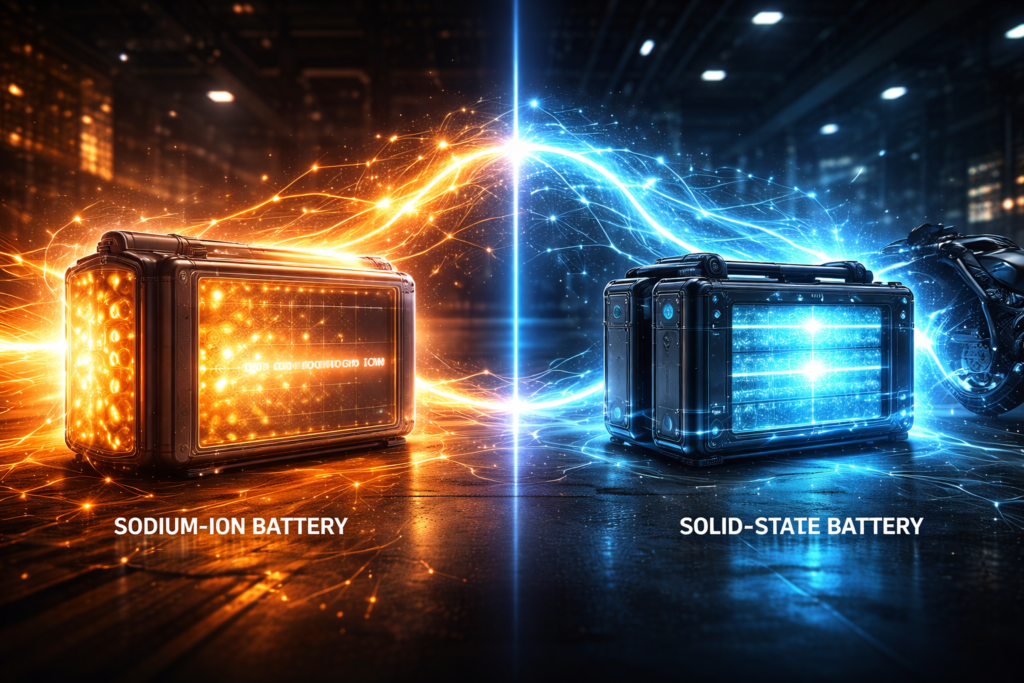
Energy storage has been the quiet bottleneck of the clean technology revolution — the constraint that determines how far your EV travels, how quickly it charges, how affordable it becomes, and ultimately how fast the world can move away from fossil fuels. In 2026, two announcements arrived that suggest the bottleneck is finally starting to crack.
CATL Goes Sodium: Cheap, Abundant, and Ready
Contemporary Amperex Technology — better known as CATL, the world’s largest battery manufacturer — confirmed commercial deployment of sodium-ion batteries for both electric vehicles and grid-scale energy storage in 2026. The significance of this cannot be overstated.
Lithium-ion batteries have powered the EV revolution, but they carry a structural vulnerability: lithium, cobalt, and nickel are geographically concentrated, supply-chain sensitive, and increasingly expensive as demand accelerates. Sodium-ion chemistry sidesteps all of that. Sodium is one of the most abundant elements on earth. It’s cheap to extract, widely distributed, and requires none of the ethically fraught mining operations that have shadowed lithium supply chains for years.
The performance gap between sodium-ion and lithium-ion has historically made the former impractical for mainstream applications. CATL’s commercial deployment signals that gap has closed sufficiently for real-world use — particularly in lower-range urban EVs and stationary storage, where energy density is less critical than cost and cycle stability. For emerging markets building out EV infrastructure and grid storage simultaneously, this is a potential game-changer. The energy equation just got a new variable, and it’s spelt sodium.
Verge Motorcycles: Solid-State Hits the Road
While CATL’s announcement was about scale and accessibility, Verge Motorcycles delivered the headline that made the enthusiast world pay attention: the first production motorcycle powered by a solid-state battery.
The numbers are striking. A 370-mile range. A 10-minute charge delivering 186 miles of range. Both figures would be remarkable in any production vehicle — in a motorcycle, they’re extraordinary. Solid-state batteries replace the liquid electrolyte in conventional lithium-ion cells with a solid material, dramatically improving energy density, reducing degradation over charge cycles, and — critically — eliminating the flammability risk that has made large lithium-ion packs a safety engineering challenge.
The Verge announcement matters beyond motorcycles. Production solid-state batteries have been a perpetually-approaching milestone in the automotive industry — always five years away, always facing manufacturing scale challenges that push the timeline back. A motorcycle is smaller and less demanding than a car, but it is a production vehicle. The technology is no longer a laboratory promise. It exists, it ships, and it rides.
What This Means for the Bigger Picture
Together, CATL’s sodium-ion deployment and Verge’s solid-state debut represent two distinct but complementary vectors of progress. Sodium-ion solves the accessibility problem — making capable batteries available to mass markets at lower cost. Solid-state solves the performance ceiling problem — pushing range, charge speed, and safety to levels that remove the last serious objections to EV adoption.
Neither technology will dominate overnight. But both are now commercially real in 2026, and that transition from lab to road changes the strategic calculus for every automaker, energy company, and grid operator on the planet.
AI & Computing: The Intelligence Layer Expands
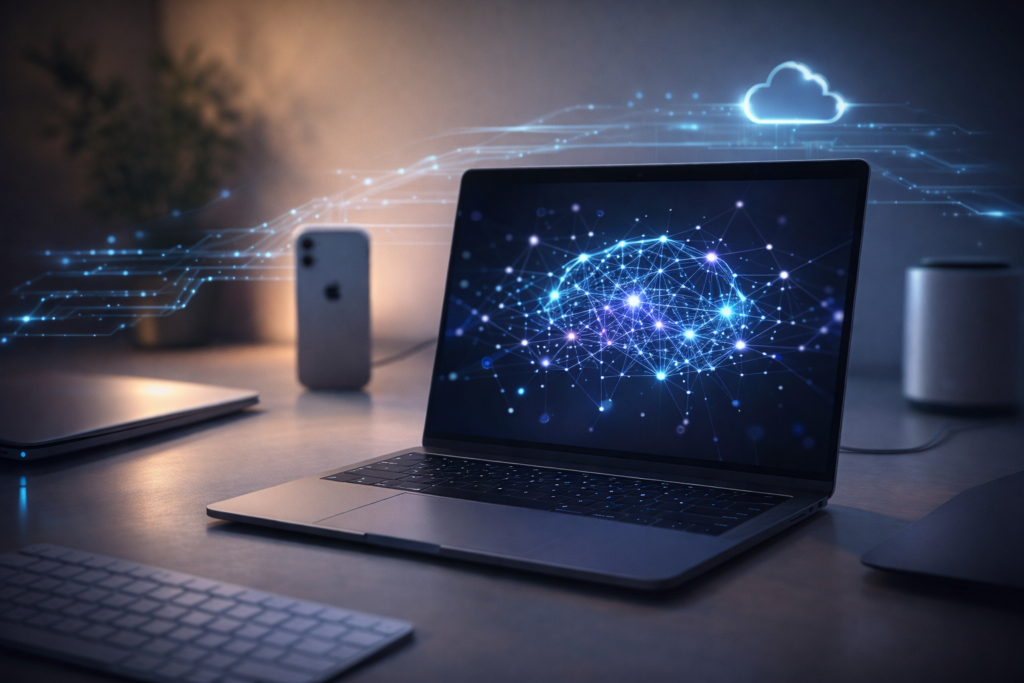
If 2025 was the year AI became a product, 2026 is shaping up to be the year it becomes plumbing — infrastructure so embedded in the devices and systems around us that its presence stops being remarkable and starts being assumed.
Two announcements in early 2026 crystallise this shift better than anything else. One involves two of the biggest names in consumer technology entering an arrangement that would have seemed unthinkable five years ago. The other involves the chip that may quietly define what “intelligent computing” means for the next decade.
Apple and Google: The Alliance Nobody Predicted
In January 2026, Apple confirmed a partnership with Google to integrate Gemini models as the foundational engine beneath Apple Intelligence — the AI layer that powers Siri, on-device reasoning, and the broader suite of intelligent features across iPhone, iPad, and Mac.
Let that sit for a moment. Apple and Google — two companies whose entire competitive identity has been built on mutual opposition — sharing the intelligence infrastructure of the world’s most valuable consumer device ecosystem.
The practical implications are significant. Gemini brings multimodal reasoning capability that Apple’s own models have not yet matched at scale. Apple brings Private Cloud Compute — its privacy-preserving architecture that processes sensitive queries in secure cloud environments without exposing user data to external servers. The combination means Siri gets meaningfully smarter, on-device AI gets more capable, and users theoretically get the best of both without sacrificing the privacy protections Apple has made central to its brand identity.
What it means competitively is equally fascinating. It signals that Apple has concluded the cost of building frontier AI models entirely in-house outweighs the strategic risk of relying on a partner. It also signals that Google, despite running its own consumer hardware operation, is willing to supply intelligence infrastructure to its most formidable competitor. In the AI era, apparently, even the oldest rivalries bend toward pragmatism.
Intel’s Panther Lake: The AI PC Era Finds Its Engine
Quietly but consequentially, Intel launched its Core Ultra Series 3 processors — codenamed Panther Lake — in early 2026, and the laptop industry responded immediately.
Dell, Asus, and Lenovo all announced new machines built around the Panther Lake architecture, and the headline isn’t raw processing power in the traditional sense. It’s efficiency — specifically, the ability to run sophisticated AI workloads locally, on-device, without routing queries to the cloud, without draining the battery in forty minutes, and without requiring a dedicated GPU the size of a small brick.
This matters because the promise of the “AI PC” — a machine that can run large language models, image generation, and intelligent automation locally — has been perpetually undermined by the energy cost of doing so. Panther Lake’s architecture is designed from the ground up to change that trade-off. The Neural Processing Unit (NPU) at its core handles AI inference tasks with a fraction of the power draw of previous approaches.
The result, in the Dell, Asus, and Lenovo machines built around it, is a new category of laptop that is genuinely, usably intelligent in a local sense — capable of on-device AI assistance, real-time transcription, intelligent image processing, and contextual automation without a Wi-Fi connection or a cloud subscription. The AI PC is no longer a concept. In 2026, it’s a product line.
Quantum & Emerging Tech: The Long Game
Not every innovation announced in 2026 will change your life this year. Some of the most significant developments happening right now are operating on a longer timeline — building foundations that won’t fully surface in consumer products or mainstream industry for another decade. But that doesn’t make them less important. If anything, it makes them more so.
The quantum computing story of 2026 is not one of sudden breakthroughs or commercially available quantum laptops. It’s subtler and, in many ways, more interesting than that: it’s the story of a technology quietly crossing the threshold from theoretical promise into genuine industrial utility.
Hybrid Systems: Quantum Meets Classical
The most pragmatic development in quantum computing right now isn’t a purer quantum machine — it’s the hybrid. Quantum-classical systems, which pair quantum processors with conventional computing architecture to handle tasks that neither can optimally solve alone, are entering industrial pilot programmes in 2026 across sectors including logistics, pharmaceuticals, and materials science.
The logic is straightforward. Fully fault-tolerant quantum computers — machines capable of running complex algorithms without error rates that corrupt results — remain years away at scale. But hybrid systems can extract quantum advantage today on specific problem types: optimisation challenges, molecular simulation, cryptographic applications. Companies that begin building competency with hybrid architectures now are positioning themselves for the transition to fully quantum systems when that threshold eventually arrives. The pilots running in 2026 are as much about organisational learning as they are about computational output.
Quandela and the Error Correction Horizon
French quantum computing company Quandela entered 2026 with a notable prediction: meaningful advances in quantum error correction are closer than the industry consensus suggests. Error correction is the field’s central unsolved challenge — quantum systems are extraordinarily sensitive to environmental interference, and errors compound in ways that make reliable computation at scale currently impossible without significant overhead.
Quandela’s photonic approach to quantum computing — using particles of light rather than superconducting circuits as qubits — offers a distinct error profile that the company argues is more tractable than competing architectures. Their 2026 predictions point toward error correction milestones that could accelerate the timeline to fault-tolerant quantum computing by years rather than the incremental progress the field has historically delivered. Bold claims, carefully watched by a scientific community that has learned to be sceptical of quantum timelines. But worth tracking closely.
Siemens and NVIDIA: Simulating the Future in Real Time
Perhaps the most immediately applicable emerging technology announcement of CES 2026 came from an unlikely pairing: Siemens and NVIDIA, with a product called Digital Twin Composer built on NVIDIA’s Omniverse platform.
A digital twin, for the uninitiated, is a real-time virtual replica of a physical object, system, or environment — a living simulation that updates as its real-world counterpart changes. The concept has existed in industrial contexts for years, but the computational demands of building and running genuinely high-fidelity twins at scale have limited their deployment to the most resource-rich organisations.
Digital Twin Composer changes the accessibility equation. By combining Siemens’ deep industrial engineering expertise with NVIDIA Omniverse’s 3D simulation infrastructure, the tool enables engineers to build, interrogate, and iterate on complex physical systems — factory floors, power grids, infrastructure networks — in real-time 3D environments that respond dynamically to design changes and operational data.
The implications for manufacturing, urban planning, and infrastructure engineering are profound. Testing a new factory layout no longer requires physical reconfiguration. Stress-testing a power grid against extreme weather scenarios no longer requires waiting for the weather. The simulation is the laboratory, and in 2026, that laboratory just became dramatically more accessible.
Conclusion — What Comes Next
Step back from any single announcement in this list and a pattern emerges with unusual clarity: artificial intelligence is no longer a category. It’s a material.
Like electricity in the 20th century, AI in 2026 is becoming the invisible substrate running beneath every other technology story. It’s in Samsung’s display engineering. It’s in Qualcomm’s network architecture. It’s in CATL’s battery management systems, Intel’s processor design, Apple’s privacy framework, and Siemens’ simulation platform. The question is no longer which industries AI will touch. It’s whether there are any left that it won’t.
The first quarter of 2026 has established the year’s defining themes with unusual confidence. Foldables are maturing into a genuine mainstream category rather than a premium novelty. Energy storage is diversifying beyond lithium dependency for the first time at commercial scale. The AI PC is transitioning from marketing language to functional reality. And the network layer itself — the invisible architecture that carries all of this — is being redesigned from the ground up for an AI-native world.
What to Watch in H2 2026
The second half of the year carries its own set of inflection points worth tracking. Samsung’s creaseless foldable panels are expected to appear in shipping devices — the consumer reception will determine whether the category finally crosses the chasm into mass adoption. CATL’s sodium-ion rollout will face its first real-world stress test at commercial scale. Apple Intelligence, powered by Gemini, will encounter the scrutiny that comes with actual users and actual use cases rather than controlled demonstrations. And somewhere in a quantum computing lab, Quandela’s error correction predictions will either begin to materialise or recede into the long list of ambitious timelines the field has produced and revised.
2026 is not a year of one big thing. It’s a year of many things converging — and that, historically, is when the most durable change actually happens.
Which innovation from 2026 has caught your attention most? The battery breakthroughs? The Apple-Google alliance? The quiet arrival of quantum in the real world? Drop it in the comments — the conversation is just getting started.
Sources
- TechRadar — CES 2026 Trends Overview — https://www.techradar.com/ces-2026
- TeckNexus — MWC 2026 Highlights & 50 Announcements — https://www.tecnexus.com/mwc-2026
- Engadget — Everything Announced at CES 2026 — https://www.engadget.com/ces-2026
- The New York Times — Apple-Google AI Partnership — https://www.nytimes.com/2026/01/apple-google-gemini-partnership
- TechCon Global — Battery & Energy Advances 2026 — https://www.techconglobal.com/battery-advances-2026
- USA Today — CES 2026 Top Picks — https://www.usatoday.com/ces-2026-top-picks
- Quantum Computing Trends 2026 — Hybrid Systems & Error Correction Outlook — https://www.quantumcomputingtrends.com/2026-outlook
Frequently Asked Questions
1. What were the biggest tech innovations announced at CES 2026? CES 2026 delivered several standout moments, but the headlines belonged to Samsung’s creaseless foldable OLED panels, which finally eliminated the visible fold line that has haunted the category since its inception. Alongside that, AI emotional companions like Ecovacs’ LilMilo and SwitchBot’s KATA Friends signalled a new frontier in consumer robotics, while Asus and RayNeo pushed AR smart glasses meaningfully closer to everyday wearability. LiDAR-equipped robot lawnmowers from Segway, Mammotion, and Roborock also quietly announced that precision outdoor automation had arrived — no satellite required.
2. How is 6G different from 5G, and when can we expect it? The leap from 5G to 6G isn’t simply about faster download speeds — it’s a fundamental architectural shift. As Qualcomm outlined at MWC 2026, 6G is being designed as an AI-native network from the ground up, capable of optimising itself in real time and delivering ultra-low latency that current 5G infrastructure cannot match. That distinction matters enormously for applications like autonomous vehicles, remote surgery, and industrial automation, where milliseconds carry real consequences. As for timelines, commercial 6G deployment remains several years away — but the blueprints being drawn in 2026 will determine everything that follows.
3. What is a sodium-ion battery and why does it matter for electric vehicles? Sodium-ion batteries use sodium — one of the most abundant and affordable elements on earth — as their core charge-carrying material, in contrast to the lithium, cobalt, and nickel that conventional EV batteries depend on. CATL’s commercial deployment of sodium-ion technology in 2026 matters because it directly addresses two of the EV industry’s most persistent structural problems: supply chain vulnerability and cost. While sodium-ion cells currently suit lower-range urban vehicles and grid storage better than long-range performance cars, the technology’s accessibility and scalability make it a significant piece of the broader clean energy puzzle — particularly for emerging markets building EV infrastructure rapidly and affordably.
4. What does the Apple and Google Gemini partnership mean for everyday users? In practical terms, it means Siri gets considerably smarter. By integrating Google’s Gemini models as the engine beneath Apple Intelligence, Apple gains access to multimodal AI reasoning capabilities that its own models have not yet matched at scale. For everyday users, this should translate into more accurate responses, better contextual understanding, and more genuinely useful on-device AI assistance across iPhone, iPad, and Mac. Crucially, Apple’s Private Cloud Compute architecture means this enhanced intelligence is designed to operate without compromising the privacy protections the company has built its brand around — though how that balance holds up under real-world scrutiny remains one of 2026’s most closely watched stories.
5. Is quantum computing relevant to businesses and consumers yet? For most consumers, quantum computing remains a background technology — one whose effects will eventually arrive embedded in products and services rather than as a device you hold in your hand. For businesses, however, the picture in 2026 is shifting meaningfully. Hybrid quantum-classical systems are entering industrial pilot programmes in sectors including logistics, pharmaceuticals, and materials science, offering genuine computational advantage on specific optimisation and simulation problems today — without waiting for fully fault-tolerant quantum machines to arrive. Organisations that begin building familiarity with quantum architectures now are making a strategic investment in capability that will compound significantly as the technology matures over the next decade.