-
- No Comments
- March 19, 2026

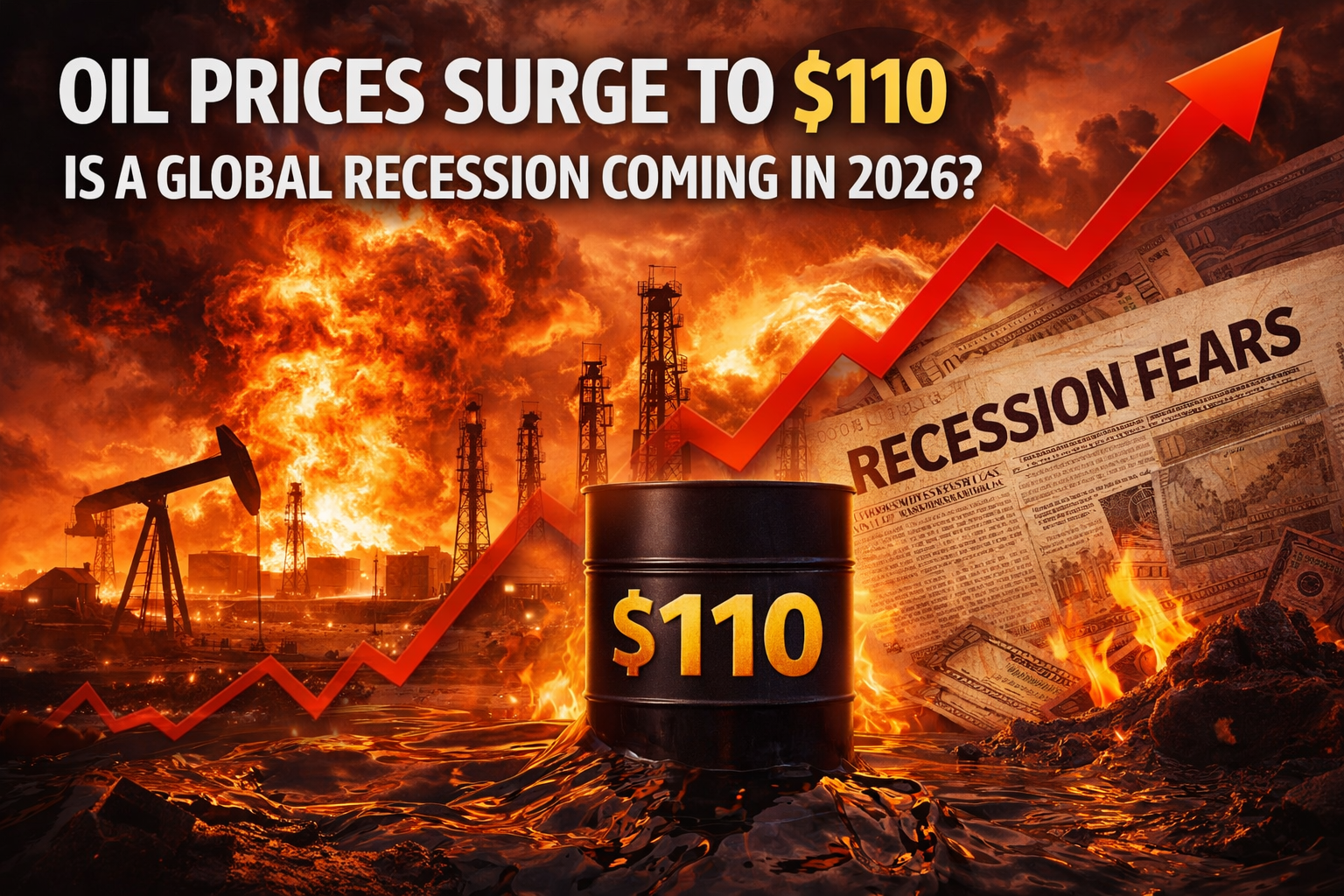
Oil Prices Surge to $110: Is a Global Recession Coming in 2026?
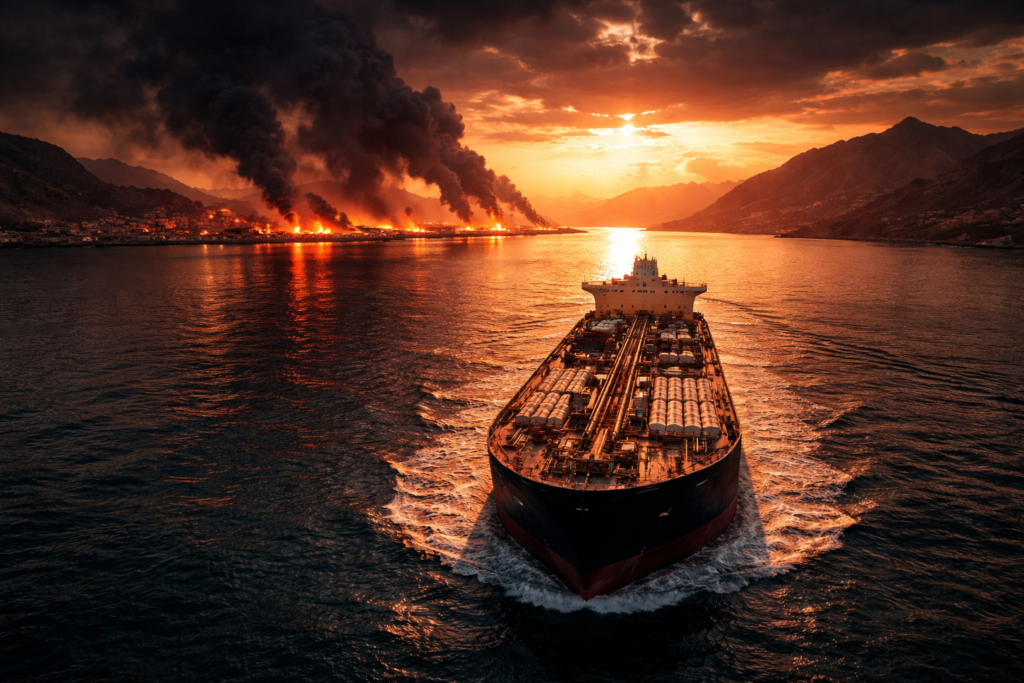
The world woke up in March 2026 to an oil market on fire. Not metaphorically. Literally, in the Persian Gulf, where the infrastructure that powers the global economy was burning. What happens next could determine whether 2026 becomes the year the world economy finally breaks.
We have been here before, sort of. The 1973 oil embargo. The 2008 price spike. The pandemic supply chaos of 2021. Each time, the world held its breath, economists updated their models, and ordinary people felt the pain at the pump long before any official recession was declared. But this time feels different. The trigger is bigger, the chokepoint is tighter, and the global economy was already walking a tightrope before the first missile struck. So when oil breaches $110 a barrel and keeps climbing, the question is not simply whether prices are high. The question is whether the architecture of the global economy can hold the weight.
How Did We Get Here? The Shock Behind the Spike

The Geopolitical Trigger
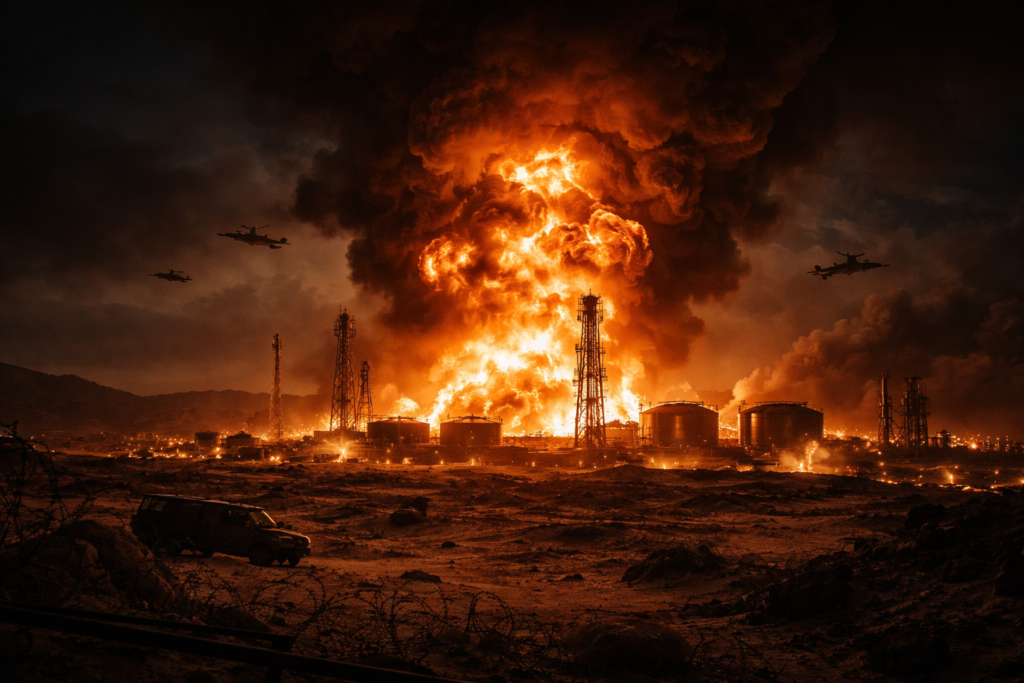
In March 2026, the Middle East crossed a line it had been approaching for years. Israel, reportedly in coordination with the United States, struck Iran’s largest natural gas field along with a series of upstream energy infrastructure targets that had, until that moment, been deliberately left untouched. These were not symbolic strikes. They were surgical, consequential, and aimed directly at the nervous system of Iranian energy production.
The calculus behind keeping those sites off the target list had always been economic as much as strategic. Hit Iran’s oil and gas infrastructure, and you do not just hurt Tehran. You send a shockwave through every commodity market on the planet. That calculation was abandoned in March 2026, and the markets responded within hours. Traders, insurers, and shipping companies all reached the same conclusion simultaneously: the rules of engagement had changed, and the price of oil needed to reflect that.
The Strait of Hormuz: The World’s Most Dangerous Chokepoint
There is a narrow strip of water sitting between Oman and Iran, roughly 33 kilometres wide at its tightest point, and through it flows the lifeblood of the modern world. The Strait of Hormuz handles approximately 20% of all global oil and gas flows. Every major oil-importing economy, from Japan and South Korea to India and the European Union, depends on tankers passing through it safely. For decades, that passage was tense but functional. In March 2026, it effectively stopped functioning.
The conflict triggered a near-total shutdown of tanker traffic through the Strait. Insurance costs for vessels attempting the passage became prohibitive. Shipping companies rerouted or suspended operations entirely. What had previously been a “war premium” baked into oil prices became something far more serious: a genuine, verifiable, physical supply crunch. The oil was in the ground. It simply could not get to the ships, and the ships could not get to the world.
This is the critical distinction that separates the 2026 shock from previous spikes driven by speculation or political posturing. The disruption is structural. The barrels are missing. And markets priced that reality in with brutal efficiency.
The Numbers Don’t Lie
Before the war escalated to its current intensity, Brent crude was trading in a range that, while elevated, felt manageable. By mid-March 2026, Brent had surged to between $110 and $114 per barrel, representing an increase of roughly 80% above pre-war levels. To put that in context: this is the highest oil has traded in many years, and it arrived not gradually but in violent, lurching jumps that rattled financial markets and central bank projections alike.
On March 19, 2026, Brent was reported at $113.71 per barrel, a figure that would have seemed alarmist as a forecast just months earlier. CNN Business described the underlying supply shock as the biggest oil disruption in history, pointing to the scale and speed of the single-day price movements that accompanied the worst of the conflict escalation. These are not rounding errors or market overreactions. They are the numbers doing exactly what numbers are supposed to do: telling the truth about what is happening in the physical world, one barrel at a time.
What Does $110 Oil Actually Do to the Global Economy?

The Invisible Tax on Everyone
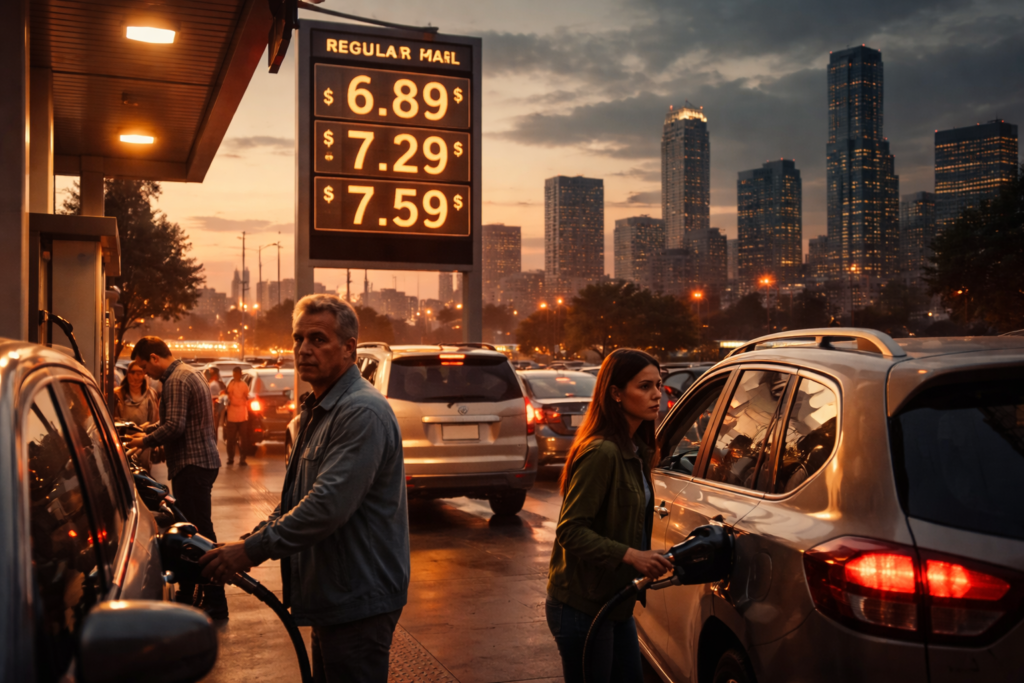
Nobody votes for it. Nobody signs off on it. But when oil prices surge, every person on the planet starts paying a tax they never agreed to. It shows up first at the fuel pump, where the numbers tick upward and drivers do the maths in their heads with increasing discomfort. Then it shows up in the weekly grocery bill, because every product on every shelf arrived on a truck, and that truck runs on diesel. Then it shows up in airline tickets, heating bills, manufacturing costs, and the price of the plastic packaging around everything you buy. Oil is not just a fuel. It is an input cost for the entire civilisation, and when its price spikes by 80%, that cost gets passed down the chain until it lands, inevitably, in the lap of the ordinary consumer.
For businesses, the calculus is equally punishing. Energy-intensive industries such as chemicals, steel, cement, and logistics face margin compression that forces an uncomfortable choice: absorb the cost and watch profits evaporate, or pass it on to customers and watch demand soften. Neither option is good. Both options, playing out simultaneously across thousands of companies in dozens of economies, start to look less like a business problem and more like a macroeconomic one.
The Inflation Ripple Effect
The IMF has done the arithmetic, and it is not comforting. According to the Fund’s own estimates, a sustained 10% increase in energy prices over the course of a year pushes global inflation up by approximately 0.4 percentage points. That figure, modest as it sounds in isolation, carries enormous weight in 2026, when central banks in the United States, Europe, and beyond have spent the better part of three years trying to wrestle inflation back toward their 2% targets.
Now consider that oil prices have not risen by 10%. They have risen by roughly 80% from pre-war levels. The IMF’s framework, applied at that scale, points toward inflationary pressure that is not a rounding error but a serious, sustained force working directly against everything monetary policy has achieved since the post-pandemic price spiral. Central banks that were beginning to contemplate rate cuts are now facing a world where cutting rates could reignite inflation, but keeping them high could tip slowing economies into contraction. That is not a comfortable position. That is a trap.
Growth Takes the Hit
The same IMF analysis that quantifies the inflation impact also addresses what the energy shock does to growth, and the answer is predictably grim. A 10% sustained rise in energy prices reduces global GDP growth by somewhere between 0.1 and 0.2 percentage points over the same period. Again, scale that estimate to the 80% price surge currently playing out, and the numbers become genuinely alarming.
Before the latest escalation, global growth was tracking at around 3.3%, a figure that represented resilience in the face of persistent headwinds. That resilience is now being stress-tested. Shave a full percentage point or more off the global growth outlook and you move from “modest expansion” to “stagnation” in several major economies. The IMF itself has been explicit: the resilience is real, but it is being tested. Tested, in this context, is a diplomatic word for something closer to strained.
So Is a 2026 Global Recession Actually Coming?
What the Institutions Are Saying
The institutions are not panicking. But they are not relaxed either, and there is a meaningful difference between the two. Moody’s has stated plainly that a U.S. recession is increasingly hard to avoid if the Iran war and its associated supply disruption continue at their current intensity. That is not a fringe view from an alarmist commentator. That is a major ratings agency telling the market, in measured professional language, that the base case is shifting.
The IMF’s posture mirrors this: elevated risk, not confirmed catastrophe. Wall Street’s consensus, always reluctant to commit to the word recession until it is unavoidable, has nonetheless been moving steadily in the same direction, with forecasters revising growth estimates downward and recession probability models ticking upward with each passing week of sustained high prices. The language across institutions is careful and calibrated, but the direction of travel is consistent. When Moody’s, the IMF, and the major investment banks are all reaching for the same cautionary vocabulary at the same time, it is worth paying attention.
The “Slowdown vs. Crash” Debate
Here is the distinction that matters most right now, and it is one that gets lost in the noise of alarming headlines. A global economic slowdown and a 2008-style synchronized global recession are not the same thing, and conflating them produces more fear than clarity. A slowdown means growth continues, but at a pace that feels grinding and uneven, with some economies contracting while others merely stagnate. A crash of the 2008 variety means synchronized contraction across the world’s major economies simultaneously, credit markets seizing, unemployment spiking, and the kind of feedback loops that take years to fully unwind.
The current consensus leans toward the former, not the latter. Economists and forecasters broadly expect a painful slowdown in 2026, particularly acute in oil-importing emerging market economies where currency pressures compound the energy cost burden. But the conditions for a full 2008-style global crash, specifically the kind of financial system fragility and credit market interconnection that turned the subprime crisis into a global contagion, are not obviously present in the same form today. What is present is a serious, real, and worsening risk that the slowdown deepens into something worse if the key variables move in the wrong direction.
The $140 Threshold and Beyond
Scenario planning is not pessimism. It is preparation. And the scenarios being modelled right now by macro researchers and institutional economists are sobering enough to warrant serious attention. Some analysts have identified a sustained move to around $140 per barrel, held for approximately two months, as the threshold at which parts of the global economy tip into mild recession. That is not an extreme scenario at current trajectory. It is a plausible one.
Beyond $140, the calculus shifts from “mild recession risk” to something considerably more severe. A hypothetical sustained move toward $200 or $250 per barrel, while treated as extreme by most forecasters, would represent a recessionary shock of historic proportions, compressing consumer spending, detonating inflation, and forcing central banks into an impossible policy position simultaneously. The world is not there yet. But the gap between $113 and $140 is not as wide as it was three months ago, and that proximity is precisely what has moved this conversation from the economics pages to the front page.
The Forces That Will Decide the Outcome
What Could Push the World Into Recession
Three forces, working in combination, represent the clearest path from “elevated risk” to confirmed global recession. The first is time. A prolonged closure of the Strait of Hormuz, stretching across multiple quarters rather than weeks, would transform what markets are currently pricing as a temporary disruption into a permanent structural shift in global energy supply. The longer the chokepoint stays closed, the deeper the damage embeds itself into inflation data, business planning, and consumer confidence. Markets can absorb a shock. They struggle to absorb a shock that never resolves.
The second force is central bank policy. The cruel irony of an oil-driven inflation spike is that it forces the institutions designed to protect economic stability into a position that threatens it. If the Federal Reserve, the European Central Bank, and their peers choose to hold rates high or resume hiking in response to resurgent inflation, they risk crushing demand in economies that are already softening. The medicine, in sufficient doses, becomes the poison. It is the same dynamic that has characterised every major oil shock of the past half century, and there is no clean way out of it.
The third force is the consumer, and specifically how much the consumer has left. Households in the United States and across much of Europe entered 2026 already carrying significant financial strain, from elevated mortgage costs to credit card debt running at high interest rates. When fuel and transport costs spike on top of that existing burden, the response is not gradual adjustment. It is a sharp, sudden pullback in discretionary spending that hits retail, hospitality, travel, and services simultaneously. Consumer spending is the engine of growth in most advanced economies. Flood that engine with enough cold water and it stalls.
What Could Pull Us Back From the Edge
The picture is not uniformly dark, and intellectual honesty requires acknowledging the forces working in the other direction. The most significant buffer against a full global recession is the labour market, particularly in the United States, where unemployment has remained stubbornly low and wage growth has provided households with at least some cushion against rising costs. An employed population with growing wages is a population that keeps spending, even when spending becomes more painful. It does not make the pain disappear, but it slows the transmission from price shock to demand collapse.
The second stabilising force is geographic redistribution. High oil prices are not a universal negative. Energy-exporting economies, across parts of the Middle East, in Norway, and elsewhere, experience a significant income windfall when prices surge. That windfall circulates through sovereign wealth funds, government spending, and import demand in ways that partially offset the demand destruction happening in oil-importing economies. The global economy is not a single organism. It is a network, and some nodes in that network are currently receiving, not losing.
The third buffer is structural and generational. The global economy of 2026 is meaningfully less sensitive to oil shocks than the economy of 1973 or even 2008. The penetration of electric vehicles across key markets, the rapid expansion of renewable energy capacity, and decades of efficiency improvements across industry and transport have all reduced the ratio of oil consumption to GDP. The shock still hurts. But it hurts an economy that has quietly been building its immunity for years. That immunity is incomplete, uneven, and not sufficient on its own. But it is real, and it matters.
What Should You Be Watching Right Now?
Three Indicators That Will Tell You Everything
Forget the noise. Forget the daily commentary and the competing op-eds and the social media economists who have been predicting recession every quarter for four years. There are three indicators that will tell you, with more clarity than anything else, which direction 2026 is heading.
The first is the operational status of the Strait of Hormuz. This is the single most consequential variable in the entire equation. If tanker traffic resumes at meaningful scale in the coming weeks, the oil price will retreat, the inflation pressure will ease, and the recession risk will recede with it. If the Strait remains effectively closed through the summer, every negative scenario described in this piece becomes more probable. Watch the shipping data. Watch the insurance rates. Watch what the tankers are actually doing, not what diplomats are saying about them.
The second is central bank communication, specifically the tone and language coming out of the Federal Reserve and the European Central Bank in their next several meetings. The key question is whether policymakers treat the oil spike as a temporary supply shock to be looked through, or as a renewed inflation threat requiring tighter policy. The former gives the economy room to breathe. The latter compounds the pressure. Fed Chair statements, ECB minutes, and the dot plots that signal future rate intentions will be more revealing in the next 90 days than almost any other data source available.
The third is the monthly inflation print, particularly core inflation excluding energy. If oil’s rise remains contained within the energy component and fails to bleed significantly into services, wages, and broader price-setting behaviour, the shock is damaging but manageable. If it begins to contaminate core inflation, the situation changes materially. Central banks can tolerate high headline inflation driven by a single commodity. They cannot tolerate a repeat of the broad-based, persistent inflation cycle the world spent three years escaping. Watch the core numbers. They will tell you whether this is a storm or a flood.
Final Talk
So here it is, stated plainly, without the hedging and the qualifications and the economist’s instinct to leave every door open. Oil at $110 per barrel does not automatically mean a global recession in 2026. But it has moved the world to a place where recession is no longer a tail risk to be mentioned in footnotes. It is a serious, central scenario being modelled by the IMF, priced into markets, and named explicitly by Moody’s. The conditions that would prevent a recession, a swift resolution to the Hormuz disruption, central banks threading the policy needle, consumers holding their nerve, all require things to go right in multiple places simultaneously. The conditions that would produce one require only for things to continue as they are. That asymmetry is the most important thing to understand about where the global economy stands today. The question is no longer whether the risk is real. The question is whether the world gets lucky.
History has a habit of turning supply shocks into turning points, and right now, $113 a barrel is buying us a front-row seat to find out which kind this one will be.
Detailed Sources
Source 1
Title: Oil prices hit nearly $110 after Israel strikes Iran’s energy infrastructure Publication: Fortune Date: March 17, 2026 URL: https://fortune.com/2026/03/17/oil-prices-110-crude-brent-iran-war-israel-strait-hormuz-lng/ What It Covers: This article documents the immediate market reaction to Israel’s strikes on Iranian energy infrastructure, explaining how the Strait of Hormuz shutdown converted a war premium into a genuine supply crunch and pushed Brent crude toward $110 per barrel. Use this as your primary citation for the geopolitical trigger section and the initial price surge data.
Source 2
Title: Current Price of Oil as of March 19, 2026 Publication: Fortune Date: March 19, 2026 URL: https://fortune.com/article/price-of-oil-03-19-2026/ What It Covers: This article provides the specific and verifiable Brent crude price of $113.71 per barrel recorded on March 19, 2026, confirming the persistence and continuation of the price spike beyond the initial shock. Use this as your citation whenever referencing the sustained nature of the surge and the specific price figure in your numbers section.
Source 3
Title: Oil Surges to $110 After Israel Strikes Iran’s Energy Facilities Publication: Euronews Date: March 18, 2026 URL: https://www.euronews.com/business/2026/03/18/oil-surges-to-110-after-israel-strikes-irans-energy-facilities What It Covers: This piece summarises the geopolitical sequence of events that triggered the oil spike, covering the scale of the Israeli strikes, the international response, and the immediate commodity market movement. Use this as a supporting citation alongside the Fortune piece for your opening sections on the geopolitical trigger and price surge.
Source 4
Title: This Is the Biggest Oil Disruption in History Publication: CNN Business Date: March 9, 2026 URL: https://www.cnn.com/2026/03/09/economy/oil-price-shock What It Covers: CNN Business frames the 2026 supply disruption in its full historical context, describing it as the largest single oil disruption ever recorded and documenting the severity and speed of the single-day price movements that accompanied the worst of the escalation. Use this as your primary citation when making the case that this shock is historically unprecedented and when distinguishing it from previous oil crises.
Source 5
Title: IMF Says 10% Oil Rise for Year Adds 40 Basis Points to Global Inflation Publication: Bloomberg Date: March 6, 2026 URL: https://www.bloomberg.com/news/articles/2026-03-06/imf-says-ready-to-help-economies-squeezed-by-mideast-oil-shock What It Covers: This Bloomberg report covers an IMF interview in which the Fund provides its quantitative framework for understanding the economic impact of sustained energy price increases. Specifically, it documents the IMF’s estimate that a 10% sustained rise in energy prices over one year pushes global inflation up by approximately 0.4 percentage points and reduces global GDP growth by 0.1 to 0.2 percentage points. This is your most important citation for the economic impact sections, the inflation ripple effect analysis, and the growth slowdown discussion.
Source 6
Title: Moody’s Says a US Recession Is Increasingly Hard to Avoid Amid Iran War Publication: Euronews Date: March 18, 2026 URL: https://www.euronews.com/business/2026/03/18/moodys-says-a-us-recession-is-increasingly-hard-to-avoid-amid-iran-war What It Covers: This article reports directly on Moody’s assessment that a United States recession is becoming increasingly difficult to avoid if the Iran conflict and its associated energy supply disruption continue at current intensity. It represents the clearest institutional statement of elevated recession risk available and should be your primary citation for the section covering what major institutions are saying about the 2026 recession probability.
Frequently Asked Questions
Q1: What caused oil prices to spike to $110 per barrel in March 2026?
The spike is the direct result of a major geopolitical escalation in the Middle East. Israel, reportedly in coordination with the United States, struck Iran’s largest natural gas field and a series of upstream energy infrastructure targets in March 2026. The strikes triggered a near-total shutdown of tanker traffic through the Strait of Hormuz, the narrow waterway responsible for approximately 20% of all global oil and gas flows. What began as a war premium in the price quickly became a genuine physical supply crunch, and markets responded accordingly, pushing Brent crude to between $110 and $114 per barrel, roughly 80% above pre-war levels.
Q2: Has high oil ever caused a global recession before?
Yes, and the historical record is instructive. The 1973 OPEC oil embargo triggered a severe global downturn, combining energy scarcity with runaway inflation in a way that reshaped economic policy for a generation. The 1979 oil crisis produced a second wave of stagflation across major economies. The 2008 oil spike, which saw Brent briefly touch $147 per barrel, compounded the damage of the financial crisis, accelerating the global recession that followed. Each episode was different in its trigger and its severity, but the common thread is consistent: when oil stays high for long enough, the global economy eventually pays the price. The 2026 situation draws uncomfortable parallels with all three.
Q3: Which countries are most at risk if a recession hits in 2026?
Oil-importing emerging market economies sit at the sharpest end of the risk spectrum. Countries across South and Southeast Asia, Sub-Saharan Africa, and parts of Latin America face a particularly brutal combination of surging energy import bills, currency pressure against a stronger dollar, and limited fiscal space to cushion the blow through government spending. Within advanced economies, the United States faces elevated recession risk if consumer spending buckles under the combined weight of high energy costs and existing household debt. European economies, heavily dependent on energy imports and still navigating post-pandemic structural fragility, are also significantly exposed. Energy-exporting nations, by contrast, are among the few that stand to benefit from the current price environment.
Q4: What would need to happen for oil prices to come back down?
Several pathways exist, though none are guaranteed or imminent. A diplomatic resolution to the US-Iran conflict, or even a partial de-escalation that allows tanker traffic through the Strait of Hormuz to resume, would be the single most powerful downward force on prices. Separately, a significant global demand slowdown, which is itself a symptom of the economic damage high oil causes, would eventually reduce consumption enough to ease price pressure. OPEC member states and other major producers could also choose to increase output to compensate for disrupted Iranian supply, though the geopolitical complexity of that decision should not be underestimated. None of these scenarios are fast. In oil markets, the cure and the disease have a tendency to arrive at the same time.
Q5: What can ordinary people do to protect themselves financially during an oil shock?
The honest answer is that macroeconomic forces of this scale operate well above the level of individual financial decisions, and no personal finance tip fully neutralises a global supply shock. That said, a few principles hold up under pressure. Reducing direct exposure to fuel costs where possible, through public transport, carpooling, or accelerating a switch to an electric vehicle if circumstances allow, provides some insulation. Reviewing discretionary spending and building or preserving an emergency fund matters more than usual when the economic outlook is genuinely uncertain. For investors, energy sector equities and commodities have historically performed during supply-driven oil spikes, though timing any market is a dangerous game. Most importantly, watch the three indicators outlined in this piece. An informed read of where the situation is heading is worth more than any reactive financial decision made in the middle of the storm.