-
- No Comments
- March 28, 2026

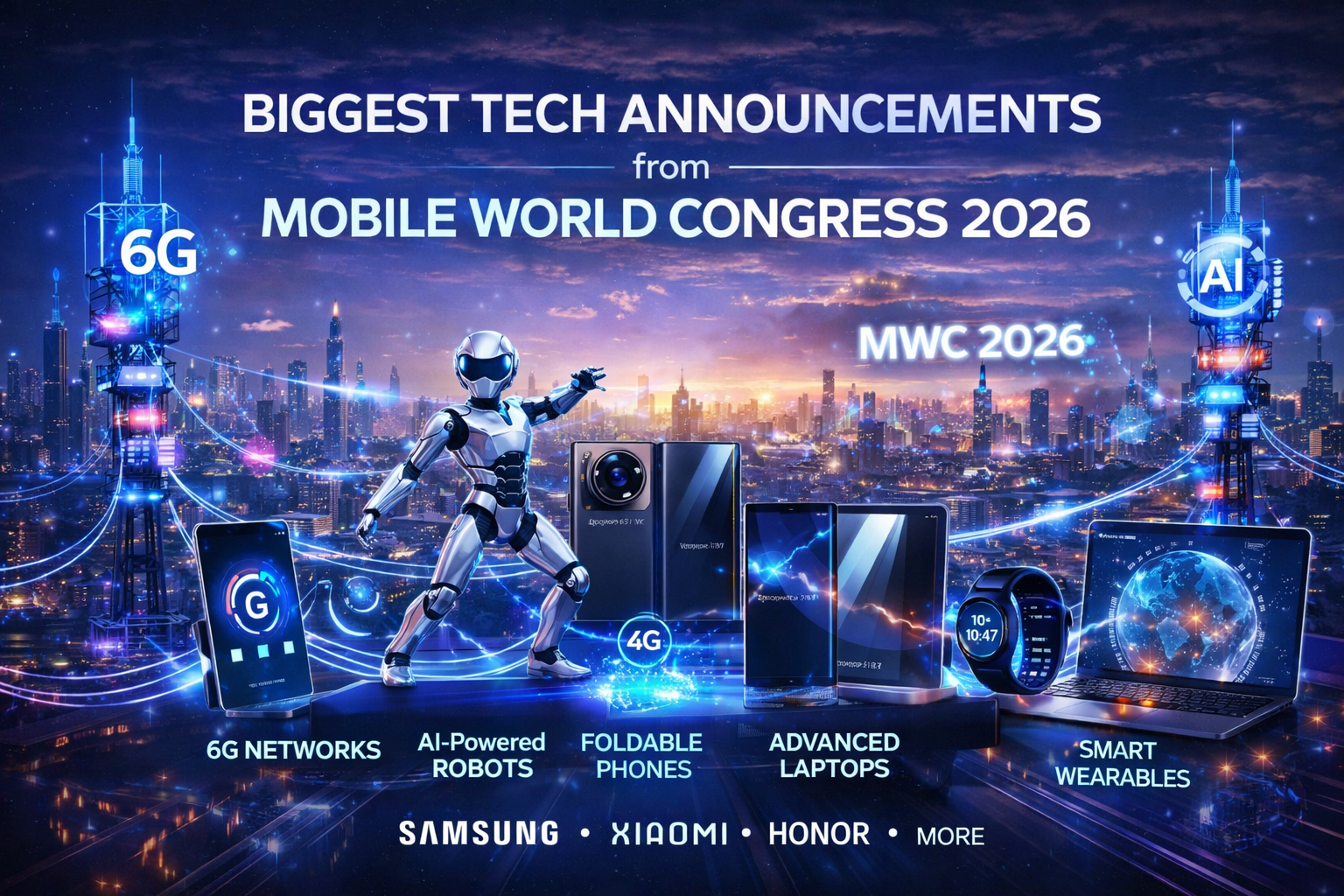
Biggest Tech Announcements from Mobile World Congress 2026
Biggest Tech Announcements from Mobile World Congress 2026 Introduction
Mobile World Congress 2026 did not feel like a traditional smartphone launch event. It felt like a line in the sand. The kind of moment the industry quietly builds toward and then suddenly, everything changes at once. This year, it was not just about faster chips or better cameras. It was about intelligence moving closer to you, into your hands, into your device, into your daily decisions.
The biggest tech announcements from Mobile World Congress 2026 reveal a world where AI is no longer something you access but something that actively works for you. Phones are now capable of running complex AI agents directly on the device, executing tasks across apps without constant cloud dependency. At the same time, hardware itself is evolving in ways that feel almost alive, with devices that can move, track, and interact in real time.
What makes this shift powerful is not just the technology itself, but what it unlocks. Faster workflows. Smarter content creation. Seamless connectivity that feels invisible yet essential. The boundaries between software, hardware, and human intent are starting to blur.
This blog breaks down the biggest tech announcements from Mobile World Congress 2026, cutting through the noise to highlight what truly matters and what these innovations mean for the future of mobile technology.
Biggest Tech Announcements from Mobile World Congress 2026 The Rise of AI First Smartphones
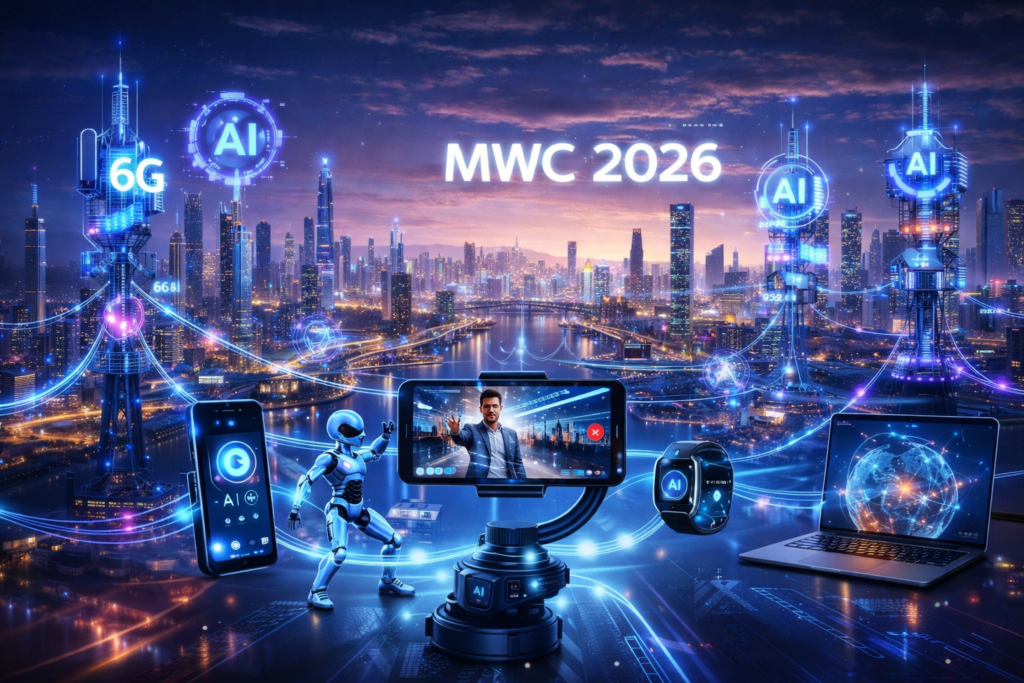
The biggest tech announcements from Mobile World Congress 2026 make one thing brutally clear the smartphone is no longer just a tool, it is becoming an operator. Not something you open apps on, but something that acts on your behalf. This is the rise of AI first smartphones where intelligence is baked into the core of the device, quietly stitching together actions across apps, anticipating needs, and executing workflows in seconds.
What used to take five taps now happens in one prompt. Search, edit, share, schedule it all flows together. And the real shift is this it is happening on device. No lag, less reliance on the cloud, and a level of speed and privacy that feels fundamentally different. The brands leading this wave are not just competing on specs anymore. They are competing on how smart their phones can think and act.
Xiaomi 17 Ultra and the Evolution of AI Cameraphones
Xiaomi walked into Mobile World Congress 2026 with a clear message the camera is no longer just hardware, it is intelligence layered over optics. The Xiaomi 17 Ultra embodies this shift. On the surface, it is a powerhouse packed with advanced multi camera systems and extreme zoom capabilities. But beneath that, it is driven by AI that understands scenes, lighting, subjects, and intent.
This is not just about taking a photo. It is about capturing, enhancing, and preparing that content for sharing without friction. The device can search for references, edit images, optimize them, and even suggest where and how to publish all in a connected flow. For creators and professionals, this turns the phone into a full creative pipeline, not just a capture device.
The result feels less like using a camera and more like directing one.
Leica Inspired Leitzphone Variant for Creators
Then comes the Leitzphone variant a device that feels like it was built for people who still romanticize the craft of photography. With its retro inspired camera ring and tactile zoom controls, it brings back the physicality of shooting. But this is not nostalgia for the sake of it.
Underneath that classic exterior sits the same AI driven engine as the Xiaomi 17 Ultra. This creates a fascinating blend where traditional camera handling meets modern computational photography. You get the satisfaction of manual control paired with AI that enhances, corrects, and refines in the background.
It is a reminder that the future of tech is not always about replacing the past. Sometimes it is about upgrading it quietly.
Honor Magic V6 and the Next Generation Foldable Experience
Foldables have been flirting with mainstream adoption for years. At Mobile World Congress 2026, the Honor Magic V6 feels like one of the devices finally pushing it over the edge.
Slimmer, tougher, and more practical for everyday use, it addresses the biggest friction points users have had with foldables. But what makes it stand out is how AI integrates into the larger screen experience. Productivity feels different when your device can actively assist in multitasking, summarizing content, managing workflows, and adapting layouts in real time.
This is where foldables start making sense not just as a design experiment, but as a productivity powerhouse. The combination of flexible hardware and intelligent software creates a device that adapts to you instead of forcing you to adapt to it.
Other Standout Smartphones from Mobile World Congress 2026
Beyond the headliners, the biggest tech announcements from Mobile World Congress 2026 also showcased a wave of experimental and extreme devices that hint at where the market is heading.
There are modular concepts that let users swap components based on need, gaming focused phones pushing performance limits, and even ultra rugged devices with battery capacities so large they border on absurd. One concept phone can reportedly generate enough heat to start a fire, a gimmick on the surface but also a signal of how far hardware experimentation is being pushed.
Together, these devices paint a broader picture. Innovation is no longer linear. It is chaotic, ambitious, and sometimes strange. But within that chaos, the direction is clear smartphones are evolving into smarter, more adaptive systems that do more than respond. They act.
Biggest Tech Announcements from Mobile World Congress 2026 The Era of Robot Phones and Embodied AI
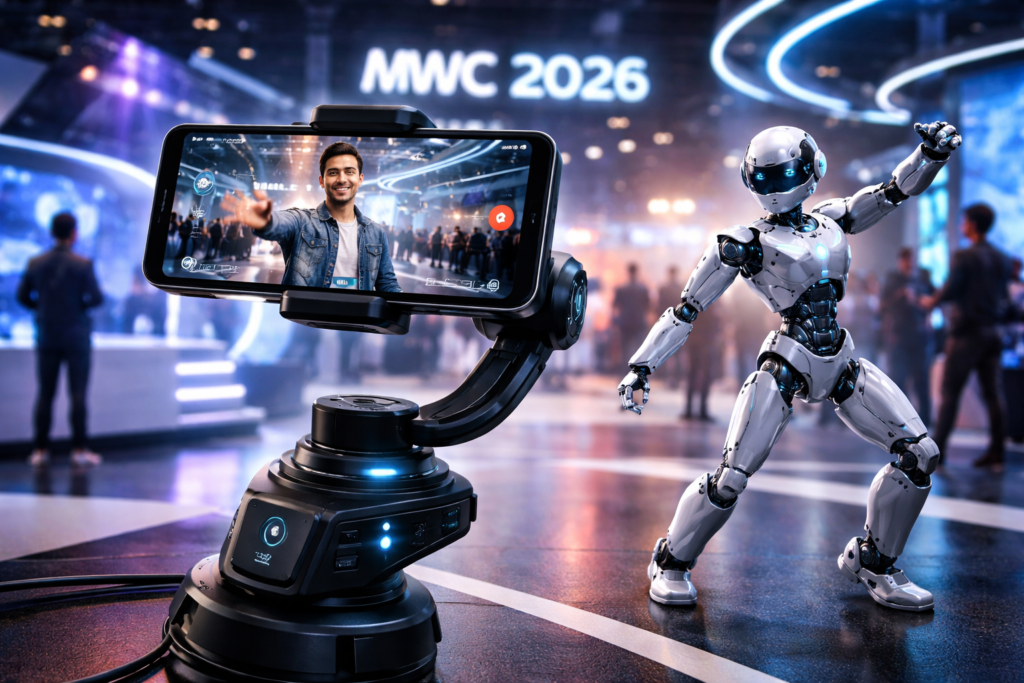
If there was one moment at Mobile World Congress 2026 that made people stop, stare, and rethink everything they knew about smartphones, this was it. The biggest tech announcements from Mobile World Congress 2026 are not just about smarter devices, they are about devices that can physically respond to the world around them. This is the arrival of embodied AI, where intelligence is no longer trapped behind a screen but expressed through movement, interaction, and presence.
For years, AI has lived in software quietly processing commands. Now it is stepping into the physical world. Phones are no longer static slabs of glass. They are beginning to behave, adjust, and react. It is a subtle shift on the surface, but underneath, it signals something much bigger the merging of robotics and mobile technology into a single ecosystem.
Honor Robot Phone A Smartphone That Moves With You
The Honor Robot Phone is easily one of the boldest concepts to emerge from Mobile World Congress 2026. At first glance, it looks like a smartphone mounted on a gimbal. But spend a few moments with it, and it becomes clear this is something else entirely.
This device can tilt, rotate, and track subjects in real time using AI driven motion control. Place it on a desk, and it follows you as you move. Start recording, and it frames your shot automatically, adjusting angles and focus without you touching a thing. It feels less like holding a camera and more like having a cameraman that never blinks.
For content creators, vloggers, and even everyday users, this changes the dynamic completely. Video calls become more natural. Recording becomes effortless. The friction of setting up shots disappears. The phone is no longer waiting for input. It is actively participating.
And that is the real breakthrough. It is not just smart. It is aware.
The Rise of AI Powered Robotics in Mobile Ecosystems
But the story does not end with one device. The biggest tech announcements from Mobile World Congress 2026 show a broader push toward integrating robotics into the mobile ecosystem itself.
Alongside concepts like the robot phone, companies are experimenting with humanoid companions and AI powered assistants that can sync directly with your smartphone. These devices are designed to extend the capabilities of your phone into the physical world whether that means interacting with your environment, assisting with tasks, or simply acting as a bridge between digital intelligence and human behavior.
Imagine a system where your phone processes intent, the robot executes action, and both learn from your habits over time. That is the direction this is heading. It is no longer about one device doing everything. It is about a network of intelligent devices working together seamlessly.
This shift toward embodied AI signals the beginning of a new category one where your tech does not just sit in your pocket, but moves with you, responds to you, and in many ways, works alongside you.
Biggest Tech Announcements from Mobile World Congress 2026 Qualcomm Next Gen Connectivity Breakthroughs
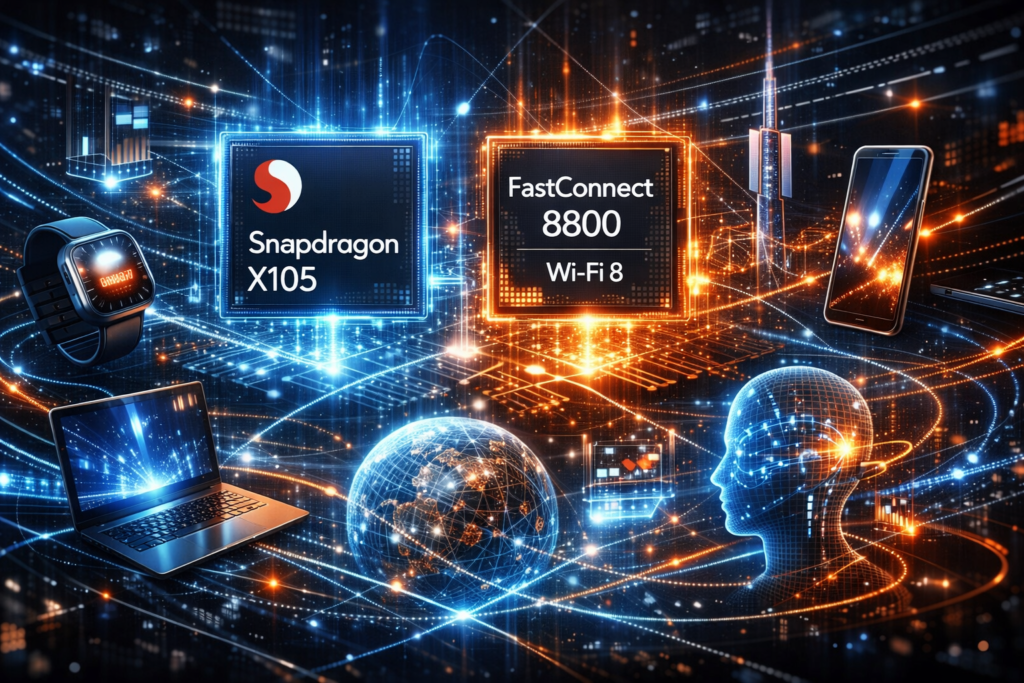
Strip away the hype, the flashy demos, the robotic gimmicks, and you land on the real engine powering everything at Mobile World Congress 2026 connectivity. Because none of this AI magic works without speed, stability, and efficiency underneath it. The biggest tech announcements from Mobile World Congress 2026 show that while devices are getting smarter, the infrastructure behind them is evolving just as aggressively.
This is where Qualcomm steps in, not with headlines designed to trend, but with the kind of foundational upgrades that quietly define the next decade. Faster modems, smarter wireless systems, and chips built specifically for AI driven workloads are setting the stage for a world where lag becomes unacceptable and real time intelligence becomes the norm.
Snapdragon X105 Modem and the Future of 5G Performance
The Snapdragon X105 modem is not just another incremental upgrade. It is a signal that 5G is entering its mature phase, where efficiency matters as much as speed. Smaller in size and significantly more power efficient, this modem is built for devices that are constantly thinking, processing, and communicating.
The real story here is how it supports AI driven applications. Modern smartphones are no longer just downloading data. They are coordinating between on device AI, cloud systems, and multiple apps at once. That requires a modem that can handle complex, continuous data exchange without draining the battery or slowing things down.
With improved performance and smarter resource management, the X105 enables a smoother experience where AI tasks feel instant, whether that is real time translation, live video enhancement, or multi app automation happening in the background.
WiFi 8 and the FastConnect 8800 Revolution
If 5G handles the world outside, WiFi 8 is redefining everything inside. The FastConnect 8800 chipset pushes wireless speeds into a territory that starts to feel almost excessive, but in reality, it is necessary for what comes next.
We are talking about environments where multiple devices are streaming, gaming, and running AI processes simultaneously. Homes, offices, and public spaces are becoming dense ecosystems of connected devices. In that world, consistency matters more than peak speed.
WiFi 8 delivers both. Higher bandwidth, lower latency, and better handling of crowded networks mean smoother gaming, seamless 8K streaming, and real time AI workloads that do not stutter or buffer. It is not just faster internet. It is reliable intelligence at scale.
Snapdragon Wear Elite and the Evolution of Smart Wearables
While smartphones grab most of the attention, wearables are quietly becoming one of the most important frontiers in personal tech. The Snapdragon Wear Elite chip shows exactly where this space is heading.
Longer battery life is the obvious upgrade, but the real shift lies in always on AI capabilities. Smartwatches are moving beyond notifications and fitness tracking into something more proactive. They can monitor, analyze, and respond in real time, offering insights, coaching, and assistance directly from your wrist.
This creates a new layer of interaction where your wearable becomes an extension of your intelligence, not just your phone. It is faster, more personal, and always available.
Taken together, these innovations from Qualcomm highlight a simple truth the future of mobile is not just about smarter devices. It is about smarter connections that make those devices truly powerful.
Biggest Tech Announcements from Mobile World Congress 2026 AI Powered Laptops Displays and Edge Computing
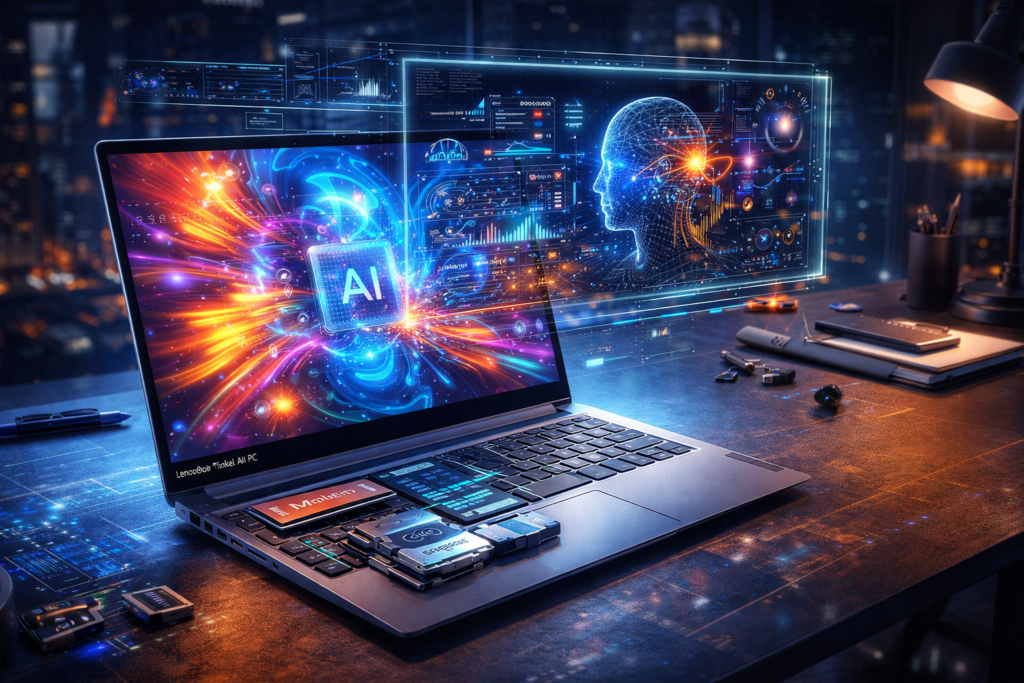
The biggest tech announcements from Mobile World Congress 2026 make it clear that the future is not locked inside your phone. It is expanding outward into a full ecosystem where laptops, displays, and edge devices all think, adapt, and collaborate in real time. This is the rise of AI powered computing beyond the handheld, where performance is no longer just about raw power but about how intelligently that power is used.
What is changing here is subtle but powerful. Instead of relying entirely on cloud servers, more processing is happening locally at the edge. That means faster responses, better privacy, and systems that feel instantly reactive. From creative workflows to enterprise operations, devices are becoming self sufficient, capable of running advanced AI models without constantly reaching out to the cloud.
Lenovo ThinkBook Modular AI PC and the Future of Upgradeable AI Computing
Lenovo’s ThinkBook Modular AI PC feels like a glimpse into how laptops might evolve over the next few years. Instead of forcing users to replace entire machines every few years, this concept leans into modularity, allowing key components especially those tied to AI acceleration to be upgraded as needed.
This is not just about flexibility. It is about future proofing performance in a world where AI workloads are evolving rapidly. As models get heavier and more complex, users can scale their machine’s capabilities without starting from scratch. For creators, developers, and enterprise teams, that means sustained performance without constant reinvestment.
The AI angle is where things get interesting. With dedicated modules for AI processing, the device can handle demanding tasks like real time rendering, intelligent editing, and data analysis locally. It reduces dependency on external servers while maintaining high performance, making workflows faster and more secure.
It is a shift from disposable hardware to adaptable systems designed to grow with the user.
TCL Super Pixel and Next Generation Display Innovation
Displays rarely steal the spotlight, but at Mobile World Congress 2026, TCL made a strong case for why they should. With its Super Pixel and advanced AMOLED technologies, the focus is not just on sharper visuals but on smarter ones.
Higher brightness, improved power efficiency, and better readability in challenging lighting conditions all point toward a more practical viewing experience. But layered on top of that is AI optimization. Displays are beginning to adjust dynamically based on content, environment, and user behavior, delivering visuals that are not just clearer but more context aware.
This matters more than it seems. As devices become more AI driven, screens are no longer passive output tools. They are part of the experience, adapting in real time to enhance usability, reduce strain, and improve clarity whether you are working, creating, or consuming content.
Together, these innovations highlight a broader truth the biggest tech announcements from Mobile World Congress 2026 are not confined to one category. They are building an interconnected system where every device, from laptop to display, plays a role in delivering faster, smarter, and more responsive computing.
Biggest Tech Announcements from Mobile World Congress 2026 The Road to 6G and AI Native Networks
Step back from the devices, and a bigger story begins to unfold. The biggest tech announcements from Mobile World Congress 2026 are not just about what sits in your hand, but what connects everything together. Because smarter phones, faster laptops, and AI powered wearables all depend on one thing a network that can keep up.
And that is exactly where the industry is heading. Not just faster networks, but smarter ones. Networks that do not simply transmit data, but understand it, optimize it, and adapt in real time. This is the early blueprint of a world powered by AI native connectivity, where intelligence is embedded into the very fabric of communication.
6G Vision and AI Native Infrastructure
6G is still years away from mainstream rollout, but at Mobile World Congress 2026, it stopped feeling like a distant concept and started looking like a defined direction. The vision is clear networks that are built with AI at their core, not added as an afterthought.
Unlike previous generations, 6G is being designed to think. That means networks capable of analyzing traffic patterns, predicting demand, and adjusting performance dynamically without human intervention. Instead of static infrastructure, we are moving toward programmable systems that can evolve over time.
This has massive implications. Lower latency, higher reliability, and the ability to support complex AI driven applications at scale. From autonomous systems to immersive digital experiences, 6G is being shaped to handle workloads that current networks struggle to support.
And perhaps most importantly, it reduces the need for constant hardware upgrades. With AI managing optimization, networks can become more efficient without requiring a complete overhaul every few years.
Telecom AI Partnerships and Smart Network Ecosystems
But building this future is not a solo effort. The biggest tech announcements from Mobile World Congress 2026 also highlight a surge in partnerships between telecom operators and AI technology providers.
Companies are no longer just focusing on coverage and speed. They are investing in intelligence. AI is being used to automate network management, predict outages before they happen, and optimize performance based on real time conditions. This leads to more stable connections, fewer disruptions, and a smoother overall experience for users.
On the customer side, AI is reshaping how people interact with telecom services. Smarter chatbots, personalized plans, and faster issue resolution are becoming standard. What used to take hours or days is now handled in minutes.
At a broader level, these partnerships are creating interconnected ecosystems where networks, devices, and services all work together seamlessly. It is no longer about isolated systems. It is about a unified environment where everything communicates, adapts, and improves continuously.
The direction is unmistakable the future of connectivity is not just faster. It is intelligent, predictive, and deeply integrated into every layer of technology.
Biggest Tech Announcements from Mobile World Congress 2026 Key Trends Defining the Future
Step back and connect the dots, and the biggest tech announcements from Mobile World Congress 2026 start to form a clear pattern. This was not a year of isolated upgrades. It was a coordinated shift toward a new kind of ecosystem where intelligence sits at the center of everything.
First comes the rise of AI first ecosystems. Devices are no longer operating alone. Your phone, laptop, wearable, and even network are beginning to function as one connected system, sharing context, learning from behavior, and executing tasks across platforms without friction. The experience feels less like switching between devices and more like moving through a single continuous interface.
Then there is embodied intelligence. AI is stepping out of the screen and into the physical world. From robot phones that track your movement to companion devices that interact with your environment, technology is becoming more present, more responsive, and more human in the way it behaves. It is no longer passive. It reacts, adjusts, and participates.
And holding all of this together is hyper fast connectivity. With next generation modems, WiFi 8, and early 6G frameworks, speed is no longer the only goal. Stability, efficiency, and real time responsiveness are becoming just as critical. The result is a digital environment where delays shrink, workflows accelerate, and AI operates without interruption.
Together, these trends point toward a future where technology fades into the background while its capabilities expand dramatically. You do less manual work, make fewer decisions, and yet achieve more. The system handles the complexity for you.
Biggest Tech Announcements from Mobile World Congress 2026 Conclusion What This Means for the Next Decade
What Mobile World Congress 2026 revealed is not just where technology is going, but how quickly it is getting there. The biggest tech announcements from Mobile World Congress 2026 are early signals of a decade that will redefine how people interact with devices, data, and each other.
For consumers, this means a shift toward convenience that feels almost invisible. Devices will anticipate needs, automate routines, and deliver results before you even realize you asked for them. The friction that once defined digital experiences will continue to disappear.
For businesses, the implications are even bigger. Faster decision making, AI driven operations, and smarter infrastructure will create new opportunities while also raising the bar for competition. Companies that adapt to this AI first world will move faster, operate leaner, and connect with customers in more personalized ways.
And on a global scale, the impact stretches further. Smarter networks, more efficient devices, and AI integrated systems have the potential to reshape industries from healthcare to education to entertainment. The way information flows, the way services are delivered, and the way economies function will all evolve alongside these technologies.
But perhaps the most important shift is this technology is no longer something you use occasionally. It is becoming something that works with you constantly. Quietly, intelligently, and seamlessly.
That is the real story behind the biggest tech announcements from Mobile World Congress 2026. Not just innovation for the sake of it, but a foundation for a future where technology becomes an extension of how we think, create, and live.
Sources and References
Below are detailed sources you can include at the end of your blog to strengthen credibility and SEO. These are written in a clean, blog-friendly format with direct links:
Mashable covered a comprehensive roundup of every major reveal at Mobile World Congress 2026, including flagship smartphones, AI devices, and experimental concepts.
https://mashable.com/article/mwc-2026-every-announcement
PCMag published a “Best of Mobile World Congress 2026” breakdown, highlighting top smartphones, chips, and innovations across categories.
https://www.pcmag.com/news/best-of-mwc-2026
The News provided coverage on key announcements including AI gadgets, robotics, and next-generation smartphones unveiled during the event.
https://www.thenews.com.pk/latest/1394306-mwc-2026-new-smartphones-ai-gadgets-and-tech-innovations-revealed
Inkl and live coverage platforms reported on WiFi 8 developments, connectivity innovations, and early insights from Barcelona’s biggest mobile show.
https://www.inkl.com/news/mwc-2026-we-re-live-in-barcelona-ahead-of-the-world-s-biggest-mobile-show
Official Mobile World Congress agenda and keynote sessions outlining future connectivity, AI-native networks, and 6G vision:
https://www.mwcbarcelona.com/agenda/sessions/6088-keynote-1-leading-the-future-intelligent-inclusive-unstoppable
https://www.mwcbarcelona.com/agenda/sessions/6087-keynote-2-transforming-tomorrows-connected-world
Android Authority also published a visual recap highlighting the most important tech showcased at the event:
https://www.youtube.com/watch?v=7hJLjgjBBGA
Disclaimer
This article is intended for informational and educational purposes only. All trademarks, brand names, product names, and company names mentioned are the property of their respective owners. The content is based on publicly available information, announcements, and media reports at the time of writing.
We do not claim ownership of any third-party content, nor do we intend to misrepresent or harm any brand, organization, or individual. Any opinions expressed are purely editorial and do not reflect the official stance of any company mentioned.
This content does not promote or discriminate against any religion, belief system, or community. We respect all faiths and cultures.
Readers are encouraged to verify details from official sources before making any decisions. The publisher of this content shall not be held liable for any losses, damages, or legal claims arising from the use of this information.
FAQ
What were the biggest tech announcements from Mobile World Congress 2026
The biggest tech announcements from Mobile World Congress 2026 focused on AI-first smartphones, robot phones, next-generation Qualcomm chips, WiFi 8 connectivity, modular AI laptops, advanced displays, and early 6G network developments.
Why is AI such a big focus at Mobile World Congress 2026
AI is becoming the core of modern devices. Instead of relying on apps, AI now enables phones and laptops to perform tasks automatically, improving productivity, content creation, and user experience.
What is a robot phone and how does it work
A robot phone is a concept device that can physically move, track subjects, and adjust angles using AI. It acts like a built-in cameraman, making video recording and communication more dynamic and automated.
How will WiFi 8 and new Qualcomm chips impact users
WiFi 8 and next-generation chips will deliver faster speeds, lower latency, and better performance for gaming, streaming, and AI tasks. This means smoother experiences and more powerful real-time applications.
What does 6G mean for the future of mobile technology
6G represents the next evolution of connectivity, expected to bring AI-native networks, ultra-low latency, and smarter infrastructure. It will support advanced technologies like autonomous systems, immersive experiences, and real-time global communication.
More Blogs
If you want to explore how to add cinematic effects to your videos, the Xiaomi 17 Ultra’s AI camera features are a perfect inspiration, and you can also learn how to create smooth velocity effects on CapCut to make your content stand out (check it out here).
If you want to explore ways to keep your device optimized while using AI-powered features, the Honor Magic V6 foldable is a great example of seamless multitasking, and our guide on turning off Do Not Disturb can help you stay uninterrupted during intense workflows (learn more here).
If you want to explore how fast connectivity and smart devices can boost efficiency, Qualcomm’s Snapdragon X105 and WiFi 8 platforms are redefining mobile performance, and our tips on best digital marketing strategies for small businesses can show you how to leverage tech for growth (read more here).
If you want to explore the broader landscape of cutting-edge tech, MWC 2026 isn’t the only source—check out our roundup of major tech innovations announced in 2026 to see how devices, AI, and networks are shaping the future (see it here).
If you want to explore how enterprise AI is scaling across industries, the trends in AI-powered devices at MWC 2026 mirror innovations like Anthropic Claude AI’s enterprise adoption and partner network launch, giving insight into AI’s growing ecosystem (learn more here).