

-
- No Comments
- May 16, 2026

What is Project Freedom Strait of Hormuz
Introduction
The sudden rise of searches for “What is Project Freedom Strait of Hormuz” shows how quickly one geopolitical event can capture global attention. In recent weeks, the Strait of Hormuz became the center of international concern after severe disruptions to commercial shipping created fears of a wider economic and military crisis. Tankers carrying oil, fuel, and critical cargo reportedly faced delays, restrictions, and growing security threats in one of the most strategically important waterways on Earth.
As tensions between the United States and Iran escalated, global markets reacted almost instantly. Oil traders feared supply disruptions, shipping companies worried about rising insurance costs, and governments closely monitored the possibility of a regional conflict spreading further across the Middle East. Because the Strait of Hormuz handles a massive portion of the world’s energy transportation, even small disruptions inside the corridor can create ripple effects across fuel prices, supply chains, and international trade.
This is where Project Freedom entered the global conversation. The operation was announced as a U.S. led mission designed to protect commercial shipping and restore safe navigation through the Strait of Hormuz. Supporters described it as an emergency defensive response to prevent a global shipping crisis, while critics viewed it as another major escalation in the ongoing power struggle between Washington and Tehran. Either way, Project Freedom Strait of Hormuz quickly became one of the most discussed geopolitical developments of 2026.
What is Project Freedom Strait of Hormuz

Project Freedom Strait of Hormuz was a United States led military and diplomatic operation launched in May 2026 to secure commercial shipping routes through the Strait of Hormuz after maritime traffic in the region faced severe disruption. In simple terms, the mission was designed to help oil tankers, cargo ships, and commercial vessels safely move through one of the world’s most important trade corridors during a period of rising regional instability.
The United States presented Project Freedom as a temporary defensive operation focused on protecting freedom of navigation rather than launching a direct offensive against Iran. According to reports, the mission included naval destroyers, military aircraft, surveillance systems, drones, and thousands of service members tasked with supporting and securing neutral commercial traffic passing through the waterway.
The reason Project Freedom Strait of Hormuz became necessary was because the Strait itself had turned into a dangerous geopolitical flashpoint. Reports of restrictions, blockades, threats to commercial vessels, and growing military tensions created fear across global shipping industries. Since the Strait of Hormuz connects the Persian Gulf to international waters and carries a major share of the world’s oil exports, disruptions there immediately raised alarms across energy markets and global trade networks.
What made Project Freedom internationally significant was not only its military scale but also its economic impact. Rising fears over blocked shipping lanes threatened global oil prices, cargo delivery systems, fuel supplies, and maritime insurance costs. Thousands of vessels and crew members were reportedly affected by the instability, turning the operation into more than just a regional military issue. It became a global economic and strategic concern.
At its core, the simplest answer to “What is Project Freedom Strait of Hormuz” is this: it was an emergency U.S. effort to protect commercial shipping and restore safe passage through one of the world’s most critical maritime chokepoints during a period of extreme geopolitical tension.
Why the Strait of Hormuz Is So Important

The Strait of Hormuz is one of the most strategically important waterways in the entire world. This narrow maritime corridor connects the Persian Gulf to the open ocean through the Gulf of Oman and the Arabian Sea, making it one of the busiest and most economically critical shipping routes on the planet. Countries in the Gulf region depend heavily on this passage to export oil, gas, and commercial goods to international markets.
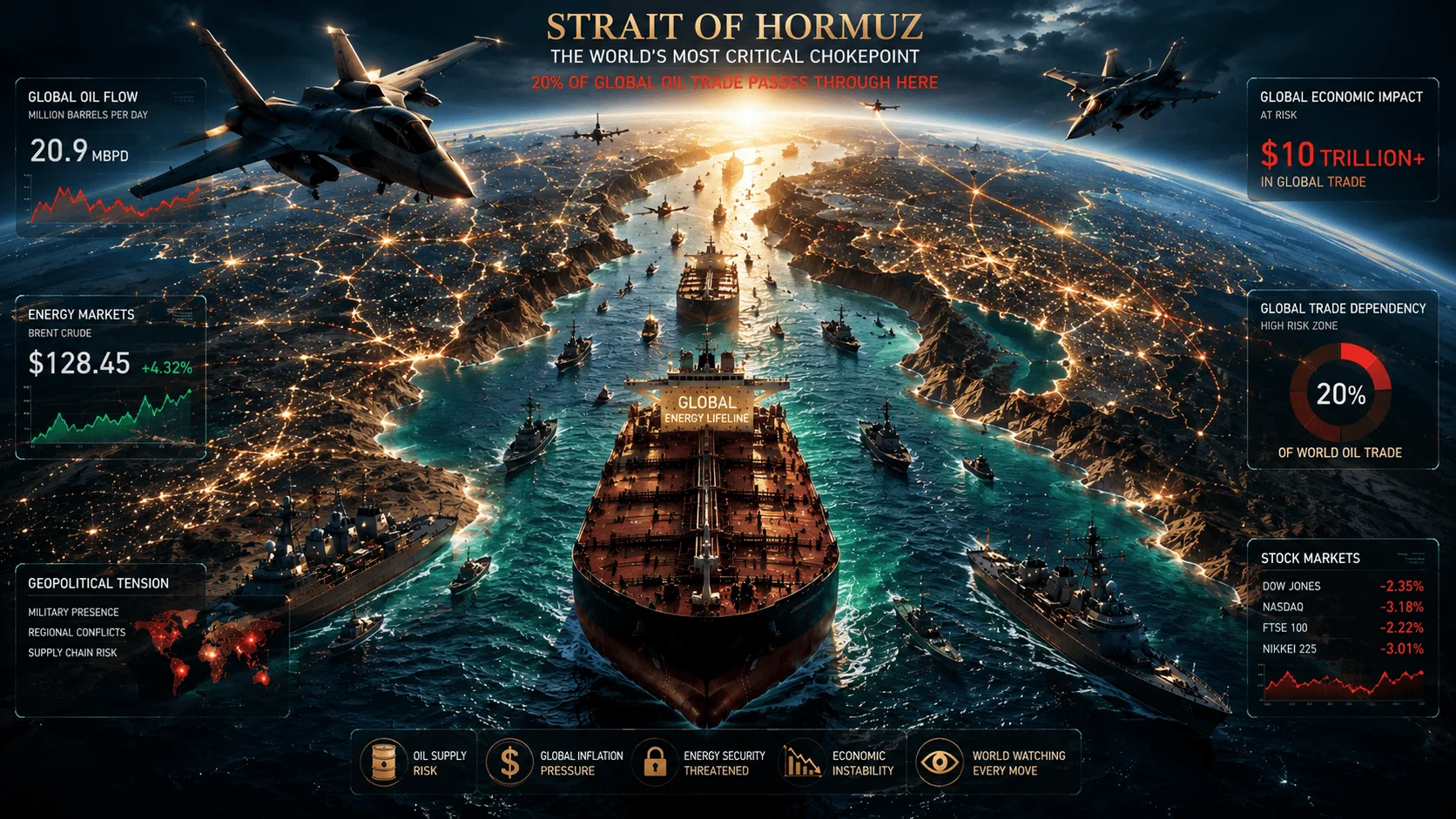
What makes the Strait of Hormuz so important is the sheer amount of global energy trade that passes through it every single day. A massive percentage of the world’s sea borne oil exports moves through this narrow route, with tankers carrying crude oil and liquefied natural gas toward Asia, Europe, and other major economies. Because so much global energy depends on this single chokepoint, even small disruptions can trigger immediate reactions in financial and commodity markets.
The importance of the Strait of Hormuz goes far beyond oil alone. Commercial cargo vessels transporting fuel, fertilizer, industrial materials, food related supplies, and consumer goods also rely on this shipping lane. Major economies depend on uninterrupted maritime movement through the region to maintain stable supply chains and avoid costly trade delays. When the route becomes unstable, shipping companies often face rising insurance costs, delayed deliveries, and increased security risks.
This is exactly why the world reacted so strongly to the Project Freedom Strait of Hormuz situation. Any disruption inside the strait has the potential to push oil prices higher, increase transportation expenses, and create uncertainty across global markets. Investors, governments, and multinational corporations closely monitor the waterway because instability there can rapidly affect fuel prices, inflation, shipping networks, and economic confidence around the world.
In simple terms, the Strait of Hormuz matters because it acts as a global economic artery. When traffic flows normally, international trade remains stable. When the route becomes dangerous or restricted, the consequences can spread across the global economy within days.
Why Was Project Freedom Announced
Project Freedom Strait of Hormuz was announced during a period of escalating geopolitical tension between the United States and Iran. The relationship between both countries had already been strained for years because of regional conflicts, military pressure, sanctions, and disputes over maritime security. However, the situation intensified dramatically after reports emerged that commercial shipping traffic through the Strait of Hormuz was facing severe restrictions and growing security threats.
According to multiple reports, vessels attempting to pass through the waterway encountered disruptions that created fears of a wider blockade or partial shutdown of maritime traffic. Commercial ships, including oil tankers and cargo carriers, reportedly experienced delays, rerouting issues, and uncertainty about whether safe passage through the corridor could still be guaranteed. This immediately raised alarms across the global shipping industry because the Strait of Hormuz is considered essential for international energy transportation.
As tensions increased, several commercial vessels and crews were reportedly stranded or forced to wait near the region due to safety concerns. Shipping companies feared that escalating instability could expose their vessels to attacks, seizures, or major financial losses. Maritime insurers also reacted cautiously, with risk premiums and insurance costs rising because of the uncertainty surrounding the route.
The United States announced Project Freedom as a response to this growing crisis. U.S. officials described the operation as a defensive effort designed to restore freedom of navigation and protect neutral commercial shipping from further disruption. The mission was framed not as a direct offensive campaign against Iran, but as an emergency operation to prevent a larger economic and humanitarian crisis tied to blocked shipping lanes.
Economic pressure was another major reason behind the launch of Project Freedom Strait of Hormuz. Delays in shipping threatened oil exports, fuel supplies, industrial cargo deliveries, and broader global trade networks. Financial markets closely watched the situation as fears grew that prolonged disruption inside the strait could trigger spikes in oil prices and further instability in already fragile supply chains.
In many ways, Project Freedom became more than a military operation. It turned into a strategic attempt to stabilize one of the world’s most important economic corridors before regional tensions created a much larger global crisis.
How Project Freedom Strait of Hormuz Works

Project Freedom Strait of Hormuz was designed as a large scale defensive security operation focused on protecting commercial maritime traffic moving through one of the world’s most sensitive waterways. The mission combined naval forces, air surveillance, intelligence systems, and escort operations to help stabilize shipping routes that had become increasingly dangerous during rising regional tensions.
One of the core functions of Project Freedom was escorting commercial ships through high risk areas of the Strait of Hormuz. Oil tankers, cargo vessels, and merchant ships traveling through the corridor were expected to receive military guidance and protection while passing through vulnerable sections of the route. The goal was to reduce the risk of attacks, seizures, or disruptions that could threaten international trade and energy transportation.
A major part of the operation involved maintaining a strong naval security presence inside and around the Strait of Hormuz. U.S. naval assets were positioned strategically to monitor maritime activity, respond quickly to emergencies, and deter hostile actions against civilian shipping. This visible military presence was intended to reassure commercial shipping companies and stabilize confidence across global trade networks.
Air surveillance also played a critical role in how Project Freedom Strait of Hormuz functioned. Military aircraft and surveillance systems were reportedly used to monitor vessel movement, detect unusual activity, and provide intelligence support across the region. Continuous aerial monitoring allowed military commanders to track potential threats and coordinate safer navigation for commercial traffic moving through the waterway.
The operation also relied heavily on guided missile destroyers and unmanned systems. Advanced naval destroyers provided defensive capabilities, radar coverage, and rapid response support, while drone systems and unmanned surveillance platforms helped monitor shipping lanes in real time. These technologies were designed to increase operational awareness without escalating the situation into a direct offensive conflict.
At its core, Project Freedom Strait of Hormuz functioned as a protective maritime shield around neutral shipping lanes. The United States repeatedly framed the operation as a temporary defensive mission intended to restore freedom of navigation, secure civilian maritime movement, and prevent a wider global shipping crisis from developing inside one of the world’s most economically important waterways.
Military Assets Used in Project Freedom Strait of Hormuz
Project Freedom Strait of Hormuz involved a significant military deployment built around naval security, air surveillance, and rapid defensive response capabilities. Although the mission was publicly described as defensive and temporary, the scale of military assets involved demonstrated how seriously the United States viewed the growing instability surrounding the Strait of Hormuz.
One of the most important components of the operation was the deployment of guided missile destroyers. These advanced naval warships were expected to provide escort protection for commercial vessels, monitor maritime threats, and strengthen the overall security presence inside the region. Guided missile destroyers are highly capable military platforms equipped with radar systems, missile defense technology, and rapid response weaponry, making them central to any major maritime security operation.
Aircraft also played a major role in Project Freedom Strait of Hormuz. Reports suggested that more than one hundred land based and sea based aircraft were connected to the broader mission structure. These aircraft supported aerial surveillance, reconnaissance, intelligence gathering, and operational coordination across the shipping corridor. Their presence allowed military forces to monitor developments in real time and quickly respond to emerging threats near commercial traffic routes.
The operation included substantial naval forces positioned throughout the region. In addition to destroyers, multiple support vessels and maritime security units were reportedly involved in maintaining operational readiness and protecting navigation routes through the strait. The visible naval buildup was intended both as a security measure and as a deterrent against further disruption to commercial shipping.
Drone systems and unmanned technologies were another major part of the operation. Unmanned aerial systems helped provide continuous monitoring over critical sections of the Strait of Hormuz, allowing military forces to track vessel movement and identify unusual activity without relying entirely on traditional manned patrols. These systems enhanced surveillance capabilities while reducing operational blind spots inside the crowded maritime corridor.
Reports surrounding Project Freedom Strait of Hormuz also mentioned approximately 15,000 service members connected to the broader mission framework. These personnel supported naval operations, logistics, intelligence coordination, air missions, surveillance activities, and regional security efforts linked to protecting maritime traffic.
Despite the scale of military assets involved, U.S. officials consistently described Project Freedom as a defensive mission structure rather than a direct offensive campaign. The operation was publicly framed as an emergency effort focused on protecting neutral commercial shipping, restoring freedom of navigation, and preventing a larger economic crisis caused by instability inside one of the world’s most critical trade routes.
How Project Freedom Could Affect Global Oil Prices

One of the biggest reasons Project Freedom Strait of Hormuz gained worldwide attention was its potential impact on global oil prices. Because the Strait of Hormuz handles a massive share of international energy transportation, even the possibility of disruption inside the corridor can send shockwaves through financial and commodity markets within hours.
As tensions escalated near the Strait of Hormuz, oil markets immediately reacted with concern. Traders and investors feared that restricted shipping traffic or a prolonged blockade could reduce the flow of crude oil and liquefied natural gas reaching international buyers. Whenever uncertainty grows around one of the world’s most important energy chokepoints, markets typically respond with volatility because global supply stability suddenly becomes uncertain.
Shipping insurance costs also became a major issue during the crisis. Insurance companies viewed the region as increasingly dangerous due to the risk of military confrontation, vessel seizures, or attacks on commercial tankers. As a result, maritime insurers reportedly raised coverage costs for ships attempting to pass through the Strait of Hormuz. These rising insurance expenses added financial pressure on shipping companies already dealing with delays and operational uncertainty.
Another important factor was the increase in tanker risk premiums. Tanker operators transporting oil through high risk regions often charge additional fees to offset security threats and potential losses. During periods of instability, these premiums can rise sharply, increasing the overall cost of transporting energy supplies across international markets. Higher transportation costs eventually ripple through the global economy and contribute to broader inflationary pressure.
Energy supply fears became one of the central concerns surrounding Project Freedom Strait of Hormuz. Countries heavily dependent on Middle Eastern oil worried that prolonged disruption could reduce available exports and tighten global supply chains. Governments, refineries, and energy traders closely monitored the situation because even short term instability inside the strait can create fears of shortages or future price spikes.
The impact on fuel prices worldwide was another major reason why Project Freedom became internationally significant. Rising oil transportation costs, shipping delays, and market uncertainty can eventually affect gasoline, diesel, aviation fuel, and industrial energy prices across multiple countries. In simple terms, instability in the Strait of Hormuz does not stay local. It can influence transportation expenses, consumer prices, manufacturing costs, and economic confidence around the world.
How Global Shipping Companies Reacted to Project Freedom
Global shipping companies closely watched the announcement of Project Freedom Strait of Hormuz because the operation directly affected one of the world’s most critical commercial trade routes. For shipowners, cargo operators, and maritime logistics firms, the growing instability near the Strait of Hormuz created serious operational and financial concerns.
Many shipowners reportedly welcomed the operation because it signaled a stronger security presence around commercial shipping lanes. With fears of vessel disruption and maritime threats increasing, shipping companies needed reassurance that commercial traffic could continue moving safely through the region. The deployment of naval escorts and surveillance systems helped reduce concerns about immediate operational risks for some commercial operators.
Insurance companies also reacted strongly to the situation. Before Project Freedom was announced, rising tensions around the Strait of Hormuz had already pushed maritime insurers to reassess regional risk exposure. Higher perceived danger often leads to more expensive insurance coverage for tankers and cargo vessels operating in affected waters. The introduction of a large scale security operation was viewed by some insurers as a stabilizing factor that could help reduce uncertainty and potentially lower extreme risk premiums over time.
Cargo movement expectations became another major focus for international shipping firms. Delays inside the Strait of Hormuz threatened oil exports, fuel transportation, industrial supply chains, and global trade schedules. Shipping companies feared that prolonged instability could disrupt delivery timelines and create financial losses across multiple sectors. The goal of Project Freedom Strait of Hormuz was partly to restore confidence that vessels could continue operating through the corridor without major interruption.
One of the immediate business effects of the operation was reduced shipping uncertainty. Even though tensions remained high, the visible military presence and defensive framing of the mission gave some commercial operators greater confidence about navigating through the region. Stability and predictability are essential for global shipping markets, and any effort to secure critical trade routes is closely monitored by the maritime industry.
International trade concerns remained at the center of the crisis throughout the operation. The Strait of Hormuz is not just an energy corridor but a key artery for broader global commerce. Any disruption affecting cargo movement through the route can create ripple effects across manufacturing, retail supply chains, fuel distribution, and industrial production worldwide. This is why Project Freedom Strait of Hormuz became more than a regional military story. For global shipping companies, it represented a high stakes effort to protect the flow of international trade during a period of severe geopolitical instability.
Was Project Freedom Strait of Hormuz a Military Operation or Humanitarian Mission

One of the biggest debates surrounding Project Freedom Strait of Hormuz was whether the operation should be viewed primarily as a military mission or a humanitarian intervention designed to protect global trade and civilian shipping. The answer largely depends on which political and strategic lens people use to interpret the operation.
The United States consistently framed Project Freedom as a defensive and humanitarian effort focused on restoring freedom of navigation through the Strait of Hormuz. American officials described the mission as a temporary operation intended to protect innocent commercial vessels, tanker crews, and civilian maritime traffic trapped in an increasingly dangerous environment. The public messaging emphasized that the operation was not designed to invade territory or launch direct offensive attacks against Iran.
Supporters of the mission argued that protecting civilian shipping routes was essential because the disruption threatened global energy supplies, food related cargo movement, and international economic stability. From this perspective, Project Freedom Strait of Hormuz was presented as a necessary emergency response to prevent a larger humanitarian and economic crisis caused by blocked trade routes and rising instability across the region.
At the same time, many analysts viewed the operation as having clear strategic military objectives beyond humanitarian protection alone. The deployment of guided missile destroyers, surveillance aircraft, drone systems, and thousands of service members signaled a strong military projection of power inside one of the world’s most contested waterways. Critics argued that the operation also served broader geopolitical goals tied to U.S. influence in the Middle East and pressure against Iran.
This created a major debate among geopolitical experts and international observers. Some analysts believed Project Freedom was primarily about securing global trade and avoiding economic collapse linked to shipping disruption. Others argued it was part of a wider strategic effort to reinforce American military dominance in the Gulf region while sending a warning to Tehran about the consequences of interfering with international navigation.
Political messaging became a central part of how Project Freedom Strait of Hormuz was understood worldwide. By emphasizing phrases like freedom of navigation, protection of neutral shipping, and humanitarian stability, the United States positioned the operation as internationally responsible rather than openly aggressive. However, critics and rival governments questioned whether the mission represented a defensive security operation or a calculated geopolitical maneuver disguised under humanitarian language.
In reality, Project Freedom likely operated on both levels simultaneously. It was presented publicly as a mission to protect civilian maritime trade, but it also carried undeniable military and strategic significance within the broader power struggle shaping the Middle East.
Trump Administration and Project Freedom Strait of Hormuz
The Trump administration played a central role in shaping the narrative and political strategy behind Project Freedom Strait of Hormuz. The operation was announced during a period of heightened tension between the United States and Iran, with the White House framing the mission as a necessary response to growing threats against commercial maritime traffic and international trade stability.
Statements linked to the Trump administration repeatedly emphasized the importance of protecting freedom of navigation through the Strait of Hormuz. Officials argued that global shipping routes could not be allowed to remain vulnerable to disruption because the waterway serves as one of the world’s most important economic corridors. The administration positioned Project Freedom as an emergency defensive effort focused on safeguarding commercial vessels, energy transportation, and international commerce.
The political messaging surrounding the operation also reflected broader diplomatic pressure on Iran. While U.S. officials avoided publicly framing the mission as a direct offensive campaign, the deployment of military assets sent a strong signal about American willingness to defend strategic maritime interests in the Gulf region. The operation became part of a larger pressure strategy aimed at discouraging further interference with commercial shipping routes.
International reactions to Project Freedom Strait of Hormuz were mixed. Some governments and global shipping interests supported the operation because they feared the economic consequences of prolonged instability inside the Strait of Hormuz. Countries dependent on stable oil exports and uninterrupted maritime trade viewed safer navigation routes as essential for protecting global markets.
At the same time, critics questioned whether the operation risked escalating tensions even further. Some international observers argued that the growing military presence inside the region could increase the possibility of confrontation rather than reduce it. Others viewed the operation as part of a wider geopolitical strategy tied to U.S. regional influence and power projection.
Strategic messaging became one of the most important aspects of the Trump administration’s handling of Project Freedom Strait of Hormuz. The administration consistently described the mission using language centered around defense, stability, and economic protection instead of direct military confrontation. This approach allowed officials to present the operation as a globally necessary action rather than a purely political or military escalation.
In many ways, the political handling of Project Freedom was just as important as the military deployment itself. The operation became a test of how the United States could project strength, reassure global markets, pressure geopolitical rivals, and maintain international support all at the same time.
Could Project Freedom Lead to a Bigger Conflict
One of the biggest questions surrounding Project Freedom Strait of Hormuz is whether the operation could eventually trigger a much larger regional or international conflict. Because the Strait of Hormuz sits at the center of global energy transportation and Middle Eastern geopolitics, even limited military activity inside the corridor carries significant escalation risks.
The most immediate concern involves the possibility of escalation between the United States and Iran. When military forces from rival powers operate in close proximity inside a tense maritime environment, the risk of misunderstanding, accidental confrontation, or rapid retaliation increases dramatically. Even a small incident involving commercial vessels, patrol boats, surveillance aircraft, or naval escorts could quickly spiral into a broader crisis.
The possibility of naval confrontation remains one of the most serious fears linked to Project Freedom Strait of Hormuz. The narrow geography of the waterway creates a highly sensitive operational environment where military ships, commercial tankers, and surveillance systems often move within limited space. Analysts have warned that aggressive maneuvers, vessel interceptions, or unexpected security incidents could trigger direct clashes between regional forces and international naval units.
At the same time, diplomatic negotiations continue to play a major role in preventing the situation from escalating further. Reports surrounding Project Freedom have suggested that behind the scenes diplomatic discussions helped reduce immediate tensions and may have contributed to later decisions to pause or scale back parts of the operation. International powers understand that a prolonged military crisis inside the Strait of Hormuz could destabilize energy markets and damage the global economy.
Regional instability concerns also remain extremely high. The Middle East already faces multiple ongoing geopolitical tensions involving security alliances, proxy conflicts, energy competition, and military rivalries. Any escalation connected to Project Freedom Strait of Hormuz could affect neighboring countries, regional trade routes, and broader security conditions throughout the Gulf region.
Another major concern is the impact on global alliances. The operation placed international partners in a difficult position because countries dependent on stable oil transportation often support maritime security efforts, while others worry about becoming involved in a wider geopolitical confrontation. How allies respond to future developments could influence military cooperation, diplomatic partnerships, and international positioning across the region.
In many ways, Project Freedom Strait of Hormuz represents more than a temporary shipping crisis. It highlights how fragile global stability can become when geopolitical tensions collide with critical economic infrastructure. The operation may have been designed as a defensive mission, but its long term consequences could shape regional security and international relations far beyond the Strait itself.
Latest Updates on Project Freedom Strait of Hormuz
Recent developments surrounding Project Freedom Strait of Hormuz suggest that the operation has entered a more politically sensitive and diplomatically managed phase. While the mission was initially presented as an urgent response to shipping disruption and rising regional instability, later reports indicated that parts of the operation may have been scaled back or temporarily paused following diplomatic movement and easing tensions in certain areas.
Some reports suggested that active military escort operations were reduced after negotiations and international pressure helped lower immediate fears surrounding commercial shipping routes. This shift fueled speculation that diplomatic channels were being prioritized alongside military deterrence in an effort to prevent further escalation inside the Strait of Hormuz.
Diplomatic developments have remained central to the evolving situation. Governments across the region, along with international stakeholders dependent on stable energy transportation, continue monitoring negotiations related to maritime security and regional stability. Analysts believe that diplomatic engagement has become essential because prolonged confrontation near the Strait of Hormuz could create severe economic consequences worldwide.
Current shipping conditions appear more stable compared to the peak of the crisis, although concerns have not disappeared completely. Commercial traffic through the Strait of Hormuz reportedly continues under heightened monitoring and security awareness. Shipping companies and insurers remain cautious due to the region’s ongoing geopolitical sensitivity and the possibility of renewed disruptions.
Despite reports of reduced operational intensity, an ongoing military presence still exists around the region. Naval assets, surveillance systems, and security coordination efforts continue to play a role in maintaining maritime stability and deterring potential threats against commercial traffic. The continued presence of military forces reflects how strategically important the Strait of Hormuz remains for global trade and energy transportation.
Future expectations surrounding Project Freedom Strait of Hormuz remain uncertain. Some analysts believe the operation could gradually transition into a lower profile security framework supported by diplomacy and international coordination. Others warn that tensions could quickly rise again if regional disputes intensify or if shipping routes face renewed restrictions.
For now, Project Freedom remains a symbol of how rapidly geopolitical conflict, global trade, and military strategy can collide inside one of the world’s most critical waterways. Even if active operations decrease, the broader strategic importance of the Strait of Hormuz is unlikely to fade anytime soon.
What Readers Should Understand About Project Freedom Strait of Hormuz
The most important thing readers should understand about Project Freedom Strait of Hormuz is that this was never just a regional military story. The operation mattered globally because the Strait of Hormuz sits at the center of international trade, energy transportation, and geopolitical stability. When instability threatens this narrow waterway, the effects can spread across economies, governments, businesses, and everyday consumers around the world.
The Strait of Hormuz is critical because it acts as one of the world’s most important maritime chokepoints. A massive share of global oil exports and commercial cargo passes through this route every single day. If shipping traffic slows down or becomes unsafe, international markets react immediately because energy supplies, transportation systems, and industrial supply chains all depend on stable movement through the corridor.
Many people assume geopolitical conflicts only affect governments and militaries, but shipping disruptions eventually impact ordinary people as well. Rising oil transportation costs can increase fuel prices, airline expenses, food delivery costs, manufacturing prices, and inflation across multiple countries. A crisis inside the Strait of Hormuz can influence everything from gas station prices to consumer goods because global economies remain deeply connected through international shipping networks.
The situation also remains politically sensitive because Project Freedom Strait of Hormuz exists at the intersection of military strategy, economic pressure, diplomacy, and regional power struggles. The United States framed the mission as defensive and humanitarian, while critics viewed it as part of a larger geopolitical confrontation involving Iran and Middle Eastern influence. That combination of security concerns and political tension is why the operation continues attracting international attention.
At its core, Project Freedom Strait of Hormuz demonstrates how one strategic waterway can affect global stability far beyond the Middle East itself. It is a reminder that modern economies depend heavily on secure shipping routes and that geopolitical tension in one region can rapidly become a worldwide issue.
FAQs About What is Project Freedom Strait of Hormuz
What is Project Freedom Strait of Hormuz
Project Freedom Strait of Hormuz was a United States led military and diplomatic operation launched in 2026 to help secure commercial shipping routes through the Strait of Hormuz during a period of rising regional instability and maritime disruption.
Why did the United States launch Project Freedom
The United States launched Project Freedom to restore freedom of navigation, protect commercial vessels, and prevent a larger global shipping and energy crisis caused by disruptions inside the Strait of Hormuz.
Why is the Strait of Hormuz important to global trade
The Strait of Hormuz is one of the world’s most important trade chokepoints because a large percentage of global oil exports and commercial cargo passes through the route every day. Disruption there can affect fuel prices, shipping costs, and global supply chains.
Did Project Freedom involve military action
Yes, Project Freedom involved significant military deployment including guided missile destroyers, aircraft, surveillance systems, and naval forces. However, the mission was publicly described as defensive rather than offensive.
How does Project Freedom affect oil prices
Project Freedom affected oil prices because any instability inside the Strait of Hormuz creates fears about energy supply disruptions. Rising tensions can increase transportation costs, tanker insurance premiums, and global fuel prices.
Is Project Freedom connected to Iran
Yes, the operation was closely connected to rising tensions between the United States and Iran, especially regarding maritime security and restrictions affecting commercial shipping in the Strait of Hormuz.
Was Project Freedom successful
Reports suggest the operation helped stabilize some shipping conditions and reduced immediate fears of large scale disruption. However, debates continue about its long term effectiveness and geopolitical consequences.
Could the Strait of Hormuz crisis happen again
Yes, many analysts believe future tensions in the region could create similar crises because the Strait of Hormuz remains one of the world’s most strategically sensitive waterways.
Conclusion
Project Freedom Strait of Hormuz became one of the most important geopolitical stories of 2026 because it revealed how fragile global stability can become when military tension collides with critical economic infrastructure. What began as a maritime security operation quickly evolved into a worldwide conversation about oil markets, military power, global trade, and regional diplomacy.
The operation highlighted the enormous strategic importance of the Strait of Hormuz and why governments, energy companies, shipping firms, and financial markets react so strongly whenever instability threatens the corridor. From rising oil prices and shipping delays to diplomatic negotiations and military deployments, every development inside the Strait carried international consequences.
More importantly, Project Freedom Strait of Hormuz showed that modern economies remain deeply dependent on secure trade routes. A disruption in one narrow waterway can influence inflation, fuel prices, transportation systems, industrial production, and political relationships across the globe within days.
In the end, the story of Project Freedom is not only about military operations or Middle Eastern politics. It is about how one narrow strip of water can simultaneously shape global oil prices, geopolitical strategy, military tensions, and the future of international trade.
Detailed Sources for What is Project Freedom Strait of Hormuz
Below are the main research sources used to explain “What is Project Freedom Strait of Hormuz” along with what each source specifically covered. These are useful if you want to add citations, authority signals, or external references inside your blog.
Al Jazeera Coverage on Project Freedom
One of the most detailed explainers about Project Freedom Strait of Hormuz. This report explained:
- Donald Trump’s announcement of “Project Freedom”
- U.S. plans to guide stranded ships through the Strait of Hormuz
- The humanitarian framing of the operation
- The use of destroyers, aircraft, drones, and military personnel
- Risks of escalation between the United States and Iran
- The number of stranded vessels and affected seafarers
Additional Al Jazeera updates also covered:
- The launch of the operation
- Temporary suspension of the mission for diplomacy
- Iranian reactions and shipping developments
Reuters Report on Strait of Hormuz Escalation
Reuters focused on the expanding geopolitical tension surrounding the Strait of Hormuz.
Key details included:
- Iran redefining the operational boundaries of the Strait
- Strategic control concerns
- The broader military and economic implications
- Regional security tensions affecting global shipping
Reuters also reported on the temporary pause of Project Freedom for diplomatic negotiations.
The Wall Street Journal Coverage
The Wall Street Journal provided detailed reporting on:
- The military structure behind Project Freedom
- U.S. deployment of missile defense destroyers
- Use of aircraft and unmanned systems
- Approximate troop numbers
- The defensive shield concept around commercial shipping
The report also clarified the distinction between the blockade strategy and the commercial shipping protection mission.
The Guardian Analysis on Strait of Hormuz Crisis
The Guardian focused more on the wider geopolitical fallout and diplomatic implications.
Important points included:
- Iran and Oman coordination claims
- Disputes over maritime control
- Concerns over toll systems for commercial shipping
- The broader international conflict surrounding the Strait
Another Guardian report discussed the political fallout surrounding Trump’s handling of Project Freedom and regional diplomatic tensions.
Times of India Report on Project Freedom
The Times of India provided an explainer style overview covering:
- Why the operation was launched
- How shipping disruptions affected oil markets
- Iran’s role in the blockade crisis
- Why the Strait of Hormuz is economically critical
- The impact on global energy transportation
The publication also discussed how countries like India started reassessing long term energy security strategies because of the Strait of Hormuz crisis.
Le Monde Coverage on Shipping and Fertilizer Crisis
Le Monde highlighted the humanitarian and economic side of the crisis.
The report discussed:
- Disruption of fertilizer shipments
- Threats to food security in vulnerable countries
- The United Nations response
- The global supply chain risks linked to the Strait of Hormuz
This source was especially useful for understanding how maritime disruption affects ordinary people beyond oil prices alone.
Suggested External Source Section for Your Blog
You can place this at the end of the article:
Sources and References
- Al Jazeera Middle East Coverage
- Reuters International News
- The Wall Street Journal Global Affairs
- The Guardian World News
- Times of India Defence Coverage
- Le Monde International Analysis
Disclaimer
This article is published for informational, educational, and journalistic purposes only. The content is based on publicly available reports, international news coverage, research analysis, and ongoing geopolitical developments related to Project Freedom Strait of Hormuz.
The views, references, and discussions included in this article are not intended to target, insult, defame, or promote hatred toward any country, government, religion, community, organization, or individual. We fully respect all faiths, cultures, nations, and international communities.
All trademarks, names, and referenced entities belong to their respective owners. Readers are encouraged to verify evolving developments through official government statements and trusted international news sources.
This website does not encourage violence, political extremism, misinformation, or hostility in any form. The purpose of this article is solely to provide general awareness and analytical insight into a major international event affecting global trade, shipping, and geopolitics.


